





 Portuguese
  English
  Spanish
  5 min of reading
  8 comments


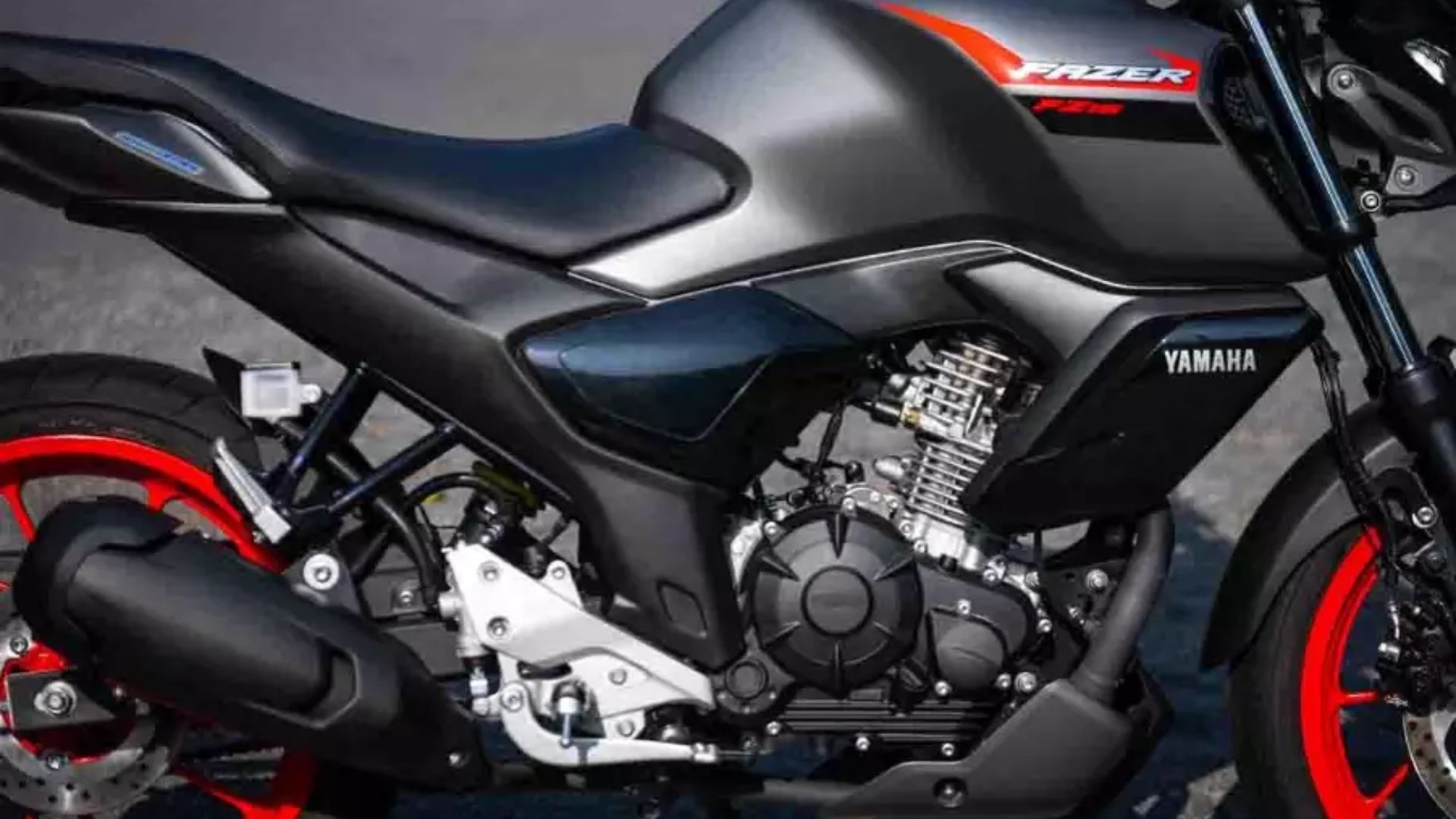


Equipped with Monoshock Rear Suspension, ABS on the Front Wheel, and Wider Tires, the Yamaha Fazer FZ15 ABS Connected 2025 Bets on Comfort, Stability, and Efficiency, Seeking Space in the Competitive 150/160 Motorcycle Segment in Brazil.
The Yamaha Fazer FZ15 ABS Connected 2025 arrives in the Brazilian market as an option for daily use focusing on safety and comfort.
The model combines a 149 cm³ BlueFlex engine, monoshock rear suspension, ABS on the front wheel, and wider tires than the standard for the 150 cc category.
The model aims to compete in a segment dominated by utilitarian bikes of 150 to 160 cc, offering a package of equipment that prioritizes stability, fuel consumption, and embedded technology.
-
OMODA & JAECOO grows in Europe in 2026 with an integrated strategy of sales, innovation, local production, and technological advancement in the United Kingdom, Italy, and Spain.
-
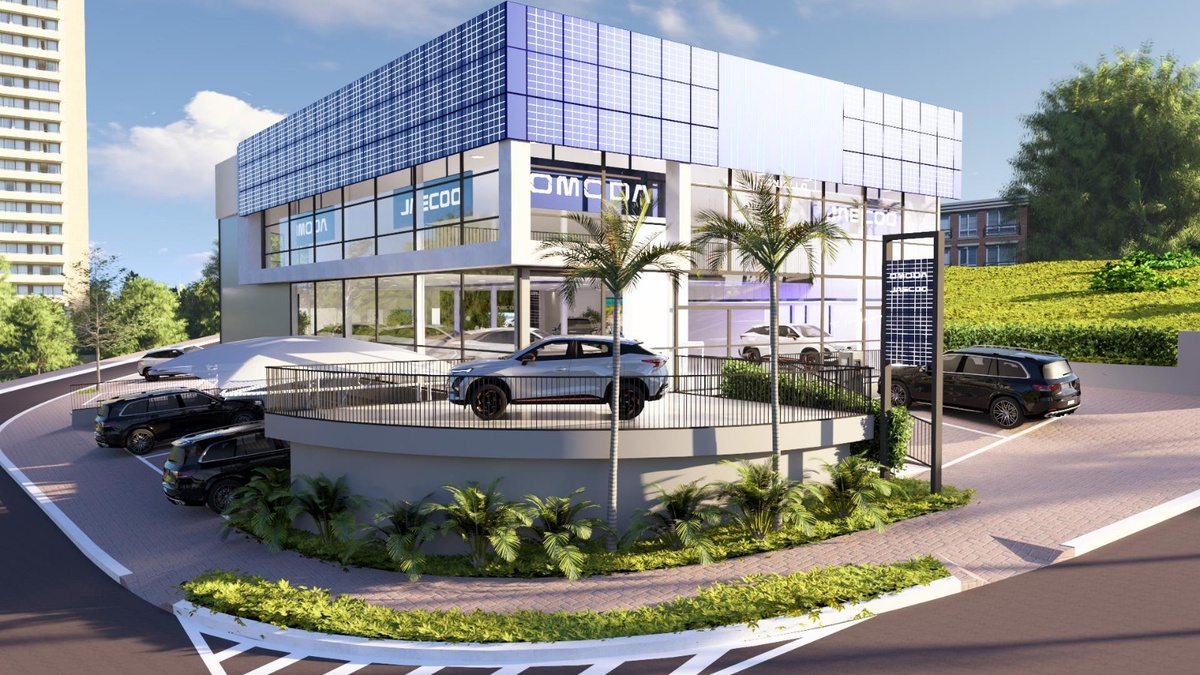
OMODA & JAECOO expands after-sales service in Brazil with competitive maintenance, a 7-year warranty, and high availability of parts for technological SUVs.
-
OMODA & JAECOO appoints Alessandra Souza as executive marketing director in Brazil and accelerates brand expansion with a focus on innovation, networking, and hybrid portfolio.

-
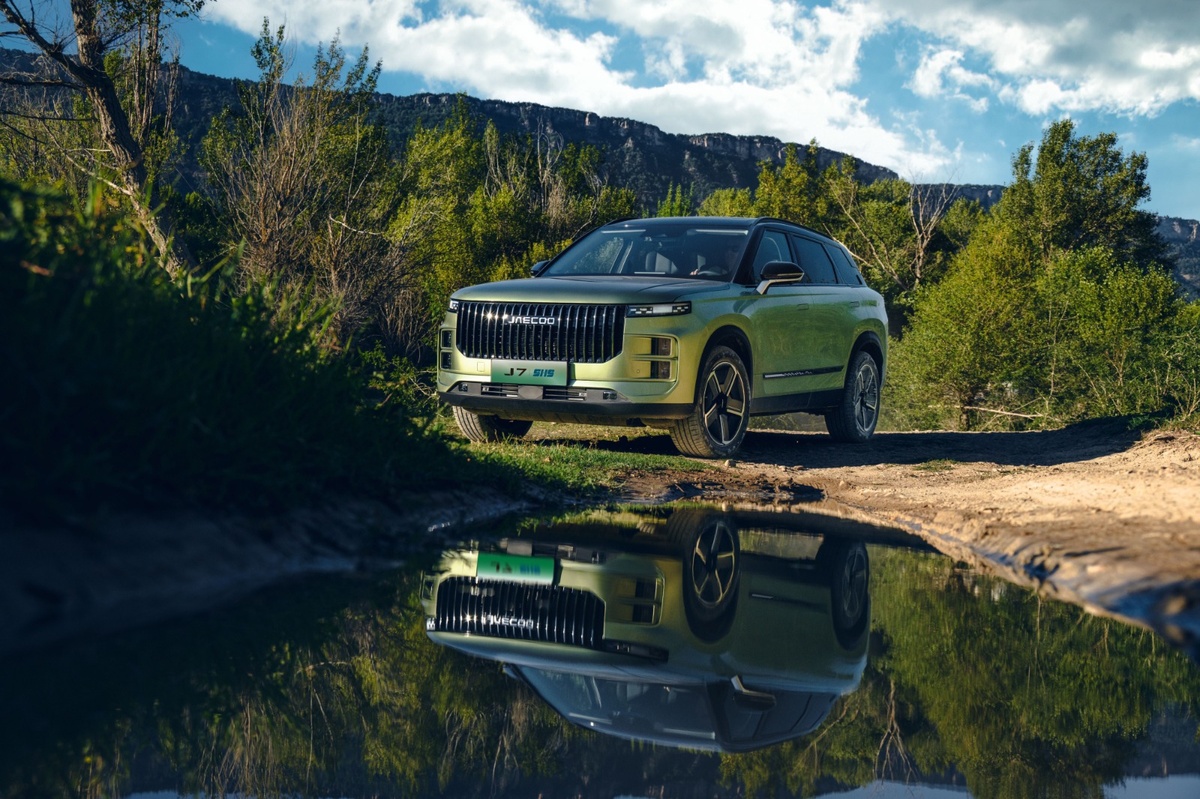
Jaecoo 7 with super hybrid SHS system exceeds 1,200 km of combined range with a 1.5 turbo engine, high-density battery, and intelligent energy management.

The proposal of the Yamaha Fazer FZ15 ABS Connected 2025 is to deliver smooth riding, contained fuel consumption, and predictable responses in traffic, without compromising on safety features valued by urban riders.
According to widely reported data from the segment, range above 40 km/l is achieved under moderate riding conditions, which is in line with the architecture of the setup and the fuel injection calibration designed for economy.
Engine, Gearbox, and Fuel Consumption
Under the sculpted tank, the Yamaha Fazer FZ15 ABS Connected 2025 uses a single-cylinder SOHC (single overhead cam) BlueFlex engine, a flex-fuel system that allows the use of gasoline or ethanol without driver intervention.
The power output is around 11.6 hp with gasoline and 11.7 hp with ethanol, with 1.3 kgf.m of torque across both fuels.
The numbers are not the highest in the segment, but the delivery is linear and favored for urban traffic.
The five-speed gearbox, with short shifts, favors smooth starts and contained revs, contributing to fuel consumption.
In everyday use, without prolonged accelerations, averages of over 40 km/l are reported, which is directly interesting to users who cover many kilometers per month.
The 150 cc category coexists with models of higher effective displacement, such as the Honda CG 160 Titan (162.7 cm³, 14.4/14.7 hp and 1.4 kgf.m of torque) and the Haojue DK 160 (162 cm³, 16 hp and 1.4 kgf.m).
In acceleration and pickups, these bikes tend to offer stronger responses, but the Fazer FZ15 150 cc bets on mechanical smoothness, cycle tuning, and fuel efficiency as differentiators.
Cycling, Suspension, and Tires
The standout technical feature of the chassis is the monoshock rear suspension.
This arrangement uses a single shock absorber, mounted centrally, to progressively absorb impacts.
In the Yamaha Fazer FZ15 ABS Connected 2025, the system works to reduce mass transfer during braking and bumps, maintaining comfort and useful travel even on uneven asphalt.
For the user, the effect is direct: fewer jolts and more precision in changes of direction.
The wider tires also play an important role.
The front uses 100/80 and the rear 140/60, measurements that are larger than the usual in the 150 cc category.
This increases the contact area with the ground, enhances grip in corners, and strengthens the feeling of stability at typical urban speeds.
Visually, the whole setup also conveys the size of a larger motorcycle, something appreciated by those seeking presence without stepping up to higher displacement ranges.
Brakes, ABS, and Active Safety
In terms of braking, the Yamaha Fazer FZ15 ABS Connected 2025 offers ABS on the front wheel.
The ABS (anti-lock braking system) monitors wheel rotation and modulates hydraulic pressure to prevent locking in emergency situations, reducing the risk of front tire skidding.
There are disc brakes on both wheels, with controllable action by the rider, which makes low-speed maneuvers and progressive stops easier.
The CBS (combined braking system) of competitors distributes some of the lever/pedal force to the other wheel, helping to balance braking but doesn’t prevent locking.
Therefore, compared to the Honda CG 160 Titan and the Haojue DK 160 — which offer CBS — the ABS of the Fazer FZ15 150 cc represents a relevant technical differential, especially on wet or dirty surfaces.
Design, Ergonomics, and Connectivity
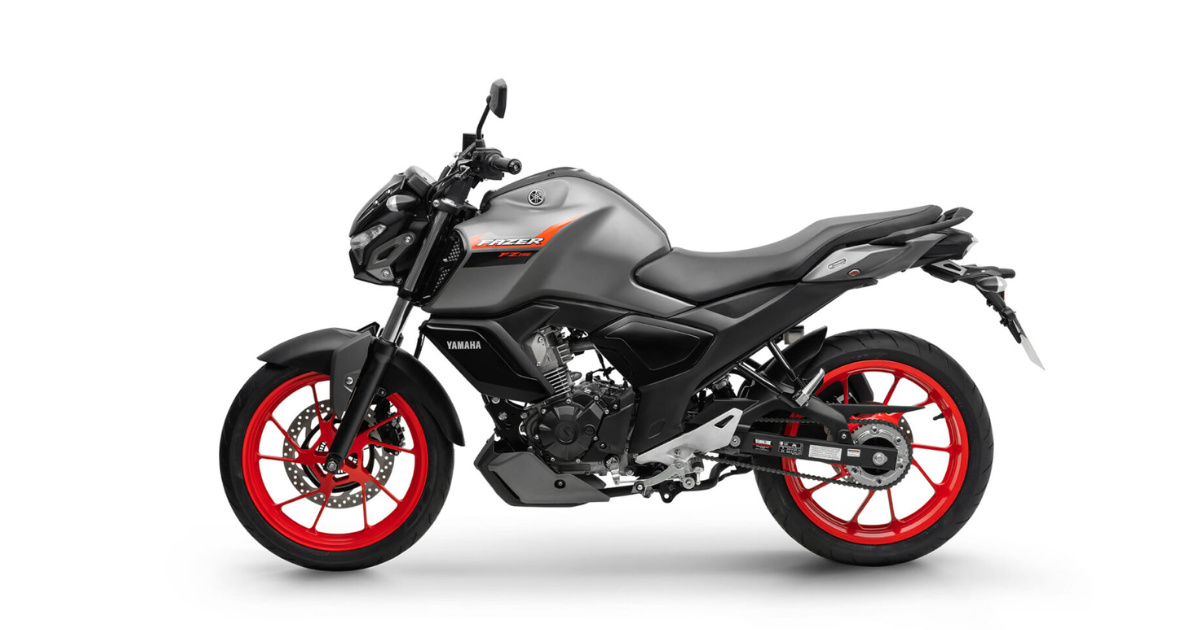
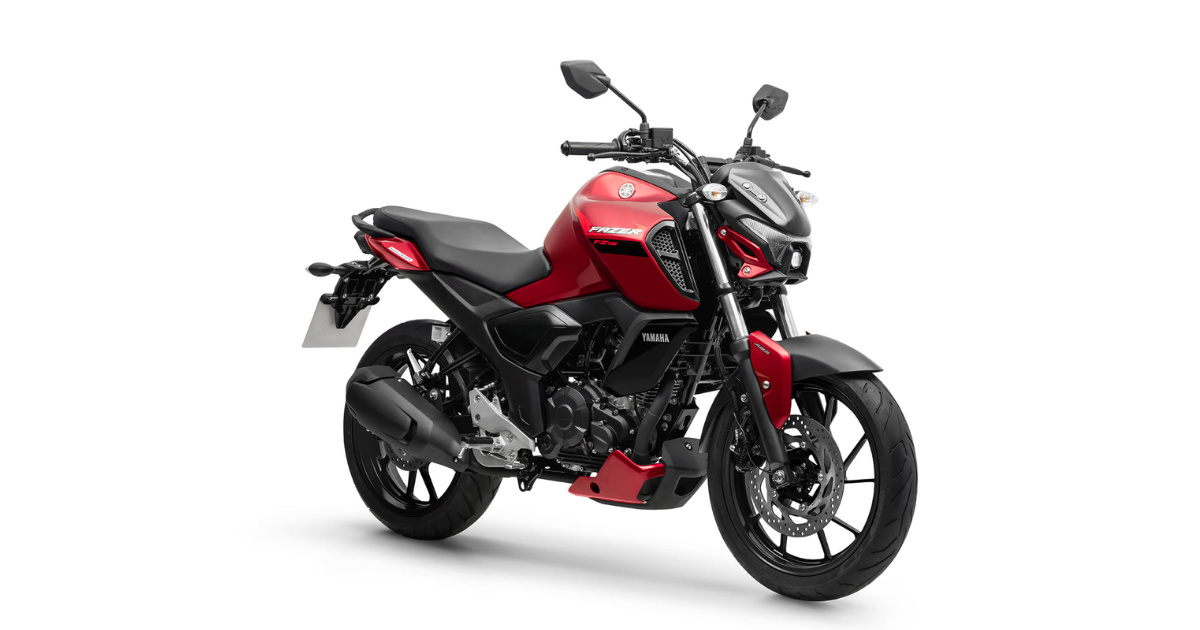
The design follows the brand’s naked style, with muscular lines and a sculpted fuel tank.
The LED headlight, inspired by the MT family, provides a modern visual signature and increases luminous efficiency.
The riding position aims for neutrality: a higher handlebar, footpegs positioned correctly, and a two-level seat to comfortably accommodate both rider and passenger.
The digital panel gathers essential information for daily use, with easy readability.
In the ABS Connected version, the Fazer FZ15 150 cc delivers a connectivity package aimed at urban use, focusing on practicality and ease of operation.
Positioning in the 150/160 Segment
In the competitive landscape, each brand chooses a path. The Titan invests in performance with 162.7 cm³ and a fuller power curve.
The DK 160 seeks stronger numbers, reaching 16 hp.
The Yamaha Fazer FZ15 ABS Connected 2025 bets on riding experience: refined cycling, larger tires, front ABS, and monoshock suspension.
For those who primarily ride in the city, the combination of contained fuel consumption, progressive responses, and a safety package makes the proposal rational.
Target Audience and Recommended Use
Beginner riders, users returning to two wheels, and fleet operators prioritizing operational cost are likely to benefit from the setup.
The tuning prioritizes control and predictability, important in corridors, traffic light exits, and pothole-filled sections.
For short trips on highways, the Fazer FZ15 150 cc fulfills its role soberly, provided the platform’s intent is respected.
Those seeking stronger accelerations or higher cruising speeds may consider options with larger displacements or rivals of 160 cm³ focused on performance.
Main Highlights
The Yamaha Fazer FZ15 ABS Connected 2025 brings together a 149 cm³ BlueFlex engine with competitive urban fuel consumption, monoshock rear suspension aimed at comfort and stability, ABS on the front wheel with discs on both wheels, 100/80 tires in the front and 140/60 in the rear, a design featuring an LED headlight and urban naked look, as well as a Connected package suitable for daily use.
For you, when choosing a Yamaha 150 cc motorcycle, what matters most: ABS, fuel consumption over 40 km/l, monoshock, or 140/60 tires?








A fz15 poderia muito bem ser substituída pela mt15
Estou a 4 meses com a minha, substituindo uma cg Titan, me surpreendeu muito, ótima ciclística e robusta para a minha utilidade na cidade é maravilhosa, consigo ter uma média de 35 a 40 kmL dependendo de como está o trânsito e de como estou pilotando ela pena bastante na rodovia principalmente por conta da final, nem 120km ela consegue original
Recentemente fiz alterações, módulo e rodas (incrível oque um par de rodas mais leves consegue fazer)
faltou força!
A Yamaha pode e deve fazer melhor pra competir tanto com as Hondas e também com outras marcas que estão presentes no mercado nacional.
desing é excelente e a ciclística também, a economia é a grande característica dessa moto, mas tinha que ser pelo menos uns 15cv.