





 English
  Francês
  Alemão
  Italiano
  Japonês
  Norueguês
  Portuguese
  Spanish
  3 min of reading
  2 comments





Engine Silence, Continuous Acceleration, and Regenerative Braking Break Learned Sensory Patterns and Explain the Discomfort Reported by Passengers
Feeling motion sickness when riding in electric cars, while combustion vehicles do not cause the same discomfort, is not just a whim or an isolated perception. On the contrary, scientific studies have confirmed this effect, linking the problem to the way the human brain interprets the motion of this type of vehicle.
With the advancement of automotive electrification, this phenomenon has been observed more frequently. According to data released in 2024 by the Brazilian Electric Vehicle Association (ABVE), sales of electric and hybrid vehicles in Brazil increased 26% compared to 2023. From this growth, researchers have identified a clear pattern: sickness occurs more frequently in electric cars than in gasoline or diesel models.
Despite the common association with the stomach, the origin of the discomfort lies in the brain. This is because the human nervous system struggles to correctly interpret the displacement signals in a sensory environment different from the one learned throughout life.
-
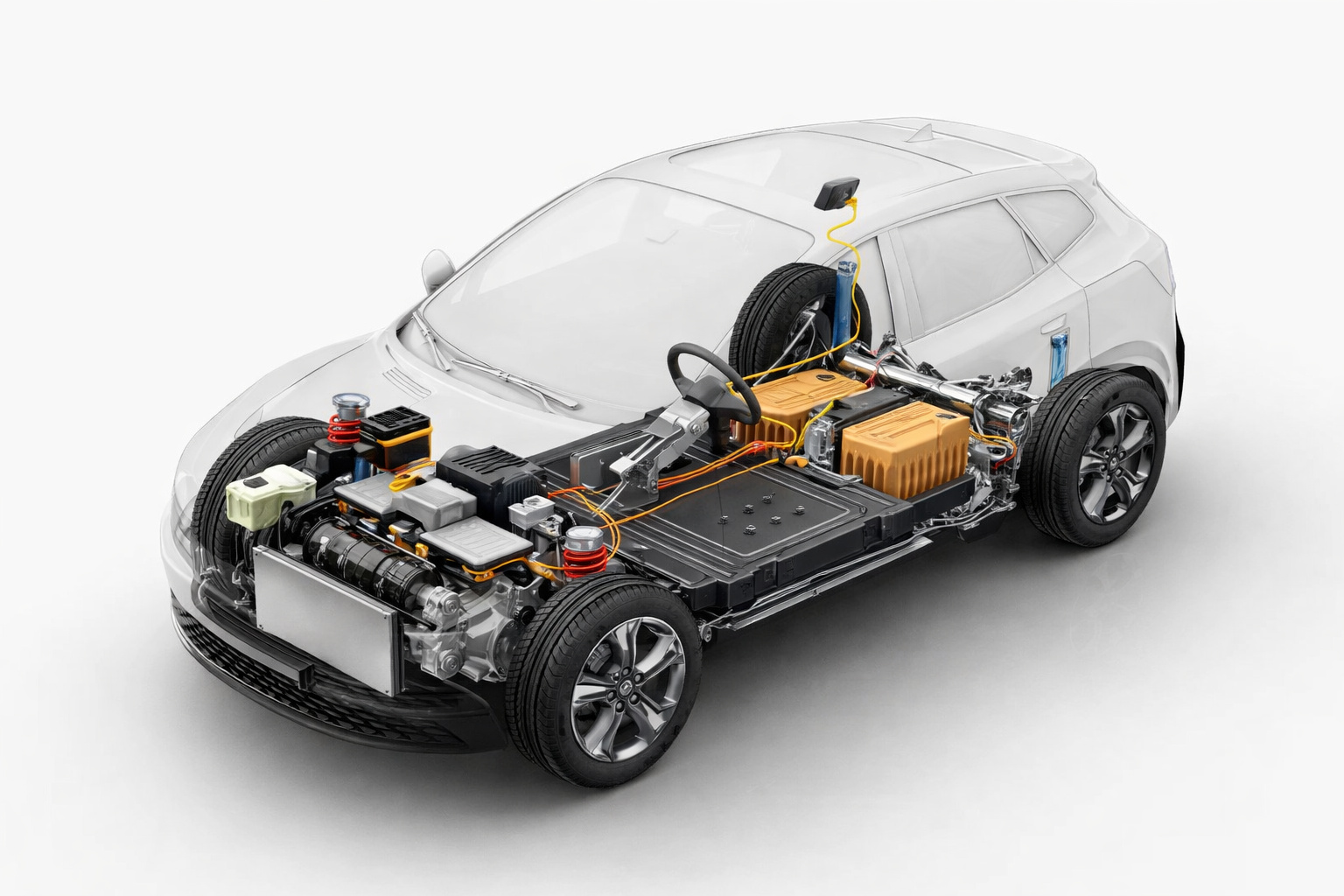
China Surprises Automotive Industry With Battery That Promises Electric Car Able to Run Up to 1,000 km Without Recharge
-
Why BYD Grew So Fast in Brazil and How Blade Batteries, Electric Cars, and Industrial Incentives Shaped This Expansion in the National Automotive Sector
-
Electric Cars Make Progress in Brazil in 2026 and Promise to Reduce Drivers’ Costs with Cheaper Energy, While Infrastructure Grows Slowly Across the Country
-
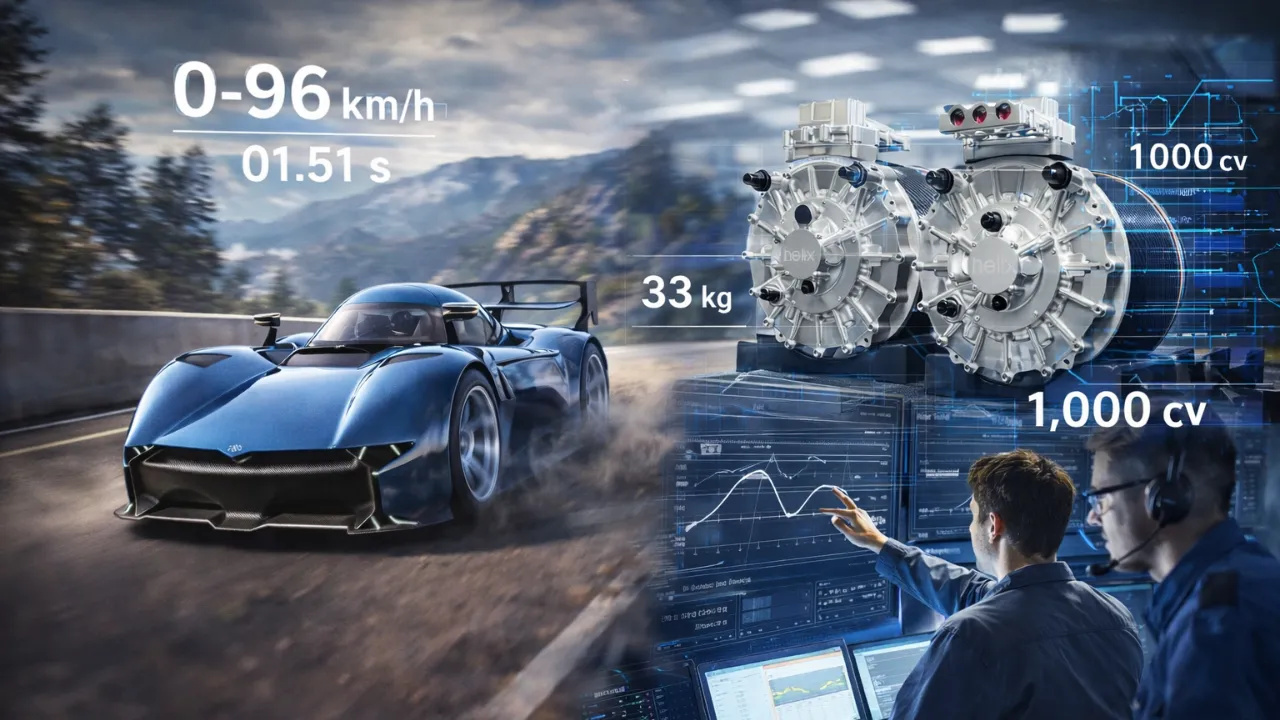
This Helix Electric Motor Weighs Only 33 Kg and Turns the McMurtry Spéirling Into a Compact 1,000 Hp Missile That Takes Just 1.5 Seconds to Reach 100 Km/H

The Human Brain Relies on Predictability, and Electric Cars Disrupt This Pattern
Over the decades, drivers and passengers have learned, even without realizing it, to anticipate the movements of combustion cars. The increasing engine noise, vehicle vibrations, and gear shifts act, therefore, as prior alerts for acceleration and braking.
In electric cars, however, these signals virtually disappear. The engine is silent, acceleration occurs instantly and continuously, and movement happens without familiar sensory warnings. Studies on motion sickness, published in academic databases like Libraries Search, indicate that this absence of references causes the brain to misestimate the forces of movement.
As a consequence, a conflict arises between vision, bodily perception, and the vestibular system, located in the inner ear. This sensory mismatch is, in fact, the main trigger for motion sickness in passengers.
Failures in Anticipating Movement Increase Nausea and Discomfort
As the brain tries to predict movement and fails repeatedly, the symptoms intensify. Nausea, dizziness, and a sense of discomfort occur more frequently, especially in passengers who are not in control of the vehicle, such as those in the back seat.
Moreover, researchers highlight that the human brain is still in the adaptation phase. Electric cars began to circulate extensively only in recent years, especially after 2020, which explains the nervous system’s difficulty in handling this new movement pattern.
Electric Car Technologies Also Contribute to Motion Sickness
In addition to the engine’s silence, other technological factors exacerbate the discomfort. Studies published in ScienceDirect identify regenerative braking as a central element. This system decelerates the vehicle continuously and for an extended period to recharge the battery, generating low-frequency movements associated with motion sickness.
Research published between 2021 and 2023 in the International Journal of Human–Computer Interaction found that higher levels of regenerative braking are directly linked to increased discomfort, especially for passengers in the back seat. Additionally, the vibration pattern of the seats, different from what is observed in combustion cars, adds another unusual stimulus for the brain to process.
Given this set of factors, the brain interprets the scenario as a risky situation. In response, the body activates defense mechanisms, manifested by nausea and physical discomfort. While technology advances rapidly, the human body is still trying to adapt to this new form of movement, raising the question: Will the brain adjust over time, or will the industry need to rethink the sensory comfort of electric cars?










que geração mimimi essa
Frescura, eu dirijo elétrico e não senti nada de motorista ou passageiro, e geração Nutella kkkkkkkkk