





 Portuguese
  English
  Spanish
  4 min of reading
  0 comments


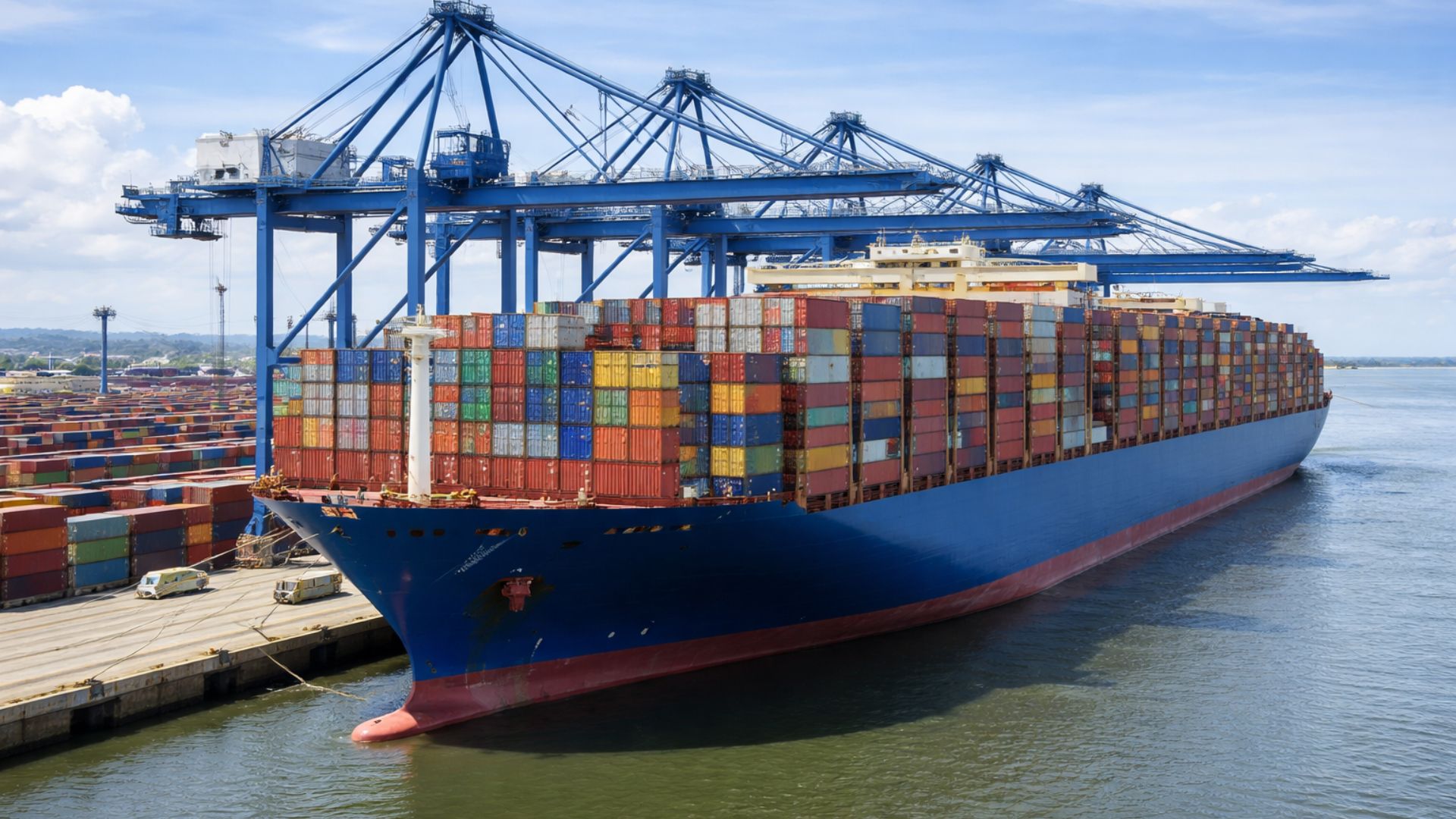
Billion-Dollar Investment in Port Infrastructure in Southern Brazil Promises to Expand Logistical Capacity, Prepare Terminal for Increasingly Larger Ships, and Open More Than a Thousand Direct and Indirect Jobs in a Strategic Move to Avoid Bottlenecks in the Outflow of Cargo and Strengthen Exports.
The Rio Grande Container Terminal, on the southern coast of Rio Grande do Sul, is projected to open more than 1.2 thousand jobs with the expansion of its operational structure.
The estimate released by the company is for more than 220 direct jobs and about a thousand indirect jobs, within an investment plan currently estimated at approximately R$ 1.4 billion, with the goal of more than doubling the terminal’s annual capacity and preparing it for a new stage of long-haul navigation in the country.
Expansion Should Double Container Movement at the Terminal
Currently, Tecon Rio Grande has an annual movement capacity of about 1.4 million TEUs, a unit used in the industry to measure containers equivalent to 20 feet.
-
50 viaducts, 4 tunnels, 28 bridges, and 40 kilometers of bike paths: BR-262 in Espírito Santo will receive 8.6 billion reais for the largest engineering project in the state’s history, inspired by the Immigrant Highway in São Paulo.

-
Brazil produces too much clean energy and doesn’t know what to do with it: over 20% of solar and wind capacity was wasted in 2025 while investors flee and 509 renewable generation projects were abandoned in the last year.

-
Piauí will produce a new fuel that replaces diesel without needing to change anything in the truck’s engine and reduces pollutant gas emissions by half: truck drivers from all over the Northeast are already celebrating the news that will arrive later this decade.

-
A new Brazilian shopping center worth R$ 400 million will be built in an area equivalent to more than 4 football fields, featuring 90 stores, 5 cinemas, a supermarket, a college, and parking for 1,700 cars, potentially generating 3,000 jobs.


With the expansion, the terminal aims to exceed 3.2 million TEUs per year, a movement that repositions the Gaúcha operation among the main container complexes in Brazil and increases its margin to absorb the expected increase in logistical flow in the coming years.
The centerpiece of this project is the extension of the pier, which should increase from 900 meters to 1.2 thousand meters.
According to the terminal’s CEO, Paulo Bertinetti, the expansion will allow for the operation of three ships at the same time and adapt the structure to accommodate increasingly larger vessels in a scenario where ships longer than 360 meters are already part of the reality of international maritime transport.
Expansion of the Pier Will Allow Simultaneous Operation of Large Ships
In addition to extending the pier, the plan includes the purchase of dock and yard equipment and infrastructure improvements to support a higher volume of movement.
Today, the terminal operates in an area of 735 thousand square meters, with three berths and nine dock cranes, a structure that already positions it as the only dedicated container terminal in the State and a strategic point for connecting Rio Grande do Sul with national and international maritime routes.
The justification presented by the company is that the expansion is not merely a growth decision, but a necessity to avoid logistical bottlenecks in the medium term.
In a public statement, Bertinetti stated that the investment is essential to prevent future limitations in the outflow of cargo, in a context where the global fleet operates with larger vessels and demands more productivity from Brazilian ports to maintain regularity and competitiveness.
Modernization Seeks to Avoid Logistical Bottlenecks at the Port
The sector’s reading is that modernizing infrastructure tends to reduce bottleneck points in port operations, especially during berthing windows and simultaneous movements.
With more docks, new equipment, and expanded capacity, the terminal gains the ability to respond more efficiently to fluctuations in demand and the concentration of cargo on larger ships, a phenomenon that has been altering maritime logistics on different commercial routes.
This change also carries regional weight.
The Port of Rio Grande is one of the main entry and exit points for goods in the southern part of the country, and Tecon occupies a central position in this dynamic by serving shipping companies, importers, and exporters connected to international markets.
When port infrastructure approaches operational limits, the impact tends to manifest in deadlines, availability of windows, and logistics costs, which helps explain the pressure for investments before saturation occurs.
Port Infrastructure and Impact on Freight Competitiveness
The company assesses that a more continuous and agile operation contributes to preserving the competitiveness of the production chain, including effects on maritime freight.
Still, the terminal itself acknowledges that this effect is not automatic or isolated, as the cost of freight also depends on variables such as ship size, fuel consumption, route, space availability, and conditions in the international market.
In practice, the expected gain from the expansion is more related to reducing pressure on the system than to an immediate and direct drop in prices.
Bertinetti stated that expanding infrastructure and increasing productivity are the ways to avoid operational overload, which tends to contain additional costs arising from delays, loss of efficiency, and scale limitations.
In other words, the investment acts as a logistical preventive measure before being a tool for tariff reduction.
The most recent schedule released by the company indicates investments between 2025 and 2028, aiming to bring the terminal by 2029 with a capacity more than double the current.
This data updates previous projections and indicates that the expansion of Tecon Rio Grande has entered a planning phase with a more defined horizon, in line with the trend of port modernization and the competition for efficiency in the foreign trade corridors that pass through southern Brazil.








Seja o primeiro a reagir!