





 English
  Francês
  Alemão
  Italiano
  Japonês
  Norueguês
  Portuguese
  Spanish
 5 min of reading
  0 comments



With Million-Dollar Investment, The Main Access Road To One Of The Most Sought-After Tourist Destinations In The Country Is Undergoing Structural Changes Involving Duplication, Overpasses, Marginal Roads, And Environmental Adjustments In A Strategic Stretch Of Foz do Iguaçu.
The duplication of the Cataratas Highway (BR-469), in Foz do Iguaçu, in the west of Paraná, has achieved 78.24% completion in the most recent measurement, referring to the month of December.
The section under construction connects the entrance portal of Iguaçu National Park to the access point for Argentina and integrates a set of interventions aimed at increasing roadway capacity at one of the main entry points for Brazilian tourism.
The total investment projected is R$ 165,824,427.46.
-
BRL 20.1 Million Bridge Project Kicks Off: 200-Meter Construction to Improve Access in Three Cities in Minas Gerais

-
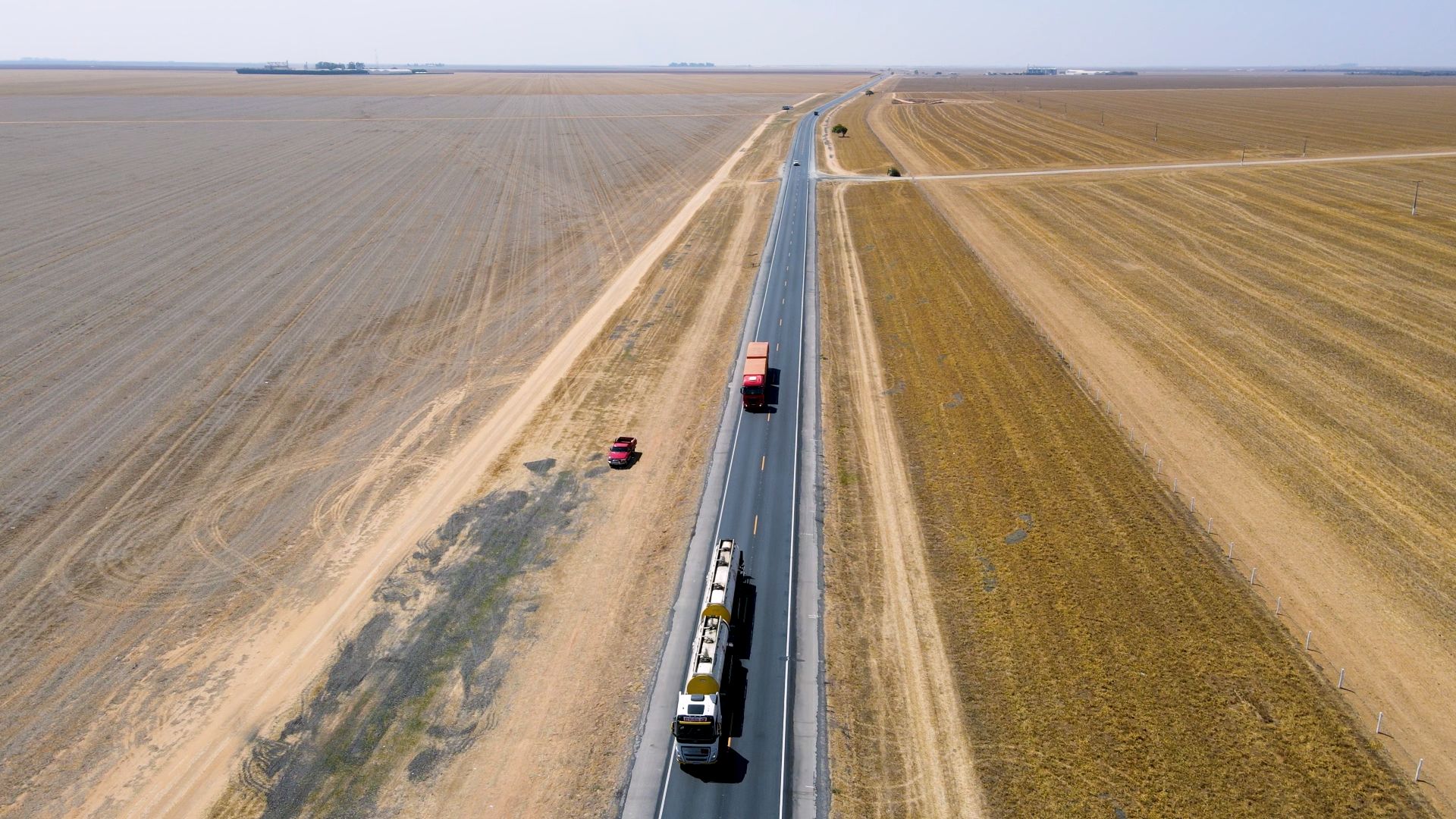
‘Endless Road’ In Brazil Is One of The Largest In The World: 145 Km Stretch On An Important Highway (BR) Crosses The West Of Bahia And Had 135.9 Km Revitalized With R$ 35.3 Million
-
Engineer From ITA Who Worked at Embraer Leads Free Flow Expansion With National Artificial Intelligence and Technology for Toll Without Barriers in Brazil

-
With ‘Super’ Asphalt, New Highway (BR) Will Receive R$ 375 Million to Pave 60 Km, Reduce Route from 432 Km to 150.7 Km and Apply 10 Cm of Asphalt in 24 Months


The project includes the duplication of the roadway, construction of overpasses, implementation of marginal roads, and drainage adjustments, as well as structures aimed at animal crossings.
The highway handles the movement of visitors, workers, and residents accessing the national park, the airport, and the city’s hotel areas.
Currently, work is focused on the execution of the duplicated central lane and the completion of the overpass leading to Foz do Iguaçu International Airport, identified by technical managers as the only special work still in progress.
Meanwhile, other fronts are advancing through paving, signaling, and operational adjustments along the corridor.
Progress of The Works And Work Fronts On BR-469

The section covered by the duplication is approximately 8.7 kilometers long.
This is a stretch with high traffic volumes, especially during peak tourist periods, which requires interventions to be carried out in stages to maintain vehicle circulation during construction.
According to information from the state government, teams are simultaneously working on paving the marginal roads, implementing road safety devices, and horizontal and vertical signage.
These stages occur in an integrated manner with the progress of the main structures, such as overpasses and elevated accesses.
In some areas, temporary traffic changes have been necessary to allow the continuation of services.
Around the access to the airport, for example, the Department of Highways of Paraná reported operational changes using temporary detours, a measure adopted to facilitate the construction of the overpass without total interruption of the highway.
How The New Cataratas Highway Will Look After Duplication
Upon completion of the works, the Cataratas Highway will have two lanes in each direction, each 3.60 meters wide, separated by a double concrete barrier.
The project also includes internal and external shoulder lanes, sized according to technical road safety standards.
The marginal roads are part of the corridor reconfiguration.
According to the disclosed planning, these lanes will be approximately 7 meters wide and will be intended for local traffic, with the aim of separating short-distance flows from the main traffic.
In certain sections, sidewalks for pedestrians and bidirectional bike lanes are planned, implemented at the same level as the marginal lanes or on shared sidewalks, depending on local characteristics.
The organization of the roadway system aims to orderly access to developments, neighborhoods, and tourist attractions, reducing direct crossings with the main lane.
Technicians involved in the project indicate that this separation of flows is one of the central points of the redesign of the highway.
Overpasses and Works of Art Along The Route
The duplication includes the construction of overpasses at points considered critical due to the concentration of accesses and intersections.
One of them is located at km 2+260, in front of the Ritz Cataratas Condominium.
Another one appears at km 3+970, at the access to the Remanso neighborhood.
Further along, the project includes an overpass at km 7+600, near the Movie Cars museum.
The overpass at km 6+760, responsible for the access to the airport, remains under construction and houses a significant portion of the current work schedule.
In addition to these structures, the intervention package includes the construction of a new bridge over the Tamanduá River.
The crossing is part of the structural adjustments necessary to increase the capacity of the highway and redistribute traffic flows along the duplicated stretch.
Drainage, Animal Crossings, And Environmental Requirements
As it crosses an area near Iguaçu National Park, the duplication of BR-469 includes specific measures related to the environment.
Among them are the implementation of drainage systems, stormwater galleries, and animal crossings, structures used to allow the safe crossing of wildlife under the highway.
These devices are part of the environmental requirements applied to projects in ecologically sensitive areas.
As stated by the state government, the execution occurs in an integrated manner with other stages, following the progress of paving and concrete structures.
While some sections are entering the finishing phase, others are still receiving base and drainage services.
This type of overlap of stages is common in large linear projects, especially when there are overpasses, bridges, and underground systems distributed along the route.
Who Executes And Oversees The Duplication Of BR-469
The duplication of the Cataratas Highway is the result of a partnership between the Government of Paraná, through the Department of Infrastructure and Logistics, and Itaipu Binacional.
The execution and oversight of the services are the responsibility of the Department of Highways of Paraná (DER-PR), which also coordinates communication about traffic changes during the progress of the works.
With the project in its advanced stage, the complete release of the new configuration depends on the completion of the overpass leading to the airport and the finishing of the duplicated central lane.
Until all stages are delivered, the responsible bodies recommend attention to temporary signage and instructions in the sections under intervention, especially during peak hours.











-

3 pessoas reagiram a isso.