





 Portuguese
  English
  Spanish
  5 min of reading
  0 comments


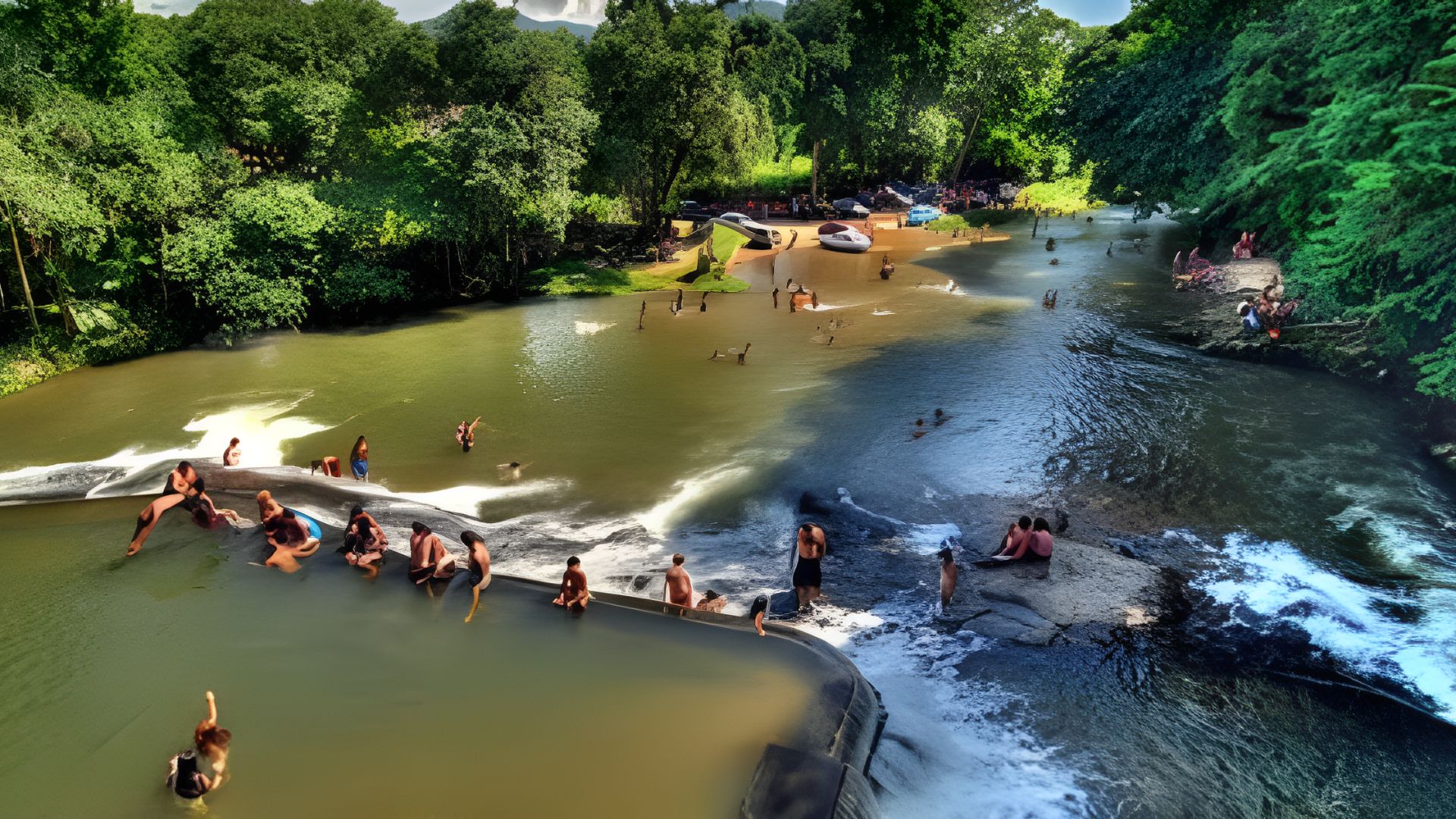
Freshwater Space in Downtown Schroeder Combines History, Nature and Recent Revitalization, Attracting Residents and Visitors Seeking Leisure on Hot Summer Days.
In the heart of Schroeder, in the North of Santa Catarina, a small stretch of freshwater surrounded by greenery has become one of the most sought-after refuges on hot summer days.
The so-called Prainha de Schroeder, on the banks of Helena Koplin Street and near the Gneipel Bridge, brings together history, nature, and leisure in a space that keeps alive the memory of the old dam and the water wheel that helped drive the municipality’s development.
Prainha de Schroeder in the Center of the City
Although it is located in a central area, the prainha is still seen by many visitors as a hidden spot.
-
Friends have been building a small “town” for 30 years to grow old together, with compact houses, a common area, nature surrounding it, and a collective life project designed for friendship, coexistence, and simplicity.

-
This small town in Germany created its own currency 24 years ago, today it circulates millions per year, is accepted in over 300 stores, and the German government allowed all of this to happen under one condition.

-
Curitiba is shrinking and is expected to lose 97,000 residents by 2050, while inland cities in Paraná such as Sarandi, Araucária, and Toledo are experiencing accelerated growth that is changing the entire state’s map.

-
Tourists were poisoned on Everest in a million-dollar fraud scheme involving helicopters that diverted over $19 million and shocked international authorities.


Access is via a secondary road, Helena Koplin Street, which helps to give the environment a more reserved atmosphere compared to other leisure spaces in the region.
Even so, residents report that on hot weekends, the activity is intense, with entire families seeking refreshment in the shallow waters.

The proximity to the Gneipel Bridge, a structure well-known to residents and a landmark in the center, reinforces the feeling that the bathing area is part of the city’s daily life.
Anyone passing through the region can see the contrast between urban traffic and the section of the river lined with vegetation, serving as a rest area and outdoor gathering spot.
History of the Dam and the Water Wheel
The prainha is not just a leisure space.
The site holds remnants of the old dam that was part of the water intake system used by a sawmill powered by water wheel, a structure typical of a period when the force of rivers was essential for the functioning of local industries.
Part of this setup remains preserved and can be observed by those visiting the bathing spot.
These elements help tell chapters of Schroeder’s history, a municipality whose formation was linked to the presence of European immigrants and the use of water resources for timber production and other economic activities.
While the dam evokes the industrial past, the current use of the area as a leisure space shows the change in the city’s relationship with the river.
Revitalization and New Stretch of White Sand

In recent months, the prainha has undergone revitalization interventions that included the placement of white sand along part of the bank, creating a more comfortable space for those who prefer to stay by the river.
The change reinforces the character of a “freshwater beach” and was designed to enhance the experience for families with children who tend to concentrate in the shallower areas.
In addition to the newly placed strip of sand, the location continues to be marked by easy access and a calmer profile compared to other bathing areas in rivers in the region.
Residents report that during the summer, the number of bathers significantly increases, especially on weekends and holidays, when the heat intensifies and the prainha becomes an alternative to longer trips to the Santa Catarina coastline.
Traditional Use for Bathing
The use of the river stretch for bathing is not recent.
Municipal tourism promotional materials indicate that the prainha has been frequented for decades by residents and visitors seeking a calmer environment, with freshwater and direct contact with nature.
The combination of trees along the banks, the sound of the current, and proximity to the center transformed the spot into a local leisure reference.

On weekends, it is common for groups of friends and families to occupy the area from the early hours of the morning, enjoying the shallow waters for bathing and playing.
The presence of children is frequent, which reinforces the importance of a more structured area and safe access to the river.
Still, municipal authorities and aquatic safety professionals often remind that any natural bathing environment requires extra attention, especially regarding water levels and possible changes in the current.
Nature Tourism Growing in Schroeder
The prainha is part of a set of natural attractions that has been gaining space in tourism in Schroeder, a municipality with just over 20,000 inhabitants and a diversified economy.

Trails, waterfalls, and sports activities such as canoeing and cycling are highlighted by guides and specialized pages as expanding options in the city.
In this context, the area along Helena Koplin Street ends up serving as an entry point for visitors interested in getting to know the region better.
Since it is in a central area, the location presents, in just a few meters, part of Schroeder’s identity: a municipality that grew around the river and which today seeks to reconcile urban development, historical preservation, and the appreciation of outdoor leisure.
Local Identity and Summer Season
For long-time residents, the permanence of the dam and the century-old water wheel reinforces an emotional bond with the place, which has been an area of work, a passage point, and now, a setting for vacations and weekends.
For first-time visitors, the surprise often lies in finding a structured freshwater beach in the very central area, just minutes away from shops, services, and residences.
As the municipality expands revitalization efforts and organizes its tourist offerings, the prainha continues to serve a dual purpose: it preserves an important part of local history and offers an accessible leisure space on hot days.
Will this section of the river along Helena Koplin Street continue to be a well-kept secret by residents or will it attract even more visitors in the upcoming summer seasons?









Seja o primeiro a reagir!