





 Portuguese
  English
  Spanish
  5 min of reading
  1 comment


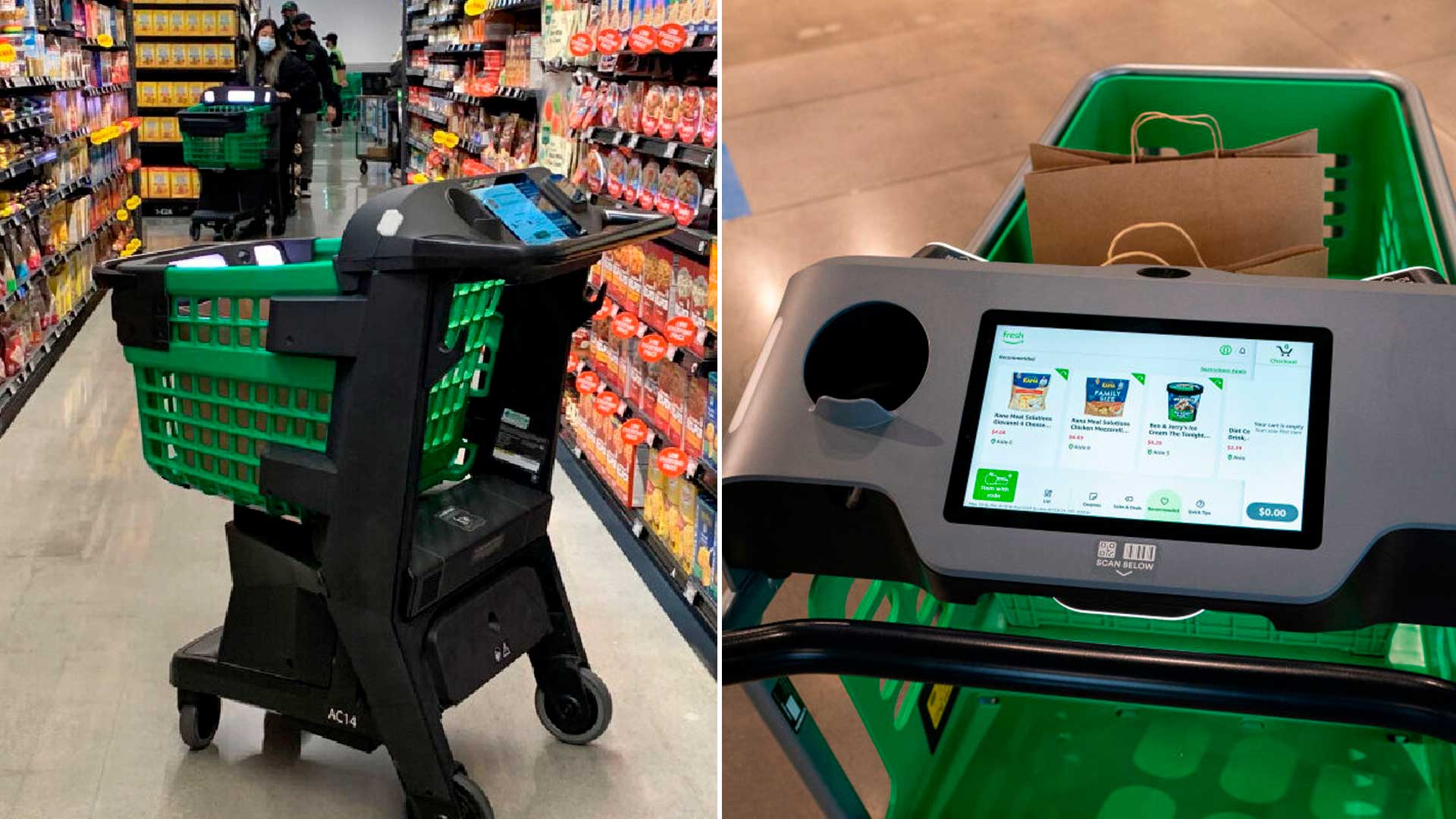

A Cart With Sensors And Artificial Intelligence Recognizes Items, Adds To Purchase, And Releases Payment On The Equipment Itself, Reducing The Checkout Step In Selected Stores
Amazon is trying to tackle one of the biggest complaints in supermarkets, the checkout line, with a smart cart that registers products in real time and completes the purchase without going through a traditional checkout. The idea is for the customer to make a small or medium purchase, return the cart at the designated point, and have the payment completed on their linked account.
The product is the Amazon Dash Cart, presented by the company as a way to make trips to the grocery store faster and more convenient, especially when the bottleneck is the final payment step. In 2024, the company stated that it had been expanding the Dash Cart and that it would be deployed to all Amazon Fresh stores, in a change that repositions the technology strategy within the units.
The cart gained notoriety for being associated with the advancement of frictionless retail, but Amazon has made a point of differentiating the approaches. While some stores used Just Walk Out, with cameras in the environment to identify items, the Dash Cart concentrates the “intelligence” in the cart itself, with sensors, cameras, and processing to recognize what is added and removed from the basket.
-
Friends have been building a small “town” for 30 years to grow old together, with compact houses, a common area, nature surrounding it, and a collective life project designed for friendship, coexistence, and simplicity.

-
This small town in Germany created its own currency 24 years ago, today it circulates millions per year, is accepted in over 300 stores, and the German government allowed all of this to happen under one condition.

-
Curitiba is shrinking and is expected to lose 97,000 residents by 2050, while inland cities in Paraná such as Sarandi, Araucária, and Toledo are experiencing accelerated growth that is changing the entire state’s map.

-
Tourists were poisoned on Everest in a million-dollar fraud scheme involving helicopters that diverted over $19 million and shocked international authorities.


The move comes at a time when physical retail is trying to balance automation and consumer experience, while also dealing with costs, system reliability, and concerns about privacy. The discussion helps explain why Amazon has been promoting the Dash Cart as a practical alternative to reduce lines without relying on a complete infrastructure in the ceiling and on the shelves.
How The Dash Cart Eliminates The Checkout Line

The process begins on the smartphone, with the customer identifying themselves to the cart via the app and a code to start the purchase session. From there, the consumer adds items to the basket and tracks the registration on the cart’s screen, with an updated subtotal and list of products.
When finished, the person exits through an area designated for the Dash Cart, where sensors identify the cart and the system processes the payment using the method registered on the Amazon account. According to reports on the launch, the idea was to reduce waiting time for those who just want to resolve their purchase quickly.
Sensors, Cameras, And AI Inside The Cart
Behind the “no checkout” feature, the Dash Cart combines computer vision and sensor fusion technologies to recognize items, even when the consumer places products with different packaging and varied sizes. Amazon describes the cart as a system that identifies what is in the basket and transforms that reading into a real-time shopping list.
In addition to cameras and sensors, one of the solutions highlighted in initial coverage was the focus on small or medium purchases, with a capacity designed for up to two large bags. This reduces the complexity of recognition and reinforces the convenience argument, as this type of visit is precisely the one that suffers most from disproportionate lines at the end.
In 2022, the company announced updates to make the cart more useful during the journey inside the store, with navigation and screen experience improvements. Among the changes, there was the idea of facilitating the choice of fresh items and enhancing the cart’s sense of location in the environment to show nearby products and offers.
Amazon also began describing the Dash Cart as a “shopping companion” in larger stores, with features like maps and guidance within the supermarket, as well as real-time spending and savings tracking. This positioning suggests that the cart is not only for charging but also for influencing the journey and increasing conversion at the point of sale.
Still, the central promise remains the same, skip the line without having to interact with a cashier. It is this combination of practicality and automation that fuels the narrative that the cart can “change shopping habits forever,” although adoption depends on the pace of expansion and operational costs.
Where The Technology Is Already Working And Expansion In Amazon Fresh
The Dash Cart was introduced in the context of Amazon’s physical operation in 2020 when the company opened its first Amazon Fresh store in Woodland Hills, California, and presented the cart as a way to avoid traditional checkout. At the time, the novelty was treated as a direct bet against the experience of lines in regular supermarkets.

Over time, the cart was made available at Amazon Fresh units and also appeared in communications about use in other brands of the group. Amazon itself highlighted that it had been listening to feedback and expanding the Dash Cart’s presence in stores across the United States.
In April 2024, the company stated that it had already begun expanding the Dash Cart to all Amazon Fresh stores while simultaneously repositioning Just Walk Out within the units. Retail reports interpreted the decision as a shift in strategy, moving away from a more complex, fully instrumented store model to a solution focused on the cart.
Privacy, Jobs, And The Dispute For The Supermarket Of The Future
The adoption of carts with cameras and sensors brings an inevitable debate about data and privacy, as the system needs to observe the customer’s interaction with products during the purchase. Studies and analyses of automated retail indicate that real-time data collection can increase distrust among some consumers, even when the proposal is convenience.
Another sensitive point is the impact on jobs, as reducing dependency on the traditional cashier may change team compositions, although it creates demand for other roles such as floor support, restocking, and equipment maintenance. Amazon often argues that technology improves the experience, but the topic remains controversial as automation is rarely neutral in practice.
The discussion became even more intense when the sector began to question how much some “no checkout” solutions relied on human reviews to function accurately. In 2024, Amazon contested reports suggesting a strong dependence on people watching footage, and the issue heightened scrutiny over how these technologies operate behind the scenes.
In the end, the Dash Cart emerges as a pragmatic bet, less “magical” and more operational, to shorten lines and accelerate purchases. Whether this will actually become the norm depends on costs, error rates, consumer acceptance, and transparency regarding data, a combination that could determine who leads the supermarket of the future.
If this trend catches on, do you think customers gain time or pay the price in privacy and surveillance within the store? Leave a comment saying whether you would use such a cart or prefer the traditional checkout and explain why.










Bom eu imagino que esses carrinhos identifica cada produto e o cliente ainda tens que passar no caixa para ter certeza que todos os itens foi registrado no sistema do carrinho, e além disso o carrinho ter uma câmera acoplada com de 380 graus para identificar cada passo do cliente de não colocar um certo produto escondido na roupa ou numa sacola qualquer e tenha sensores que registra o item colocado no carrinho,e aí passa no caixa e este mesmo carrinho imprime um cupom com todo relatório registra no caixa e finaliza a compra