





 English
  Francês
  Alemão
  Italiano
  Japonês
  Norueguês
  Portuguese
  Spanish
  5 min of reading
  0 comments


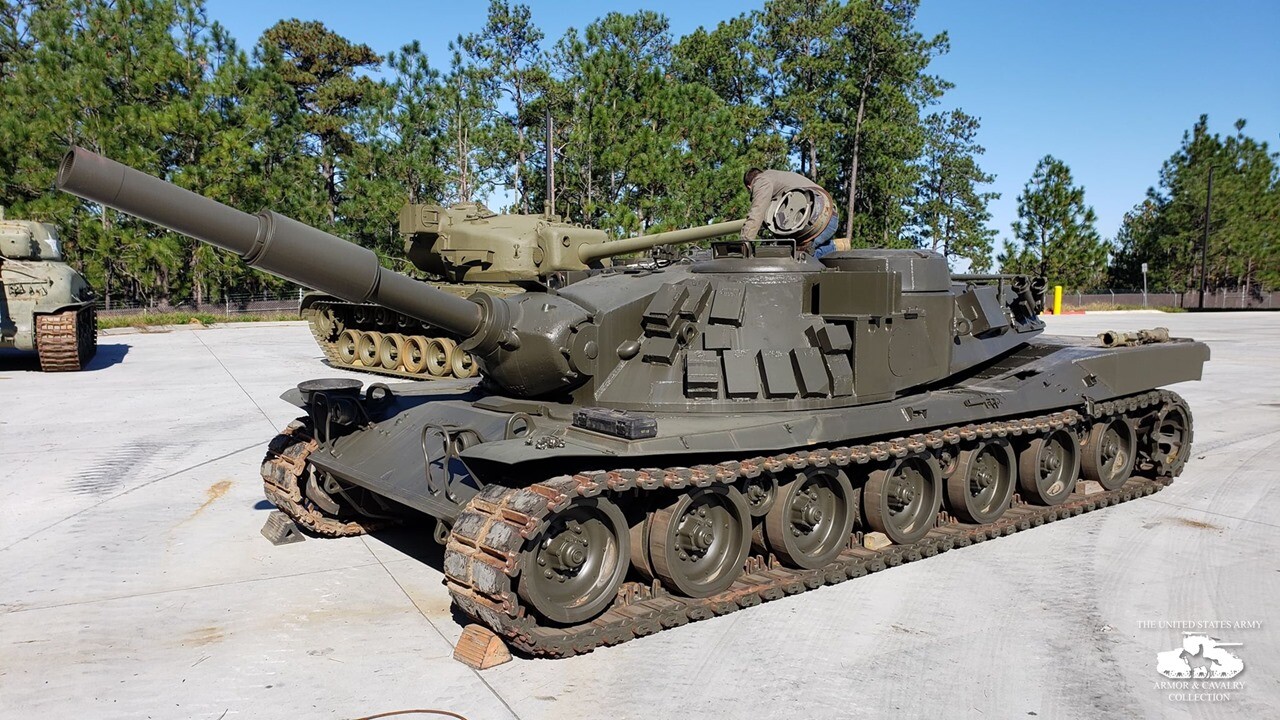
Created by the USA and Germany in the 1960s, the MBT-70 combined hydraulic suspension, automatic loader, and missile-launching cannon, but was canceled after costs exploded.
At the height of the Cold War, when the United States and the Soviet Union competed in virtually every technological area, one of the most ambitious armored vehicle projects in military history emerged: the MBT-70 (Main Battle Tank 70). Developed in partnership between the United States and West Germany, the tank was designed to represent a giant technological leap over existing armored vehicles in the 1960s. The proposal was to create a combat vehicle capable of dominating the European battlefield against Soviet armor. To achieve this, the engineers included extremely advanced technologies for the time, such as adjustable hydropneumatic suspension, automatic loader, low-profile turret and a 152 mm cannon capable of firing guided anti-tank missiles.
If it had entered production, the MBT-70 would have been one of the most revolutionary tanks of its generation. However, technical problems, disagreements between the countries involved, and rising costs ultimately turned the project into one of the most expensive military programs ever canceled.
The Cold War Context That Led to the Creation of the MBT-70
In the 1960s, NATO faced a growing strategic concern: the enormous number of Soviet tanks stationed in Eastern Europe. Armored vehicles like the T-54, the T-55 and later the T-62 posed a real threat in the event of conflict in Europe.
-
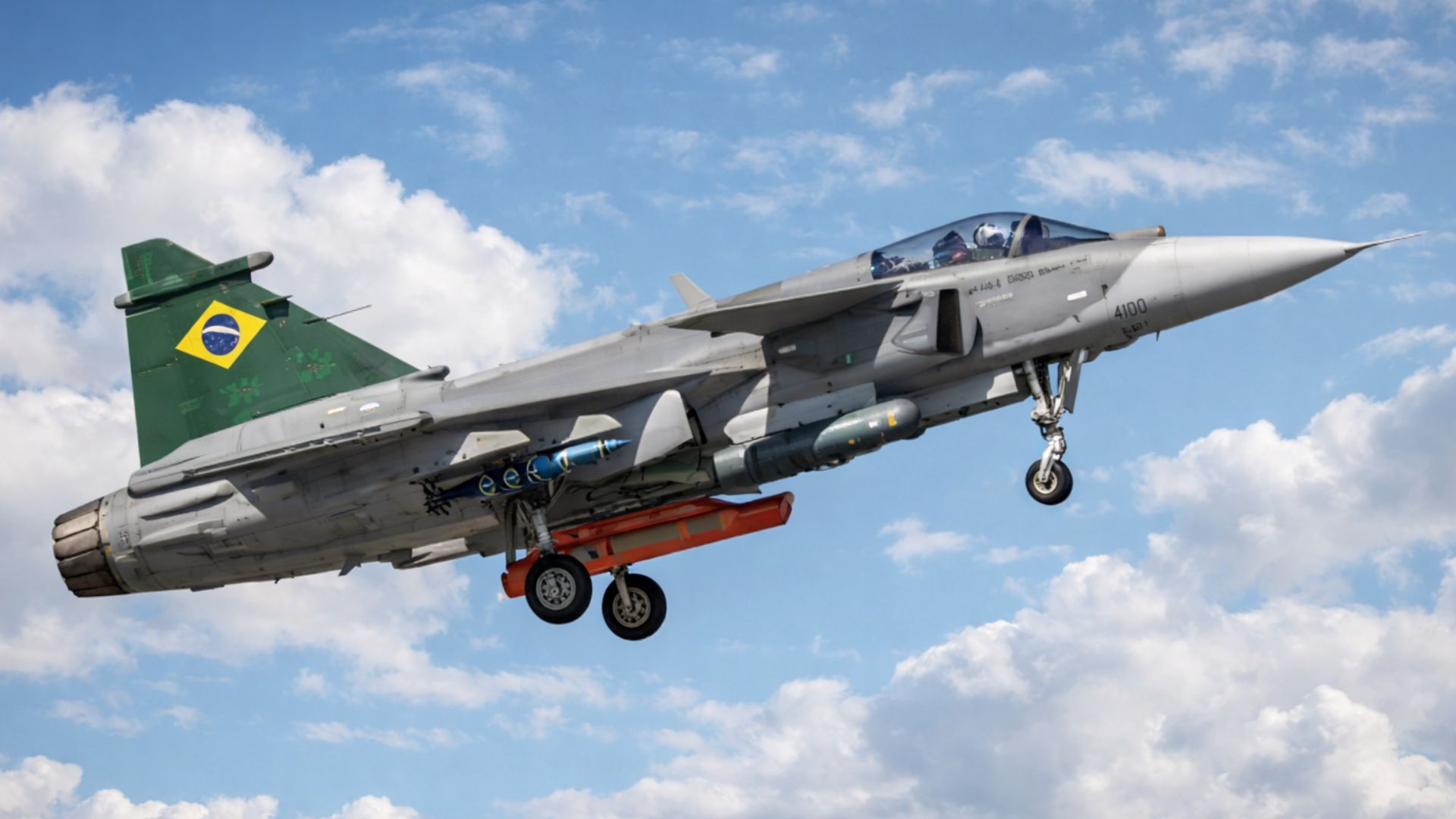
Brazil presents the first national F-39 Gripen fighter and redefines air defense with technological advancement, job creation, and strengthening of the defense industry on the global stage.
-
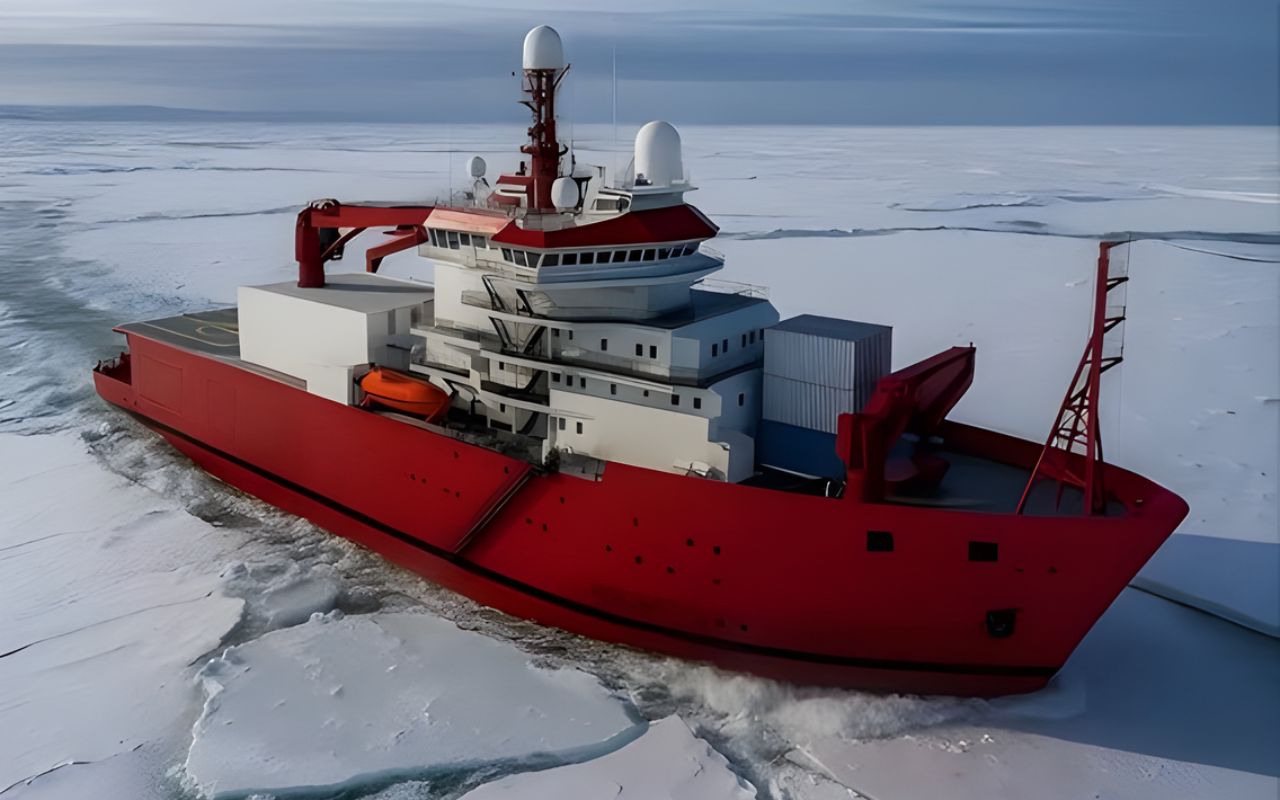
The construction of the Polar Ship Almirante Saldanha is progressing ahead of schedule and strengthens Brazil’s presence in Antarctica; the vessel will be 93 meters long, have a two-month autonomy, and technology to face ice.
-
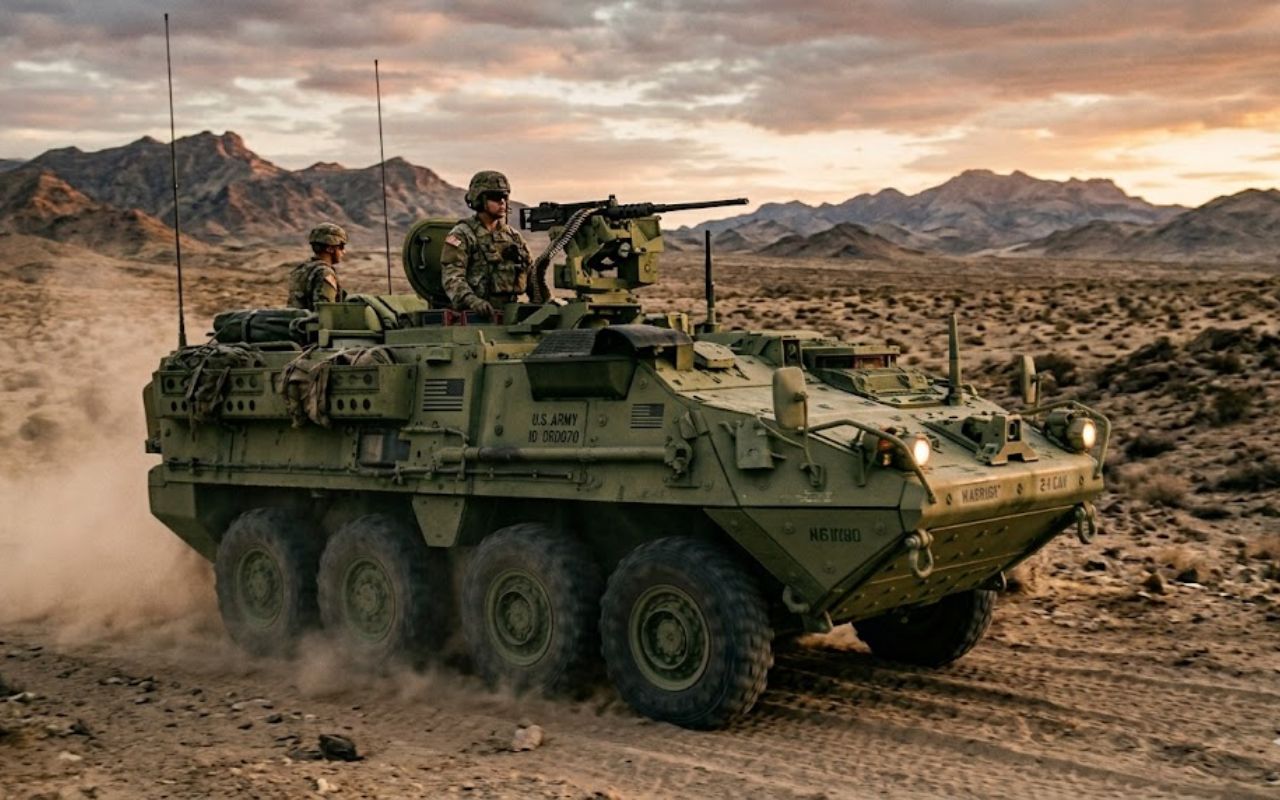
The United States Army has an armored vehicle that reaches speeds of up to 100 km/h, capable of operating normally on different types of terrain and also on asphalt without causing damage; equipped with a 350 hp engine, it can transport up to 9 soldiers — meet the Stryker.
-
Gepard 1A2: the armored vehicle that fires 1,100 rounds per minute and became a shield against drones in Brazil.

The United States primarily used the M60 Patton, while West Germany operated the Leopard 1. Although efficient, these tanks were starting to show limitations against the evolution of anti-tank weapons and new combat concepts.
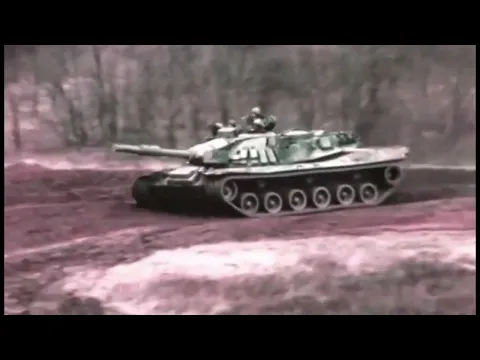

In light of this scenario, Washington and Bonn decided to develop a joint new tank, capable of replacing existing vehicles and ensuring technological superiority over Soviet armor. In 1963, the MBT-70 program was officially born.
The objective was clear: to create a tank that combined mobility, firepower, and protection at unprecedented levels.
Hydropneumatic Suspension: One of the Most Innovative Features of the Project
One of the most impressive elements of the MBT-70 was its adjustable hydropneumatic suspension, an extremely advanced technology for the 1960s.
This system allowed the tank to change its height relative to the ground, providing various tactical advantages. The vehicle could, for example, “kneel” partially, reducing its silhouette and becoming a harder target for enemies.
Additionally, the suspension also allowed the tank to tilt forward, backward, or sideways, facilitating cannon use in uneven terrain.
This capability significantly improved mobility in complex environments such as hills or rough terrain, which was critical for combat in the European theater.
The 152 mm Cannon That Also Fired Guided Missiles
Another revolutionary aspect of the MBT-70 was its main weapon. Instead of using just conventional projectiles, the tank was designed with the XM150E5 152 mm cannon, capable of firing both traditional ammunition and MGM-51 Shillelagh guided anti-tank missiles.
This combination represented a radical shift in the concept of armored combat. The Shillelagh missile could hit targets at longer distances than traditional projectiles and was guided by an infrared system that allowed it to correct its trajectory during flight.

In theory, this would give the MBT-70 a significant advantage against enemy tanks, allowing it to destroy opposing armor even before they entered the range of their own cannons.
Despite the innovative concept, the system faced various technical problems during testing, which ultimately contributed to the program’s difficulties.
Automatic Loader and Reduced Crew
Unlike most tanks of the time, which had four crew members, the MBT-70 was designed to operate with only three personnel.
This was made possible by the use of an automatic loader, which replaced the operator responsible for manually loading ammunition into the cannon.
The reduction in crew had several advantages. A tank with fewer people required less internal space, allowing for a smaller turret and a reduced vehicle silhouette. Additionally, fewer crew members meant less total weight and more space for electronics and ammunition.
However, this configuration also brought ergonomic and operational challenges, particularly because the design included an even more unusual feature.
The Unusual Decision to Place the Driver Inside the Turret
Perhaps the strangest aspect of the MBT-70 was the driver’s position. Unlike most tanks, where the driver is located in the front hull, the driver of the MBT-70 was inside the rotating turret, along with the commander and gunner.
To allow this, the driver’s seat was mounted on a rotating system that kept it facing forward, regardless of the turret’s direction.
In theory, this solution would allow the crew to remain together in a single armored compartment. In practice, however, the system proved complex and uncomfortable during testing.
Advanced Technology, But Extremely Expensive
Although the MBT-70 was technologically impressive, the project began to face problems quickly.
High technical demands made the tank extremely expensive to develop. The initially projected unit cost skyrocketed dramatically throughout the program.
Furthermore, disagreements arose between American and German engineers over various aspects of the project, including armament, electronic systems, and design philosophy. These differences ultimately hindered the program’s progress and repeatedly delayed testing.
The Cancellation of One of the Most Ambitious Projects of the Cold War
In 1969, facing rising costs and technical disagreements, West Germany decided to abandon the project. Shortly thereafter, the United States also officially canceled the program in 1971. In total, about 14 prototypes had been built for testing.
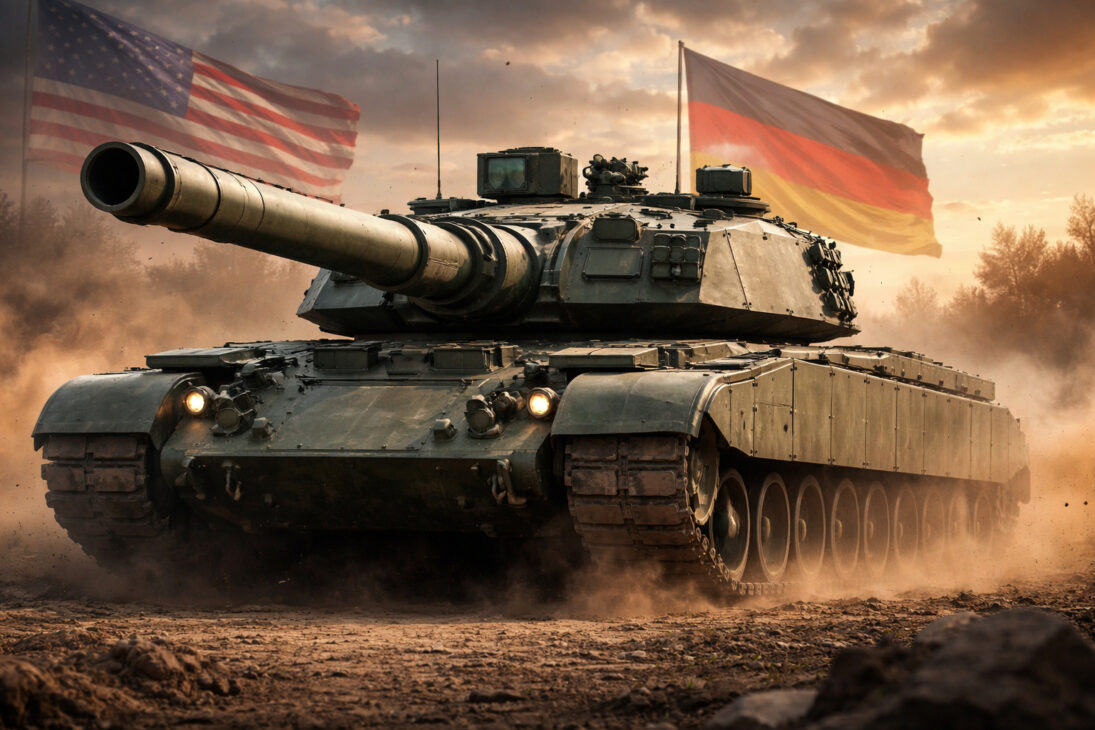
Although it never entered production, the MBT-70 left an important legacy. Many of the technologies tested during the project ultimately influenced the development of later tanks.
In the United States, some of the research contributed to the development of the M1 Abrams, which entered service in the early 1980s. In Germany, the lessons learned helped in the development of the Leopard 2, regarded as one of the best tanks in the world.
A Project That Showed the Limits of Technological Ambition
The MBT-70 represents a classic example of how extremely advanced military projects can face practical difficulties. In trying to incorporate too many innovative technologies at once, the program became too complex, too expensive, and difficult to implement within the timeline and budget.
Even so, the project remains one of the most fascinating experiments in armored history. It demonstrated the potential of concepts that are now common in modern tanks, such as advanced suspensions, automation, and sophisticated weapon systems.
Although it never saw combat, the MBT-70 continues to be remembered as one of the most futuristic tanks ever designed during the Cold War.









-

-

2 pessoas reagiram a isso.