





 Portuguese
  English
  Spanish
  9 min of reading
  3 comments


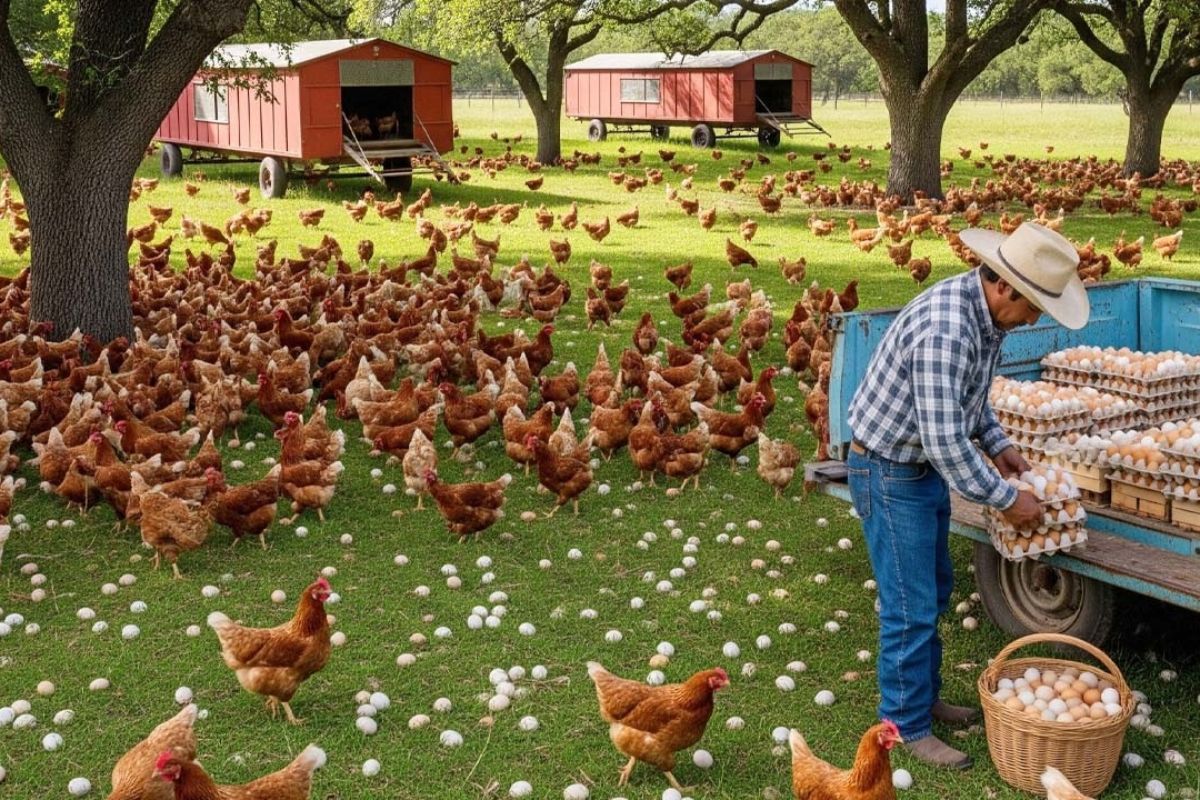


With an Annual Market of US$ 46 Billion, Pasture-Raised Chickens Go Straight from the Open Fields to Premium Shelves, Yielding Profits Up to 50 Percent Higher, Producing More Nutritious Eggs, Firmer Meat, and Making Consumers Line Up for Different Products Without Promotions, Without Discounts, Just Trust in the Origin.
Creating pasture-raised chickens seems simple when the consumer only sees the nice label at the store. But behind each egg with an orange yolk and each firmer chicken breast is a whole management system, daily risks, and a lot of pasture to care for. From breed selection to the slaughter moment, everything is meticulously planned.
While industrial farms pile billions of birds in closed barns, a parallel movement is slowly but steadily growing. Hundreds of farms in the United States are already betting on pasture-raised chickens, with flocks that can reach nearly 2 million birds on large farms, producing more nutritious eggs, tastier meat, and an audience willing to pay up to five times more without discussing price.
A Billion-Dollar Market That Doesn’t Live on Cheap Feed Alone

Poultry farming is one of the pillars of American agriculture. Every year, the sector generates over US$ 46 billion in revenue, with more than 9 billion chickens produced and sold. Most comes from industrial farms where animals grow quickly, in closed spaces, with total control over light, feed, and temperature.
-
They said no to 26 million dollars and would do it all over again: mother and daughter from Kentucky reject a million-dollar offer from a mysterious company that wants to build the largest data center in the state on more than 2,000 acres of rural land.

-
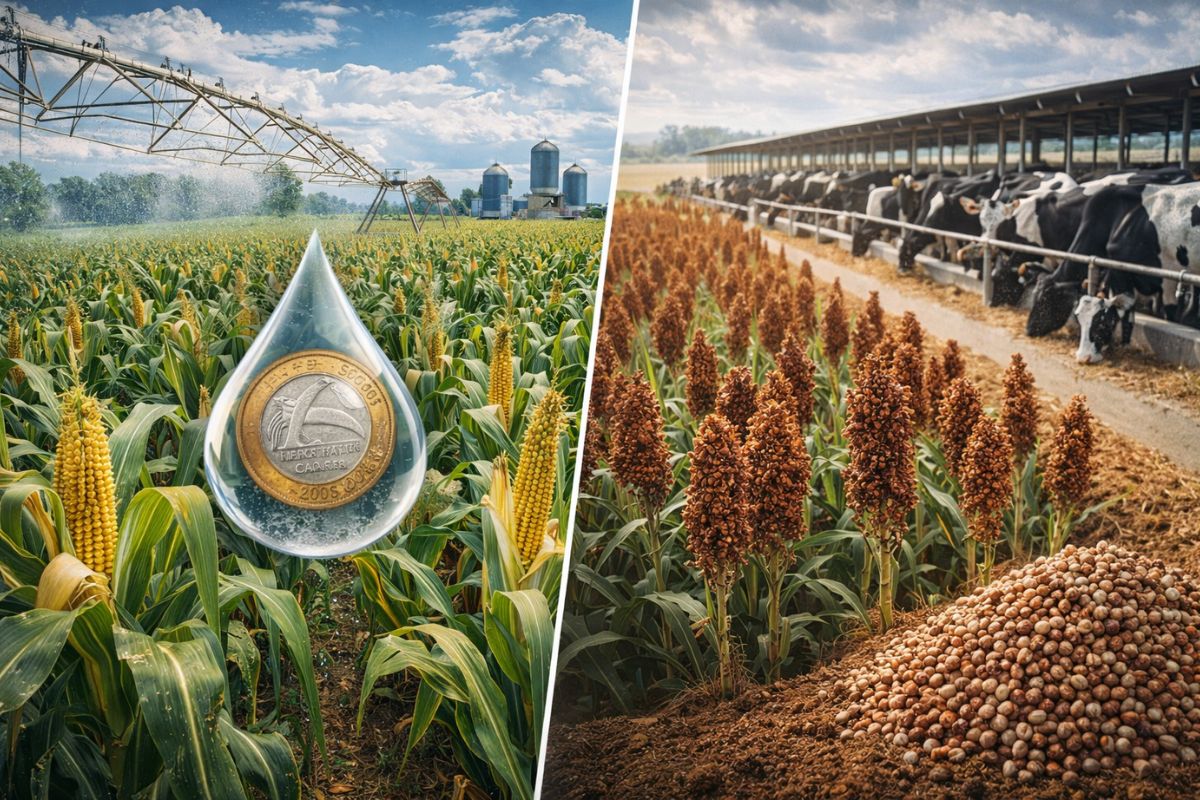
While corn requires rain and is expensive, sorghum produces almost the same volume per hectare at a cost up to 80% lower and uses less water, and it is revolutionizing dairy farming in the Triângulo Mineiro, where producers save hundreds of reais per hectare.
-
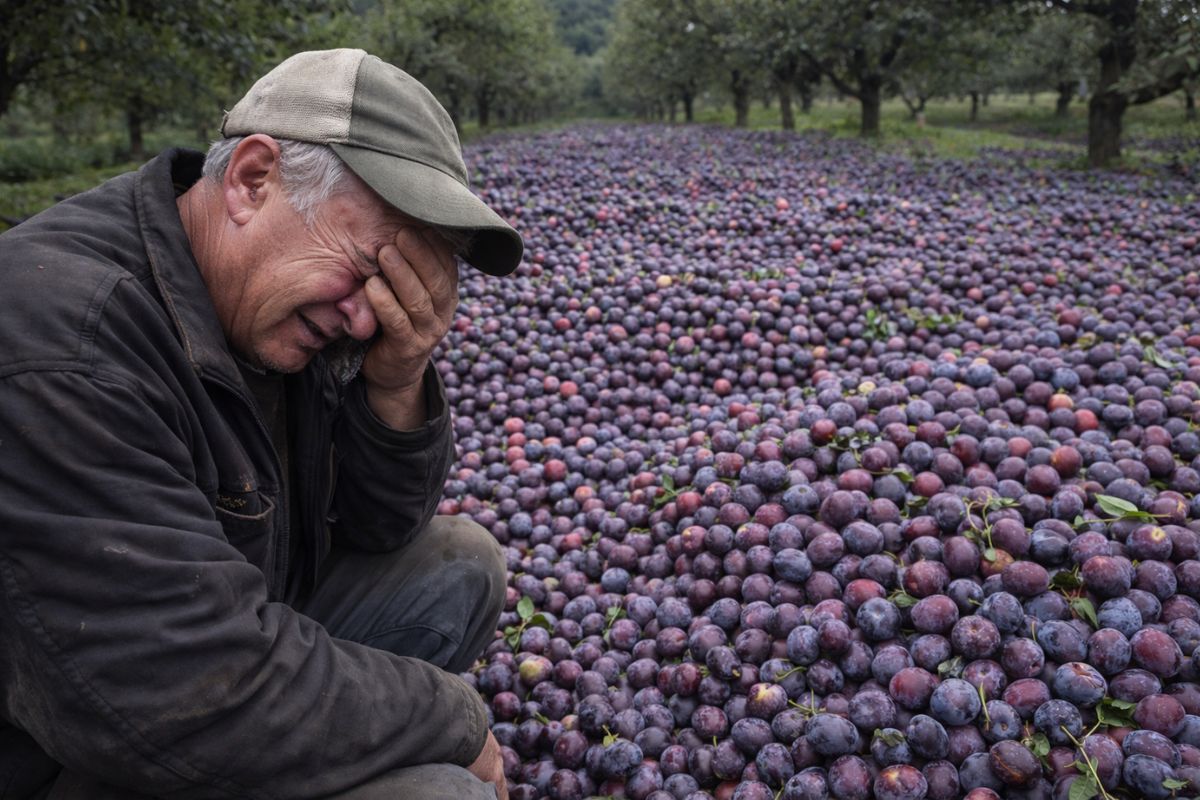
A rural producer from Urubici cries as he shows 50 tons of plums thrown on the ground because no one wanted to buy them, and in desperation, he records a video asking anyone to come to the property to pick the fruits before they rot.
-
Unable to pass through Hormuz, Brazil activated a plan B that uses Turkey as a gateway to the Middle East: the route through Gibraltar and the Mediterranean is longer and more expensive but ensures that chicken, beef, and corn continue to reach Arab markets.


In this model, a broiler chicken can reach around 5 pounds in 38 days, double the speed of a pasture-raised animal. The price is low, the scale is brutal, but quality pays the price. The meat tends to be softer, less flavorful, and with much lower omega-3 content compared to free-range chickens.
The extremely high density of birds also increases the risk of diseases and forces the frequent use of antibiotics in the water or directly on the birds, which increasingly bothers consumers.
In this scenario, pasture-raised chickens enter as a kind of “premium line” in poultry farming. They grow more slowly, cost more, require more work, but deliver a very different product.
Eggs with darker yolks, firmer meat, a sense of “real food,” and a story behind the label.
From Confinement to Green Grass: The Rise of Pasture-Raised Chickens

From Oregon to North Carolina, passing through Texas, a new type of farm has begun to occupy space: properties that work almost exclusively with pasture-raised chickens.
Today, the United States has around 750 officially recognized farms in this model, and in just five years that number has grown over 60 percent in various states.
Worldwide, it is estimated there are about 15,000 pasture-raised chicken farms in countries such as the United States, Canada, Australia, Germany, and Brazil.
In American states like Iowa, Pennsylvania, and California, large properties can manage combined flocks of nearly 2 million birds in this format.
The logic is simple in theory. Instead of chickens locked in a dark barn, chickens roam freely in open fields, scratching at grass, insects, and worms. In practice, however, the operation is much more complex than it seems to those who only see idyllic images on social media.
How a Modern Pasture-Raised Chicken Farm Works
The heart of the system is the mobile barns. These are structures on wheels that function as “chicken houses” that move across the field. Every day, or every few days, the producer pulls the barn to a new grassy area, reorganizes feeders and waterers, and lets the pasture-raised chickens explore another part of the area.
This constant movement prevents the birds from eating already trampled and dirty grass, reduces contact with feces, minimizes foot problems, and lowers the risk of digestive diseases.
At the same time, the manure becomes high-value natural fertilizer, regenerating the pasture and creating a closed cycle where the chicken feeds the land and the land feeds the chicken.
On average, half a hectare of land can comfortably sustain about 500 to 600 pasture-raised chickens. It is enough space for them to scratch the soil, eat grass, run, and spread without destroying the environment.
The producer also sets up mobile electric fences to control the movement of the flocks and keep predators away.
From Egg to Chick: Selection Starting in the Incubator
Everything starts with egg selection. To have strong flocks, the producer chooses uniform-sized eggs from healthy, well-nourished hens. These eggs go to modern incubators, with temperature around 37.5 degrees and humidity between 50 and 60 percent.
When the chicks hatch, no one throws them straight into the pasture. The first stop is a heated brooder. There, heat lamps keep the environment between 32 and 34 degrees, the bedding is frequently changed to fresh straw or sawdust, the water is clean, and the feed is light and easy to digest.
The first six weeks are the test of fire for pasture-raised chickens. A burnt-out bulb or a colder night can wipe out half of a batch.
During this phase, the producer sleeps little, observes the chick’s behavior, checks if all are drinking water and eating, and changes the bedding as often as necessary. If the chick can’t handle this start, it won’t survive in the field later.
The Time to Release in the Field: Chicken Becomes Real Chicken
When the animals reach about five to six weeks and have a more stable immune system, the second phase begins: the pasture-raised chickens finally get to know the pasture.
On the first day, the flock seems a bit lost. Within minutes, instinct takes over. They start scratching the ground, pecking at leaves, chasing insects, and running in groups.
From then on, the feeding is divided: part comes from grass, insects, and worms, and part comes from a protein-rich feed with corn, soy, and added vitamins.
During the day, pasture-raised chickens move freely across the terrain. In the late afternoon, the producer gathers the flock back inside the mobile barn. It is there that they sleep protected from foxes, wild dogs, and birds of prey, as well as from the cold of the night or sudden storms.
Weather, Diseases, and Predators: Where Romanticism Ends and Work Begins
Living outdoors is healthy, but it comes with risks. Extreme weather is a direct enemy of pasture-raised chickens. In states like Texas, three-day heatwaves with temperatures above 40 degrees have already been enough to kill over 150 birds on a single farm, even with full water troughs and daily barn movement.
On the other hand, heavy rains turn the ground into mud, leaving their feet cold and paving the way for infections. The producer spends the day balancing shade, ventilation, drainage, and barn positioning.
Predators are also part of the equation. Foxes, dogs, hawks, and other animals keep a close eye on flocks of pasture-raised chickens scattered across the field. Therefore, electric fences, daily patrols, and constant attention become part of the routine.
Diseases are another sensitive point. Even with lower density than in industrial farms, an uncontrolled outbreak can wipe out the flock.
To reduce antibiotic use, many producers focus on strict biosecurity, barn disinfection, water quality control, and even using natural mixtures with garlic, ginger, and herbs in feed to boost the flock’s immunity.
Dark Yolk Eggs, Organic Certification, and Traceability

When the hens reach five to six months of age, the most awaited phase begins: the laying cycle of pasture-raised chickens.
Inside the barn, the producer sets up wooden nests in quieter corners, filled with clean straw. The birds naturally seek these spaces to lay, without the need for artificial light or aggressive stimuli.
A good hen can produce 250 to 300 eggs per year, as long as she has a balanced diet and stable environment.
The eggs from pasture-raised chickens stand out for their darker yolk and are considered more nutritious compared to eggs from industrial farms.
Every day, the producer collects the eggs manually, separating the cracked, overly dirty, or too small ones. The selected ones go to cold chambers between 7 and 13 degrees and receive traceability labels.
When the farm meets all requirements, these eggs can also receive the USDA Organic seal, assuring consumers that they came from pasture-raised chickens within controlled standards.
From Field to Slaughterhouse: Speed, Cold, and Precision
Meat is also a central piece of the equation. Globally, chicken consumption exceeds 130 million tons per year, and in the United States, the average per person is around 51 kilograms per year, surpassing beef and pork.
In this ocean of cheap meat, the product from pasture-raised chickens enters as a niche option, albeit a valued one.
Depending on the breed, pasture-raised broiler chickens reach market weight between 8 and 12 weeks, at a slower pace than industrial ones. The result is firmer meat, a different texture, and a more intense flavor, something many American consumers deliberately seek.
When the birds reach the ideal weight, usually between 1.8 and 2.5 kilograms, the producer organizes the slaughter. The catching usually happens early in the morning or late in the afternoon when the weather is cooler.
Each chicken is carefully lifted, placed in ventilated boxes, and loaded into specialized trucks.
At the slaughterhouse, time is of the essence. The entire process must happen within two hours from the farm’s departure. The birds undergo stunning, bleeding, plucking, evisceration, and complete washing.
The carcass then enters a quick cooling system until it is below 4 degrees, which reduces bacterial growth and preserves quality.
The chickens can be sold whole or in specific cuts such as breast, thigh, wing, and fillet. Each piece is weighed accurately, packaged, and labeled with origin, weight, and expiration date, and then sent to cold chambers, supermarkets, restaurants, and specialty butcher shops.
Profits Up to 50 Percent Higher, But No Weekends
If so much headache didn’t pay off, no one would insist on the model. The numbers add up because pasture-raised chickens can command much higher prices in the market.
In some places in the United States, a pound of industrial chicken sells for about 50 cents, while pasture-raised products can cost up to five times more.
The same applies to eggs. The common box competes on price in the supermarket aisle. Meanwhile, the box with pasture-raised eggs, traceable and often with an organic seal, goes to the premium shelf, in healthy food stores, cooperatives, or restaurant menus that highlight the farm’s story.
For this reason, profits can be 30 to 50 percent higher than in industrial production, even with fewer birds per area. It’s a model that trades bulk volume for added value.
However, there’s no free lunch. To keep the flocks healthy, control the weather, move barns, observe behavior, and ensure standards, the routine rarely rests.
On a farm in South Texas, for instance, half a hectare accommodates about 500 pasture-raised chickens. During the summer, with temperatures between 38 and 40 degrees, the barn needs to be moved every day.
If the producer relaxes for a few hours, the heat or rain can cause irreversible losses. This is not a business for those who want to push a button and manage from a distance. It’s for those who accept living at the rhythm of the countryside.
Consumers in Line and a Question That Won’t Be Silenced
At the end of the line, all this machinery exists only because there are people willing to pay. Consumers line up to buy meat and eggs from pasture-raised chickens, even when the price is up to five times higher than the cheapest industrial chicken on the shelf.
They are not just buying protein. They are buying a story, animal welfare, flavor, and the idea of cleaner agriculture.
Behind each tray is the daily work of farmers who rise before the sun, measure temperature, move fences, walk through pastures, and personally care for thousands of birds.
Each egg with a dark yolk and each firmer breast carries the trace of a choice: to produce less, with more care, to sell better.
Knowing all of this, tell me straight: would you be willing to pay more to put meat and eggs from pasture-raised chickens on the table, or do you still prefer to stick with the cheapest industrial chicken on sale?









Eu estou produzindo ovos nesse formato aves soltas em pasto
Fui criada numa família rural, com aves soltas e suínos em chiqueiros grandes e amplos, além de horta e pomar. Leite direto do curral toda madrugada e queijo fresco. Tudo o que hoje é mais caro, sustentável, natural e saudável eu já apreciava desde criança.
Aves criadas soltas tem carne mais tenta, as gemas são mais amarelas e firmes. Legumes e folhagem de horta orgânica tem sabor mais agradável. Tirar uma manga ou uma tangerina do pé ou até um abacaxi do solo são lembranças de tempos felizes. Hoje compro tudo o que posso orgânico e/ou de origem natural, e explico para minha filha o valor agregado.
Claro que pagaria, o sabor não se discute.