





 Português
  Inglês
  Espanhol
  5 min de leitura
  3 comentários


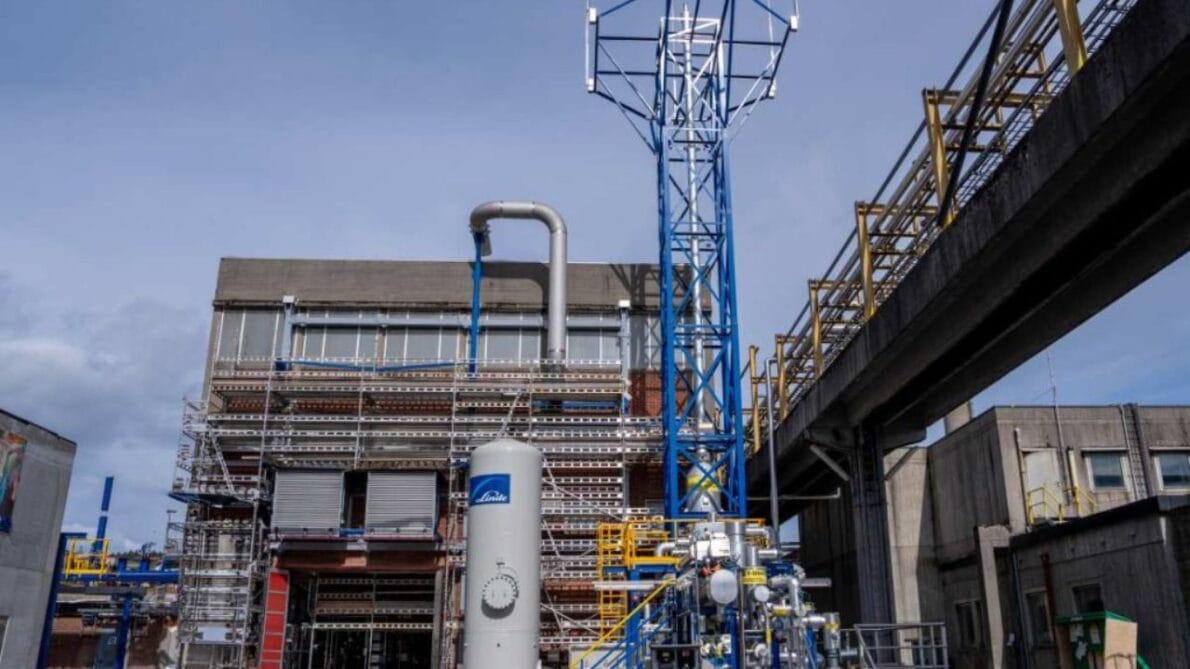

Yara’s New 24 MW Hydrogen Plant Uses Renewable Energy to Produce Hydrogen and Ammonia, Contributing to Sustainability and CO2 Reduction
The Norwegian Prime Minister, Jonas Gahr Støre, inaugurated the 24 MW renewable hydrogen plant at the Herøya Industrial Park, the largest of its kind currently operational in Europe. Hydrogen is produced through water electrolysis and renewable energy, replacing natural gas as the raw material and reducing CO2 emissions from the site by 41,000 tons annually.
Features of the Renewable Energy Project
Yara International inaugurated today the largest electrolyzer in Europe at the Herøya industrial park in Norway. Manufactured by the British company ITM Power, this 24 megawatt proton exchange membrane (PEM) electrolyzer was initially sold to Linde Engineering, which was involved in the complete design of the plant alongside Yara.
Since September, this electrolyzer has been producing up to ten tons of renewable hydrogen per day. Additionally, it manufactures fertilizer (ammonia) from renewable energies, also utilizing Carbon Capture and Storage (CCS) technology.
-
Renewable energy advances over protected areas in Brazil, and a survey by the Energy Transition Observatory reveals silent impacts that challenge environmental conservation and pressure sensitive traditional territories.

-
Rio Grande do Sul accelerates energy transition: State invests in renewable technologies and consolidates decarbonization strategies and pathways to attract billions in new industrial investments.

-
With 160,000 m² of collectors, an area larger than 20 football fields, Silkeborg, in Denmark, hosts a solar thermal plant that heats 19,500 homes and could become the largest solar heating plant in the world.

-
A study reveals the expansion of renewable energy procurement in Brazil and shows how companies are taking advantage of opportunities to reduce expenses, ensure energy efficiency, and strengthen strategic environmental commitments.


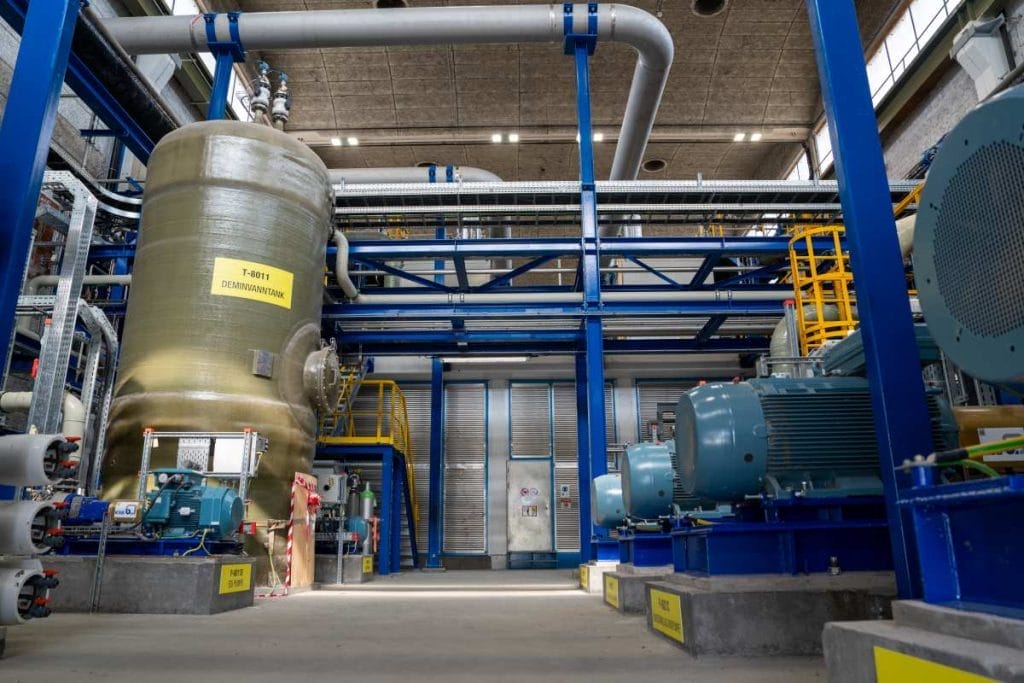
Energy Project Details
- Site Area: Approximately 1.5 square kilometers.
- Annual Fertilizer Production: 3 million tons.
- Electrolyzer Production Capacity: 24 megawatts.
- Daily Hydrogen Production: Up to 10 tons.
- Annual Ammonia Production: 20,000 tons.
- CO2 Emission Reduction: 40,000 tons annually.
The inauguration of the 24 MW electrolyzer is a significant milestone for Yara and for the decarbonization of the value chains in the food industry, shipping, and other energy-intensive sectors.
Words from the President and CEO of Yara
Hydrogen is produced through the electrolysis of water using renewable energies, replacing natural gas as the raw material, which allows for a reduction of approximately 40,000 tons of annual CO2 emissions on-site.
The fertilizers produced and supplied with a low CO2 footprint will form part of a new portfolio called Yara Climate Choice. These solutions not only benefit crops but also contribute to the decarbonization of the food value chain.
In addition to the fertilizers produced via water electrolysis and renewable energies, Yara will also include low-carbon ammonia-based fertilizers in its portfolio, produced with the help of carbon capture and storage (CCS).
CCS as Key to the Paris Agreement
Renewable ammonia is a key piece in the decarbonization puzzle, but industrial scaling takes time. The year 2030 is approaching, so we are also working on low-carbon ammonia production with CCS to facilitate the hydrogen economy and develop emerging markets for low-emission ammonia.
Statements from the CEO of Yara Clean Ammonia
In 2023, Yara signed a CO2 transport and storage agreement with Northern Lights, the world’s first cross-border CCS agreement. Yara aims to reduce its annual CO2 emissions from ammonia production at Yara Sluiskil in the Netherlands by 800,000 tons. Furthermore, Yara is evaluating one or two low-carbon ammonia production projects with CCS in the United States.
Holsether added that “the green transformation requires investments, reliable framework conditions, a massive expansion of renewable energies and grids, continually developing technology, and a mature market where supply and demand develop in parallel. Companies that take these challenges seriously will have a competitive advantage.”
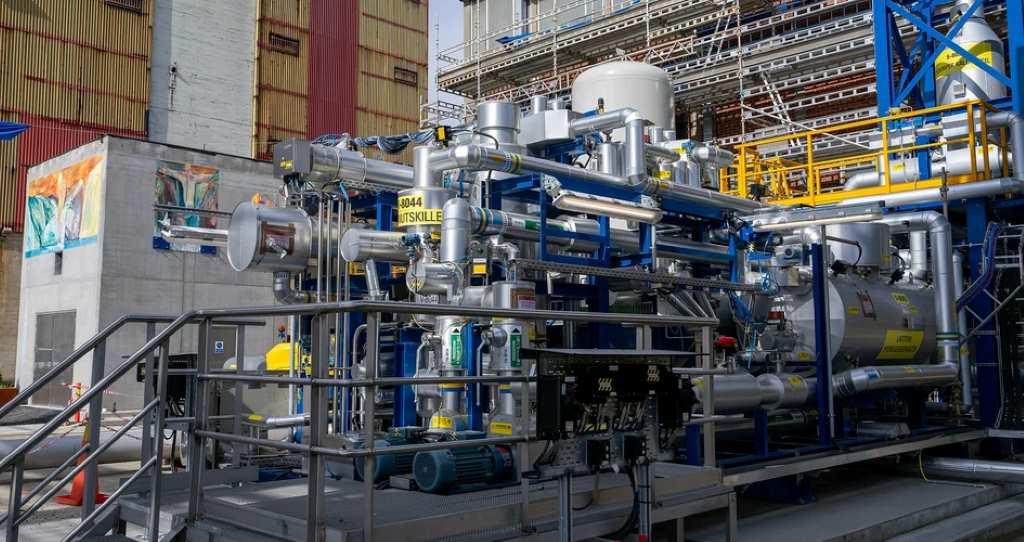
Technical Details of the Energy Electrolyzer
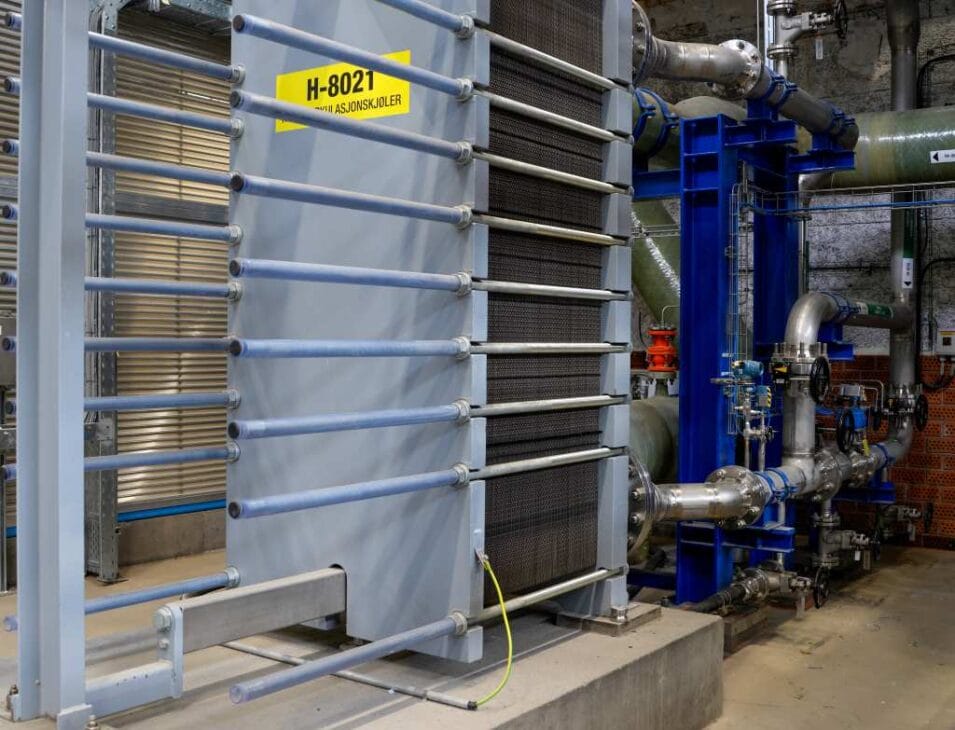
- Electrolyzer: 24 MW PEM Electrolyzer by ITM Power (United Kingdom)
- Capacity: Hydrogen >99 percent / 30 bar
- Application: Ammonia Production
- Hydrogen Capacity: 10 tons per day
- Status: Stable production, not yet at full capacity
- Ammonia Production: 20,000 tons per year
- CO2 Emission Avoidance: 40,000 tons per year
- Design: Linde Engineering, Dresden
This project marks a significant advance towards sustainability and carbon emission reduction, aligning with the goals of the Paris Agreement and positioning Yara as a leader in the energy transition and sustainable fertilizer production.

Via www.yara.com
How an Energy Electrolyzer Works
What Is an Energy Electrolyzer?
An electrolyzer is a machine that uses electricity to split water into two parts: hydrogen and oxygen. It’s like a magic machine that takes water and separates it into its smaller parts.
How Does an Energy Electrolyzer Work?
Imagine you have a battery, a glass of water, and two pencils. Here’s roughly how it works:
- Water and Electricity: In the electrolyzer, water (H2O) and electricity are used. Water is made up of small parts called molecules, and each water molecule has two parts of hydrogen (H) and one part of oxygen (O).
- Two Pencils in Water: Now, imagine we place two pencils in the water. One is connected to the positive side of the battery (the anode) and the other to the negative side (the cathode).
- We Turn on the Battery: When we turn on the battery, electricity starts flowing through the water. This electricity has enough energy to separate the water molecules into hydrogen and oxygen.
- Gas Bubbles: As electricity passes through the water, bubbles begin to form on the pencils. On the pencil connected to the negative side (the cathode), hydrogen bubbles form. On the pencil connected to the positive side (the anode), oxygen bubbles form.
- Collecting Hydrogen and Oxygen: The bubbles rise to the surface of the water, and we can collect the hydrogen and oxygen in different containers. Now we have separated hydrogen and oxygen.
What Is This Used For?
The hydrogen we obtain can be used as a very clean type of fuel. When we burn hydrogen to get energy, it only produces water and does not pollute the air. This is very good for the environment because it does not produce gases that cause climate change.
What Can Be Powered with 24 MW of Energy?
A 24 megawatt (MW) electrolyzer is a fairly powerful facility, and the amount of energy it can produce or consume can be put in perspective in various ways. Here are some comparisons to better understand what can be powered with 24 MW:
Industrial Energy Applications
- Production Plants: A medium to large production plant in the manufacturing industry could operate with a capacity of 24 MW. This includes car factories, chemical plants, and large food processing facilities.
- Electrolysis for Hydrogen Production: A 24 MW electrolyzer can produce up to 10 tons of hydrogen per day, which is enough to power fleets of hydrogen vehicles, industrial facilities that use hydrogen as a raw material or energy source, and ammonia plants.
Household Energy
- Homes: Approximately, 24 MW of capacity could provide energy for around 16,000 to 20,000 homes in Europe, considering an average consumption of 1.2 to 1.5 kilowatts per home (this number may vary depending on the energy efficiency of the homes and the climate of the region).
Energy Transport
- Electric Vehicles: This amount of energy could charge about 240 electric vehicles simultaneously, assuming a charging capacity of 100 kW per fast-charging station.
- Electric Trains: A high-speed electric train may require between 6 and 12 MW to operate. Therefore, 24 MW could power between 2 and 4 high-speed electric trains simultaneously.
Public Infrastructure
- Public Buildings: A small city or a set of government buildings, hospitals, and schools could be powered with 24 MW, depending on their size and specific energy consumption.










Apesar dos bons questionamentos pertinentes dos participantes desse chat, quero focar na boa didática da equipe que produziu esse artigo: ao final do mesmo, trouxe uma explicação do funcionamento e da aplicação dessa fonte de energia, numa linguagem que pose ser entendida por um leigo, que é o meu caso.
Somente água não se decompõe em oxigênio e hidrogênio, é necessário um componente iônico, por exemplo o sal de cozinha (NaCl cloreto de s****), vai produzir hidrogênio, gás cloro e soda cáustica.
Não explica o essencial: a eletricidade é obtida de qual fonte renovável? (Resíduos, hidroeletricidade, eólica, fotovoltaica?) Sem isso ficamos como **** acreditando nas promessas da empresa.