





 Portuguese
  English
  Spanish
  3 min of reading
  0 comments


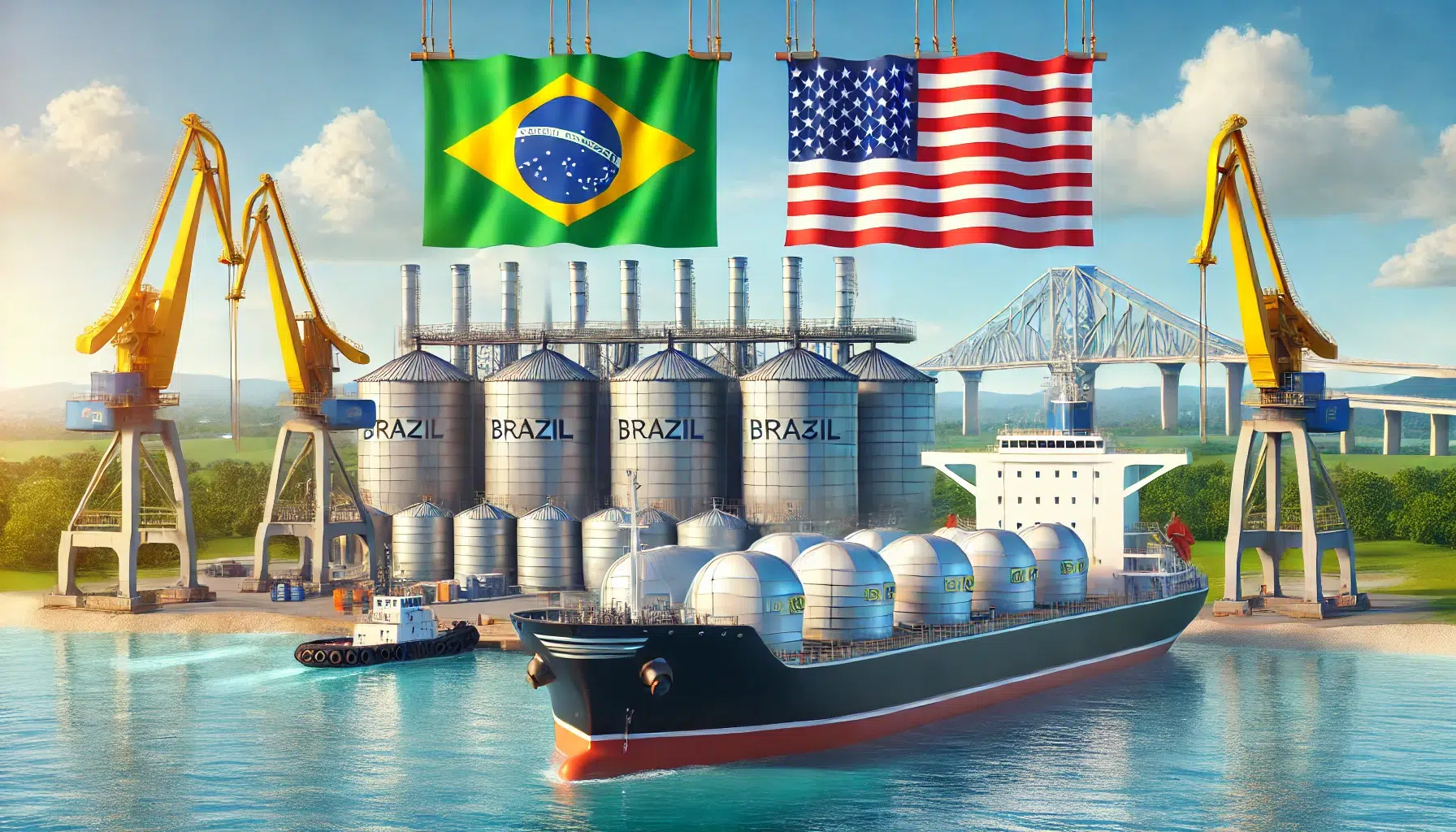
Understand the Changes in Ethanol Trade Between Brazil and the USA!
This article explores the most relevant data on the export and import of this biofuel, between Brazil and the United States.
Furthermore, we analyze the trade challenges, the tariffs imposed, and how these issues can modify the global energy landscape. Thus, you will understand how the trade policies of both countries influence the energy market and the production of biofuels!
The Current Scenario of Ethanol Trade
The exchange of ethanol between Brazil and the United States has stood out in the energy sector in 2024.
-
Piauí will produce a new fuel that replaces diesel without needing to change anything in the truck’s engine and reduces pollutant gas emissions by half: truck drivers from all over the Northeast are already celebrating the news that will arrive later this decade.

-
A new Brazilian shopping center worth R$ 400 million will be built in an area equivalent to more than 4 football fields, featuring 90 stores, 5 cinemas, a supermarket, a college, and parking for 1,700 cars, potentially generating 3,000 jobs.

-
Larger than entire cities in Brazil: BYD is building a 4.6 km² complex in Bahia with a capacity for 600,000 vehicles per year, but the discovery of 163 workers in conditions analogous to slavery has shaken the entire project.

-
With an investment of R$ 612 million, a capacity to process 1.2 million liters of milk per day, Piracanjuba inaugurates a mega cheese factory that increases national production, reduces dependence on imports, and repositions Brazil on the global dairy map.


Brazil has reinforced its position as one of the largest ethanol exporters to the USA, while also continuing to acquire significant amounts of the biofuel produced in the North American country.
As a result, the tariffs applied to ethanol and the trade negotiations in this market become fundamental factors in defining this economic scenario.
Since 2017, Brazil and the United States have debated the tariffs imposed on ethanol, varying between periods of tax reductions and increases.
In February 2023, the Brazilian government reestablished the 18% tariff on ethanol imported from the USA, directly impacting the trade relations between the two nations.
Brazilian Ethanol Exports to the USA
During 2024, Brazil exported approximately 313,341 cubic meters of ethanol to the United States.
This trade generated approximately US$ 181.8 million in revenue.
The USA remains the primary destination market for Brazilian ethanol, driven by the growing demand for renewable fuels.
The National Agency of Petroleum, Natural Gas and Biofuels (ANP) points to a 10% increase in exports compared to the previous year.
This advance is largely due to Brazilian government incentives to promote sustainable energy sources.
The preference for Brazilian ethanol is due to its production from sugarcane, whose energy efficiency is superior to that of corn ethanol used in the United States.
Thus, Brazil consolidates itself as a strategic supplier for the North American market.
Brazil and the Import of North American Ethanol
On the other hand, Brazil imported around 192 million liters of biofuel from the USA in 2024, amounting to US$ 50.5 million.
This volume primarily meets the demand of the Northeast region of Brazil, where domestic ethanol production cannot fully satisfy consumption.
The import of North American ethanol follows the fluctuation of international prices and becomes essential during periods of off-season for sugarcane in Brazil.
S&P Global Platts, a renowned energy consultancy, highlighted that the increase in imports of US ethanol occurred especially between March and June 2024, when Brazil experiences reduced domestic supply.
This situation reveals Brazil’s degree of dependence on external supply during certain periods of the year.
Tariffs and Their Impacts on the Biofuel Market
The USA announced a possible increase in tariffs on Brazilian renewable fuel, which could directly impact national exports.
Currently, the USA imposes a 2.5% tariff, while Brazil maintains an 18% tariff on North American ethanol.
The Brazilian Minister of Energy and Mining warned that an increase in these rates could affect bilateral trade relations.
Thus, he advocates for a review of tariffs on Brazilian sugar, which faces obstacles in exportation to the USA due to existing restrictions.
Since November 2023, representatives from both countries have been participating in bilateral meetings to discuss possible tariff adjustments and seek an agreement that better balances trade relations.
Information from the Ministry of Economy indicates that new rounds of negotiations are planned for May 2024.
Perspectives for the Commercialization between Brazil and the USA
The growing pursuit of renewable energies and the constant changes in trade policies emphasize the relevance of the biofuel market for both Brazil and the United States.
The future of this sector will depend on well-defined strategies and the continuation of trade negotiations between the two countries.
A study by the International Sugar Organization (ISO), released in January 2024, predicts that global demand for ethanol will increase by 12% over the next five years.
This scenario demonstrates the importance of ensuring stability and predictability in trade relations between Brazil and the USA to strengthen competitiveness in the global market.








Seja o primeiro a reagir!