





 Portuguese
  English
  Spanish
  4 min of reading
  1 comment


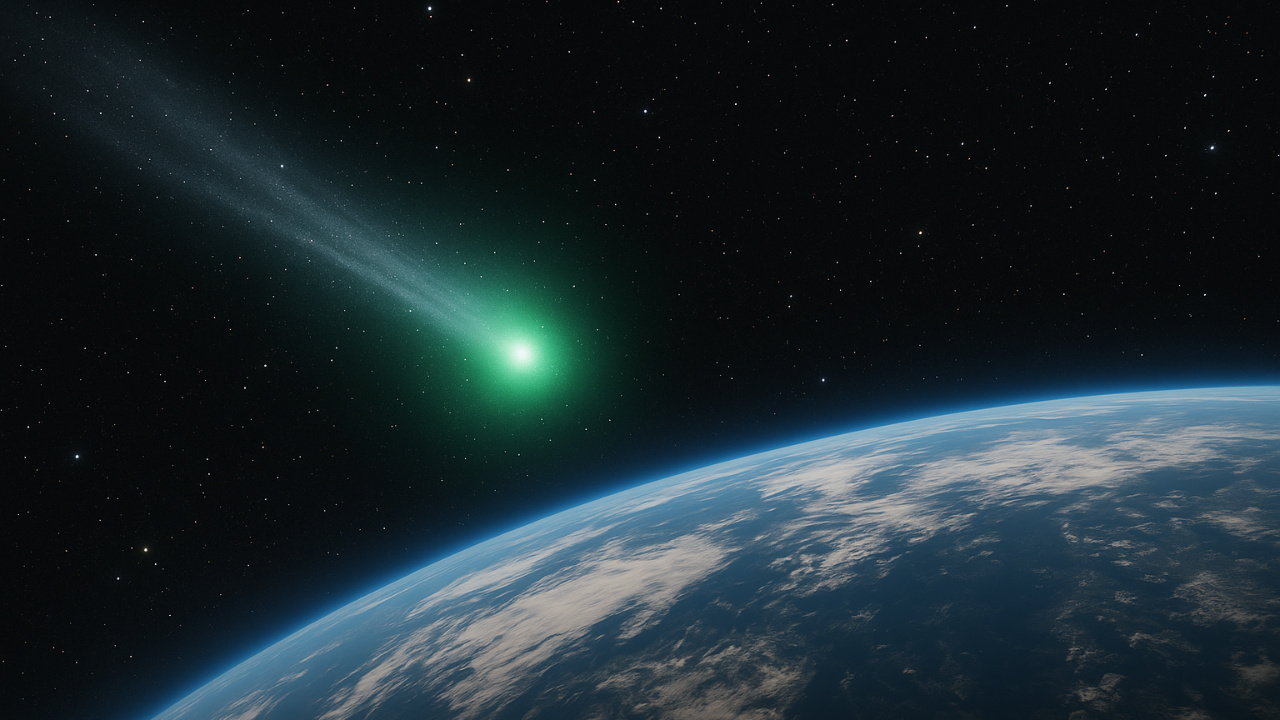


Comet 3I/ATLAS Approaches Earth This Month, Is There Any Risk? Understand the Safe Trajectory of the Interstellar Body.
As Comet 3I/ATLAS approaches Earth this month, is there any risk? This is the question that drives the scientific community and sparks curiosity on social media.
The phenomenon involves a rare interstellar visitor, observed by agencies such as NASA and ESA, which will reach its closest distance to the planet on December 19.
Scientists are monitoring the object using space and ground-based telescopes to understand what it is, who is studying it, when the approach occurs, and where the event becomes visible.
-
Iran enters the center of a climate alert after the war emitted 5.6 million tons of CO2 in two weeks, surpassing the annual pollution of entire countries.

-
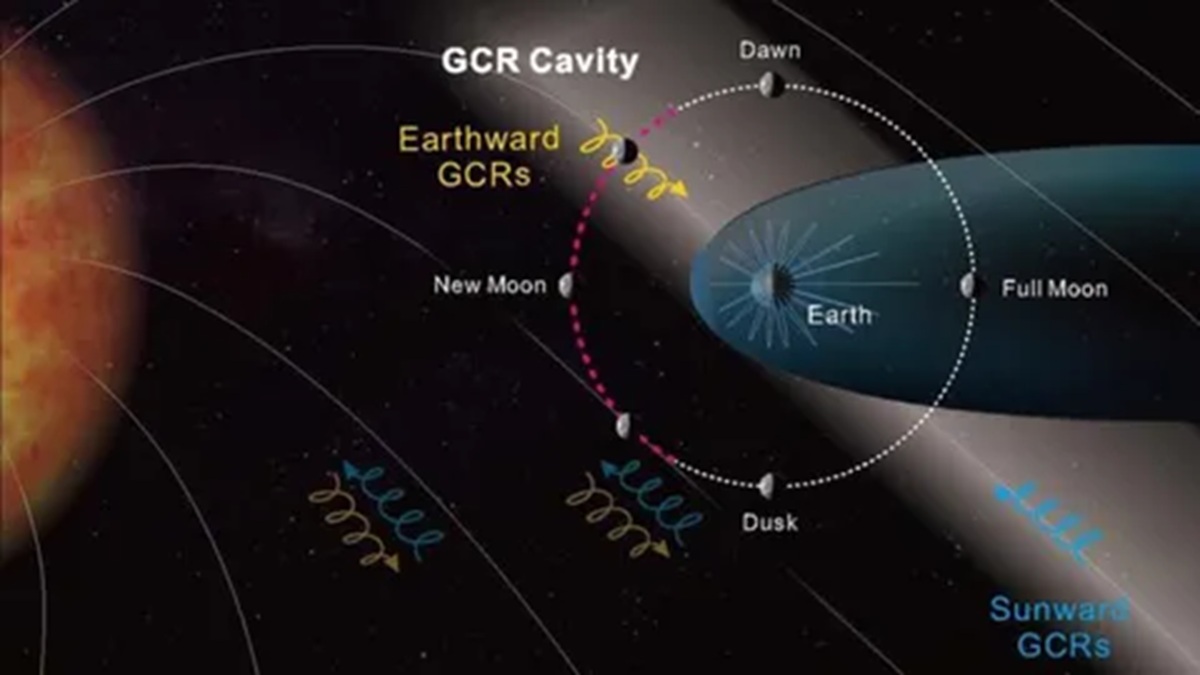
Lunar exploration may change after a Chinese probe finds a “cavity” of radiation that reduces the impact on astronauts by up to 20% at certain times on the Moon.
-
Artemis 2 sends four astronauts on a historic mission to the Moon after 50 years, with a launch on April 1 and a record flight to the far side of the Earth’s natural satellite.
-
Scientists drilled 523 meters of ice in Antarctica with water at 75 degrees and found 218 meters of sediments that prove that where there is now half a kilometer of ice, there was once an open ocean millions of years ago.


How it behaves in its trajectory and why the passage sparks so much interest, even though it poses no threat to Earth.
After All, Does Comet 3I/ATLAS Approaching Earth This Month Pose Any Risk?
The response from experts is clear: there is no risk at all.
Although alarmist speculation circulates on social media, astronomers explain that 3I/ATLAS will maintain a safe distance of about 270 million kilometers, nearly double the average separation between Earth and the Sun.
Therefore, even with the closest approach, there is no possibility of impact or damage to the planet.
A Rare and Valuable Interstellar Visitor for Science
Is there any risk as Comet 3I/ATLAS approaches Earth this month? The question arises because it is not a common object.
3I/ATLAS is only the third interstellar visitor ever identified in the Solar System, following in the footsteps of 1I/’Oumuamua and 2I/Borisov.
Initially detected in July under the temporary name A11pl3Z, it was quickly classified as an interstellar comet.
The next day, it received the designations C/2025 N1 (ATLAS) and 3I/ATLAS, confirming its trajectory coming from outside the Sun’s gravitational influence.
Preliminary research indicates that this traveler may be about seven billion years old, possibly older than the Solar System itself, estimated at 4.6 billion years.
This makes its passage a unique scientific opportunity to investigate the origin of comets in other regions of the Milky Way.
Recent Discoveries: From “Bizarre” Composition to Ice Volcanoes
Since its detection, the comet has yielded surprising discoveries.
The presence of atomic nickel attracted attention and fueled theories about a supposed alien technological origin—an idea rejected by the scientific community and dismissed by NASA.
The SPHEREx mission, launched by NASA to map the sky in infrared, identified carbon dioxide in the greenish coma of the object, which extends about 350,000 kilometers.
It also developed an anti-tail, a tail directed away from the Sun, recorded by ground-based telescopes.
Other missions, such as Juno, Europa Clipper, and JUICE, have been utilized to study the interstellar visitor. Recent observations even indicate the presence of active “ice volcanoes” on its surface.
The object also emitted a radio signal while crossing half of its route through the Solar System, which prompted further studies.
The Journey Through the Solar System to the Approach with Earth
3I/ATLAS reached its perihelion, the closest point to the Sun, on October 29, after passing relatively close to Mars and being observed by spacecraft orbiting the planet.
After a few days overshadowed by solar glare, it became visible again and attracted attention for reports of color change and acceleration.
The supposed color change was debunked by scientists, and the acceleration was explained in recent studies.
Now, as Comet 3I/ATLAS approaches Earth this month, is there any risk? Science reaffirms that there is not.
The approach is merely a natural part of its hyperbolic trajectory, which does not anticipate a future return. After December 19, it will definitively leave the Solar System.
Why There Is No Collision Risk?
Astronomers are categorical:
“3I/ATLAS is not on a collision course with Earth.”
The orbital calculations accumulated by observatories around the world are consistent and confirm that the object poses no threat.
Its completely open trajectory reinforces that it is merely passing through.
A Scientific Opportunity, Not a Cause for Panic
As December approaches, the debate intensifies. However, the scientific consensus is firm: as Comet 3I/ATLAS approaches Earth this month, is there any risk? No, none.
Moreover, contrary to rumors, 3I/ATLAS offers a unique window to study materials from other parts of the Milky Way, expanding knowledge about planetary formation processes and the composition of distant stellar systems.
Thus, it is an astronomical spectacle, not a threat.







The out gassing is a concern that the trajectory can change it has changed ever so slightly but if it rotates to 32.4 degrees give or take then we are on the menu for one hell of a let’s get the vodka out n party likes it’s 1999
The other issue if this does not happen December 19th and 3iatlas continues on its merry way then fantastic Bon voyage the real deal is Apothis Friday 13 th April 2029 when this asteroid is due to skim our planet at 19000 miles above earth . I don’t buy that I think the angle of approach will be less plus feedback I got back from jolly in Pasadena n science space centre in uk is they don’t know what is trailing it . If it is a whole load of smaller debris there’s got to be a lot of objects entering earths atmosphere n causing a lot of devastation.
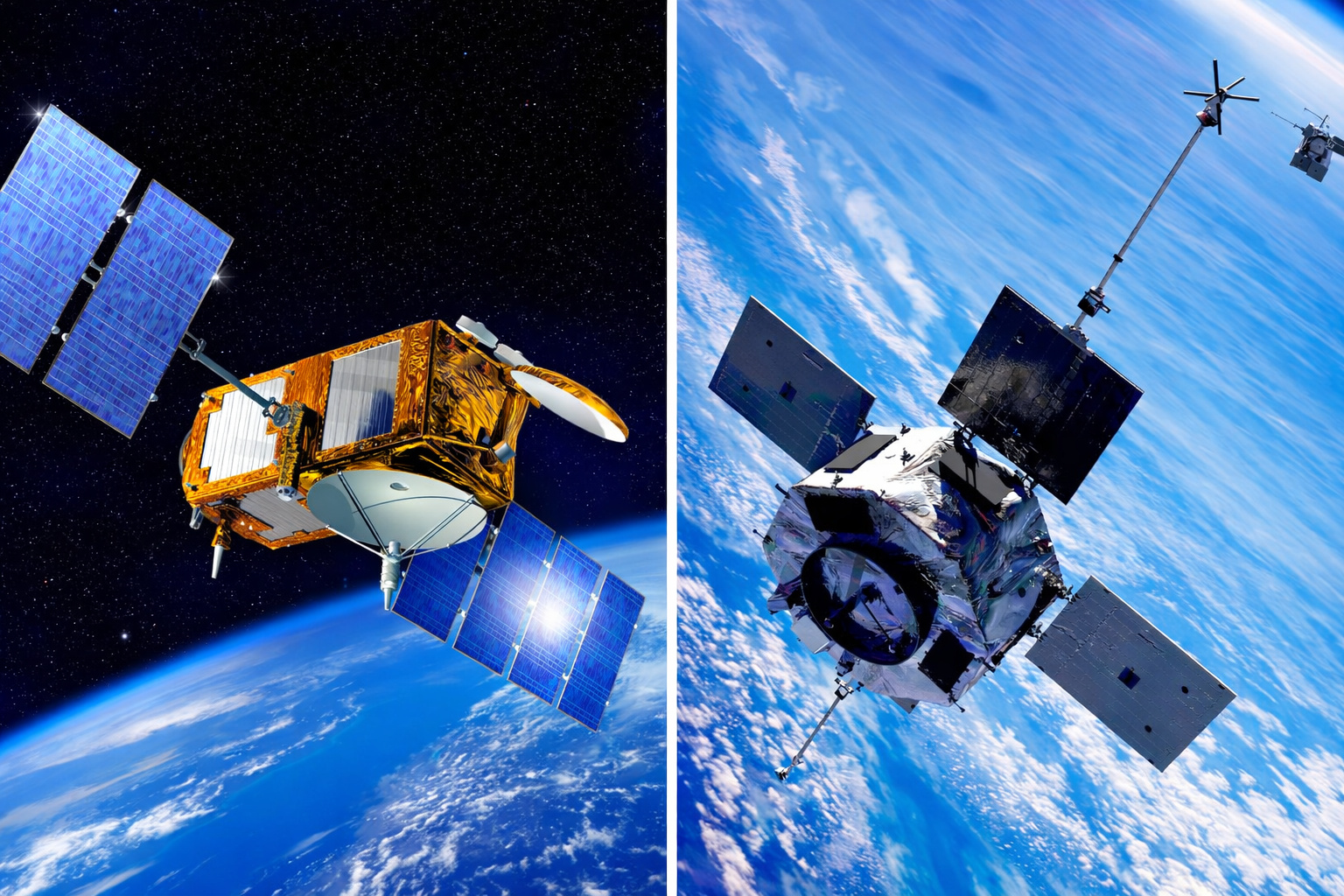
Certainly satellite black out is inevitable worryingly n I’ve broached this question military satellites with nuclear capabilities codes etc launch protocols I hope all these countries have shut down protocols to effectively shut down systems that could activate defensive strike retaliatory procedures .
I’ve had no confirmation from any source
But then again why would I I’m not a Harvard scientist just have a eager mind that’s looking outside normal possibilities
Anyways let’s hope for the best n all countries with tech military satellites flying around earth up
Their prepare for the worse x