





 English
  Francês
  Alemão
  Italiano
  Japonês
  Norueguês
  Portuguese
  Spanish
  5 min of reading
  0 comments


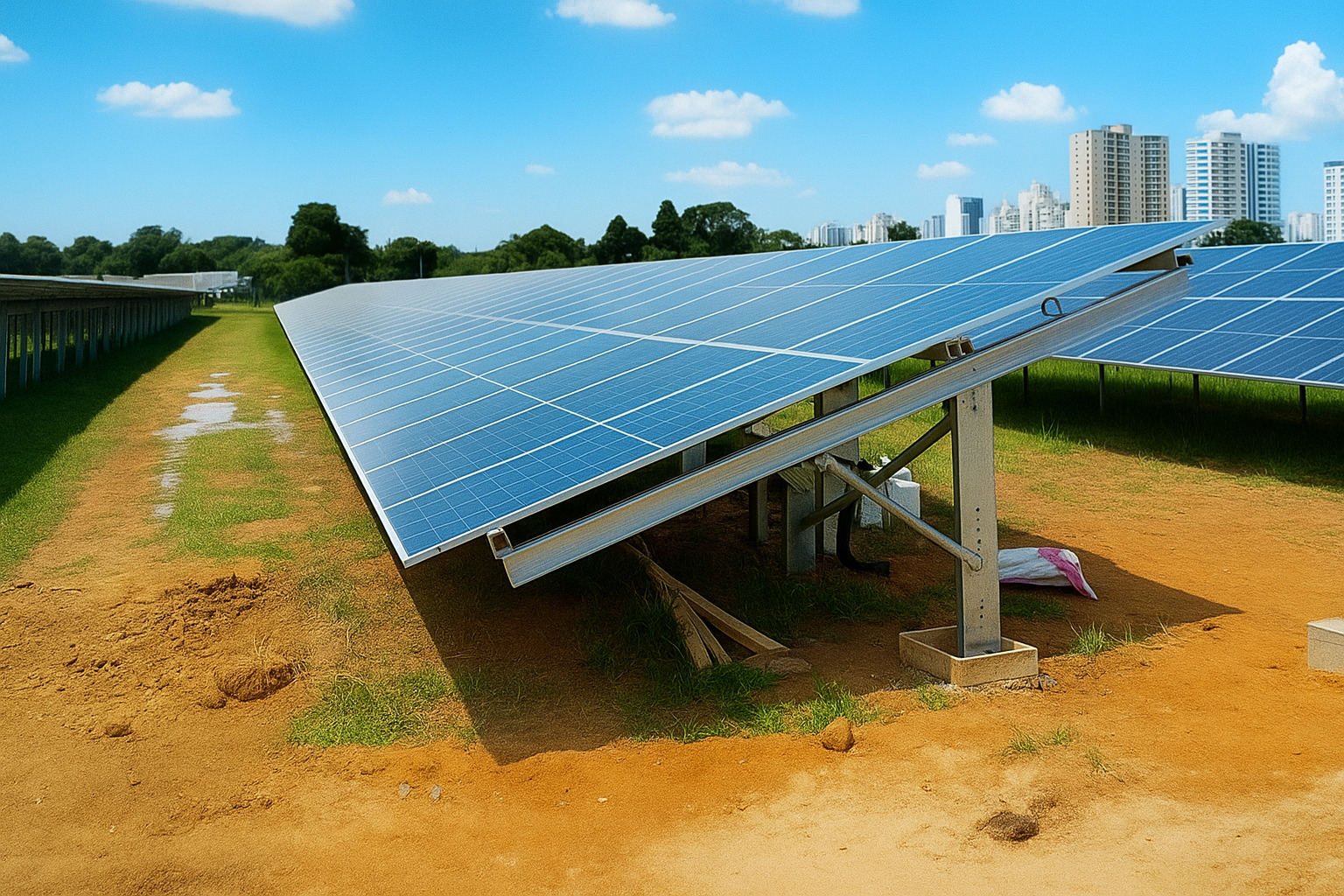
Boost Understanding About the Future of Distributed Generation and Discover How It Can Transform the Energy Sector in Brazil.
The distributed generation, especially from renewable sources, has been consolidating as one of the pillars for modernizing the Brazilian electricity system. Over the last few decades, technological, economic, and regulatory changes have paved the way for consumers to stop being just energy receivers and start producing it as well. Thus, the debate about the future of distributed generation has become essential to projecting the direction of the national energy matrix.
The Evolution of Distributed Generation in Brazil
Historically, Brazil structured its energy matrix based on large hydropower plants, often located far from consumption centers. However, starting in the 2000s, advances in photovoltaic, wind, and biomass technologies brought new possibilities.
Additionally, the creation of specific rules by the National Electric Energy Agency (ANEEL), such as Regulatory Resolution No. 482 of 2012, enabled the energy compensation model, encouraging the installation of distributed generation systems in residences, businesses, and industries.
-
Renewable energy advances over protected areas in Brazil, and a survey by the Energy Transition Observatory reveals silent impacts that challenge environmental conservation and pressure sensitive traditional territories.

-
Rio Grande do Sul accelerates energy transition: State invests in renewable technologies and consolidates decarbonization strategies and pathways to attract billions in new industrial investments.

-
With 160,000 m² of collectors, an area larger than 20 football fields, Silkeborg, in Denmark, hosts a solar thermal plant that heats 19,500 homes and could become the largest solar heating plant in the world.

-
A study reveals the expansion of renewable energy procurement in Brazil and shows how companies are taking advantage of opportunities to reduce expenses, ensure energy efficiency, and strengthen strategic environmental commitments.


This evolution did not occur in isolation. On the contrary, it resulted from global pressures for cleaner energy, international climate agreements, and greater environmental awareness from society.
Thus, Brazilian consumers began to see the possibility of reducing costs while contributing to sustainability.
On the other hand, even with advancements, regulatory and technical challenges still limit the maximum potential of this modality.
Therefore, discussing the future of this segment implies analyzing not only technological expansion but also how public policies can ensure a balance between the interests of consumers, utilities, and investors.
The Benefits and Transformations Brought by Distributed Generation
Among the main benefits, the reduction of electrical losses stands out.
As energy is generated close to consumption, there is less need for long journeys through transmission networks.
Moreover, this proximity strengthens the resilience of the system, especially in regions that suffer from frequent power outages.
Another relevant point is the encouragement of local economy.
Companies specialized in the installation and maintenance of photovoltaic and wind systems create jobs and stimulate the production chain.
Consequently, the socioeconomic impact expands, reaching small towns and rural communities.
Distributed generation also promotes the diversification of the energy matrix.
In a scenario of water crises, for example, it provides an important complement to traditional sources.
In this way, it contributes to the national energy security, reducing dependence on hydropower and thermoelectric plants.
However, it is necessary to recognize that this transition requires robust investments in technology and professional training.
Without proper planning, there is a risk of inequality in accessing the benefits, particularly for low-income families.
Furthermore, expanding distributed generation can help combat energy poverty. Remote areas and vulnerable communities, which often face challenges in accessing reliable energy, can benefit from decentralized systems. Local generation allows not only access but also an improvement in quality of life, opening doors to education, health, and economic development.
Thus, public and private initiatives have sought ways to enable distributed generation projects in less favored regions. Financial incentive programs, partnerships with NGOs, and government actions are essential to democratizing access and ensuring that the benefits are not restricted to large urban centers.
The Role of Congress and Public Policies
The National Congress plays a central role in directing energy policies in the country.
Thus, specialized committees discuss topics such as tax incentives, deadlines for adapting rules, and mechanisms to include vulnerable populations in accessing distributed generation.
In recent years, several public hearings have brought together representatives from the government, the private sector, and civil society.
These discussions have resulted in bills that seek to balance incentives for the sector’s growth with maintaining the financial stability of energy distributors.
Moreover, it is essential that regulation keeps pace with technological innovations.
For example, energy storage solutions, such as high-capacity batteries, can further amplify the benefits of distributed generation.
Therefore, laws and regulations need to be aligned with this evolution.
At the same time, the debate about the future of distributed generation involves environmental, economic, and social aspects.
Consequently, it requires a multidisciplinary approach to ensure that technological advancement brings positive results for society as a whole.
Another relevant point is the need for transparency in the relationship between consumer-generators and distributors. Common complaints, such as delays in connection and undue charges, undermine market trust. Therefore, improving processes, training involved agents, and strict oversight are imperative to strengthen the sector.
Perspectives for the Future
The future of distributed generation in Brazil tends to be promising, especially in light of the growing search for sustainable energy solutions.
With falling equipment prices, greater access to credit lines, and incentive policies, it is expected that more and more consumers will become producers of their own energy.
Additionally, integration with smart grids, capable of managing energy flow more efficiently, opens up space for a more dynamic and interactive consumption model.
Thus, it will be possible to adjust production and consumption in real time, optimizing resources and reducing costs.
However, to make this scenario a reality, it will be necessary to overcome barriers such as bureaucracy for installing systems, lack of qualified information for consumers, and the need for adequate infrastructure.
In this sense, the role of universities and research centers becomes essential to developing innovative solutions tailored to the Brazilian reality.
Finally, it is important to emphasize that the future of distributed generation is directly linked to the active participation of society.
The greater the awareness about the benefits and challenges of this model, the more consistent its evolution will be.
Therefore, the dialogue between government, the private sector, and citizens must remain constant, ensuring that development occurs in a balanced and inclusive manner.
Moreover, the growth of the distributed generation market can boost Brazil’s competitiveness in the international arena. With a stable regulatory environment and policies that encourage innovation, the country can become a reference in the production and export of renewable technologies. This would also contribute to sustainable economic development and the generation of skilled jobs in strategic sectors.










Seja o primeiro a reagir!