





 English
  Francês
  Alemão
  Italiano
  Japonês
  Norueguês
  Portuguese
  Spanish
  5 min of reading



Co-Founder of the Investor Hub, Ricardo Penha, Comments on Market Cycles and Predictions for the Oil Market
Curitiba, July 2022 – How did Europe become hostage to Putin? Can this energy crisis lead to an economic recession? What happens to stocks in this scenario? Will the East be able to drive down oil prices? Ricardo Penha, co-founder of the Investor Hub, discusses these points and how investors can become hostages to their emotions, setting aside their long-term investment strategies and plans.
Penha begins by explaining how market cycles influence asset prices. According to him, the market works like a pendulum, moving in waves, and in the last 10 years we have seen developed countries experience strong growth; risk assets performed well mainly due to low inflation and stimulative interest rates. “Even in Europe, the European Central Bank still has these stimulative interest rates despite extremely high inflation.”
It is important to understand this context because people often anchor their perceptions: the last 5 years, 10 years have been like this, but it does not necessarily mean the next years will follow suit. We are seeing a very challenging scenario over there, a situation of rising yields on European debt combined with falling prices of risk assets. Europe has the most delicate situation among developed countries.
-
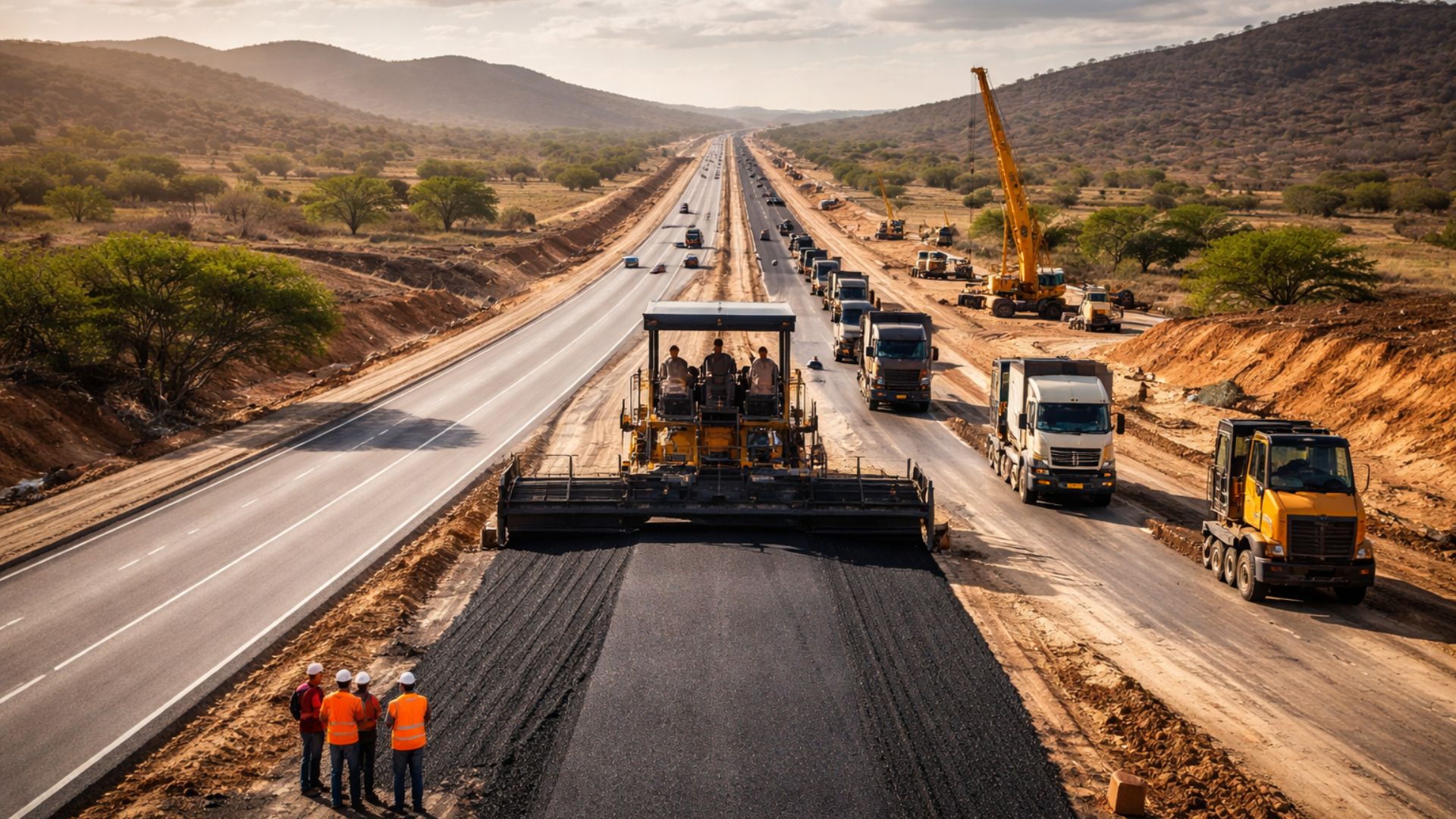
Government unlocks R$ 554 million for a highway that has been requested for decades and accelerates the duplication of BR.
-
Without bricks, without cement, and without endless construction: the cardboard house that is assembled in modules and can be moved.

-
Billions of barrels on the equatorial margin could lead Amapá to double its oil production in Brazil — the state aims to enter the route of companies in the Campos Basin, attract investments, and boost jobs and businesses in the oil and gas sector.
-
Without bricks, without cement, and without endless construction: the cardboard house that is assembled in modules and can be moved.
The issue with Russia is quite impactful, as the war with the Ukraine has added a layer of concern that cannot be dismissed, creating a deep energy crisis. And with all this context, combined with inflation, will the European Central Bank still raise interest rates?” he asks.
Impacts of the War in Europe
“I like the phrase: ‘there is no tragedy without warning’. Now we have all the media and influencers talking about recession and crisis, as agents have the characteristic of anticipating events, and this time it was no different; stock markets fell approximately 20% and only now are we discussing the problems. No one agrees with what Putin did, but we must acknowledge him as a great strategist; he has the ‘knife and the cheese in hand’ and has managed to put the West on its knees.
Europe, mistakenly – and here we don’t need to discuss what led Europe to depend so much on Russian energy – has become highly dependent on Putin; if he decides to cut off gas supplies entirely tomorrow, we would face a severe energy crisis, which would be accompanied by a recession,” he assesses.
To better understand and make the topic more tangible, Penha recalls that Brazil faced a similar problem in the 2000s with the energy crisis and rationing; the impact this had on GDP was very clear. “Mentioning rationing doesn’t help: energy is the economy and it will lead to recession,” he says. According to Penha, this is the worst-case scenario because if there is a sharp increase in energy prices, along with rising food and service costs, labor unions in Europe are demanding wage increases, which we haven’t seen in the last 20 years. “While the working class used to fight for 2%, 3% salary adjustments, now they are asking for 7% and 8%, indicating that the dynamics of the labor market may change.
What few people talk about is that in the West, in a Democracy, people have voices; if people are not satisfied, they will go online and take to the streets to protest. When you live in a dictatorship, in an autocratic system, it doesn’t matter; you won’t go out in the streets in Russia to protest against Putin,” he comments. “So, the ‘pain’ that an American or European may feel from the war is much less than that of a Russian or Chinese. No one in the West is willing to pay 10 times more for their electricity bill or 2 times more to fill their car. This situation causes social upheaval,” he analyzes.
About Oil: Is It Time to Buy or Not?
According to the specialist, it is difficult to “pin down” price precision. The way an iPhone is priced is different from the pricing of commodities. In commodities, the basic law of supply and demand applies. “In this case, we see very solid demand and a maintenance of supply. When looking at this equation, it seems obvious where the price asymmetry of the commodity lies. One of two things will happen: either we will see a large destruction of demand caused by high prices and recession, or we will need a significant increase in supply, which seems much less likely to happen.
Among the largest producers, Saudi Arabia is already at its production limit and cannot grow much more. Russia, an important player in the global oil market, is being sanctioned by the West, so we cannot count on them; that leaves the United States, but there, much of the production is private, and we saw, a few years ago, part of this industry going through significant financial difficulties, and now there is enormous pressure on shareholders to focus on generating value for shareholders rather than increasing production.
So, on the supply side, it is difficult to see where this extra oil supply will come from, meaning the solution for cheaper oil must come from a global economic slowdown,” he explains.
According to Penha, the optimistic view within the firm regarding the commodity is based on the mismatch between supply and demand, with global oil stocks at all-time lows and difficulty in seeing a substantial increase in supply in the coming years.
To give you an idea, Americans have closed 5 refineries in the last 3 years, removing approximately 5 million barrels per day from fuel supply in the market; the last refinery built there was in 1974. “No one seems willing to invest in a sector that is being demonized by governments, the media, and part of the population; the uncertainties about the future are enormous,” he comments.
Via Investor Hub https://hubdoinvestidor.com.br/









Seja o primeiro a reagir!