





 Portuguese
  English
  Spanish
  6 min of reading
  15 comments


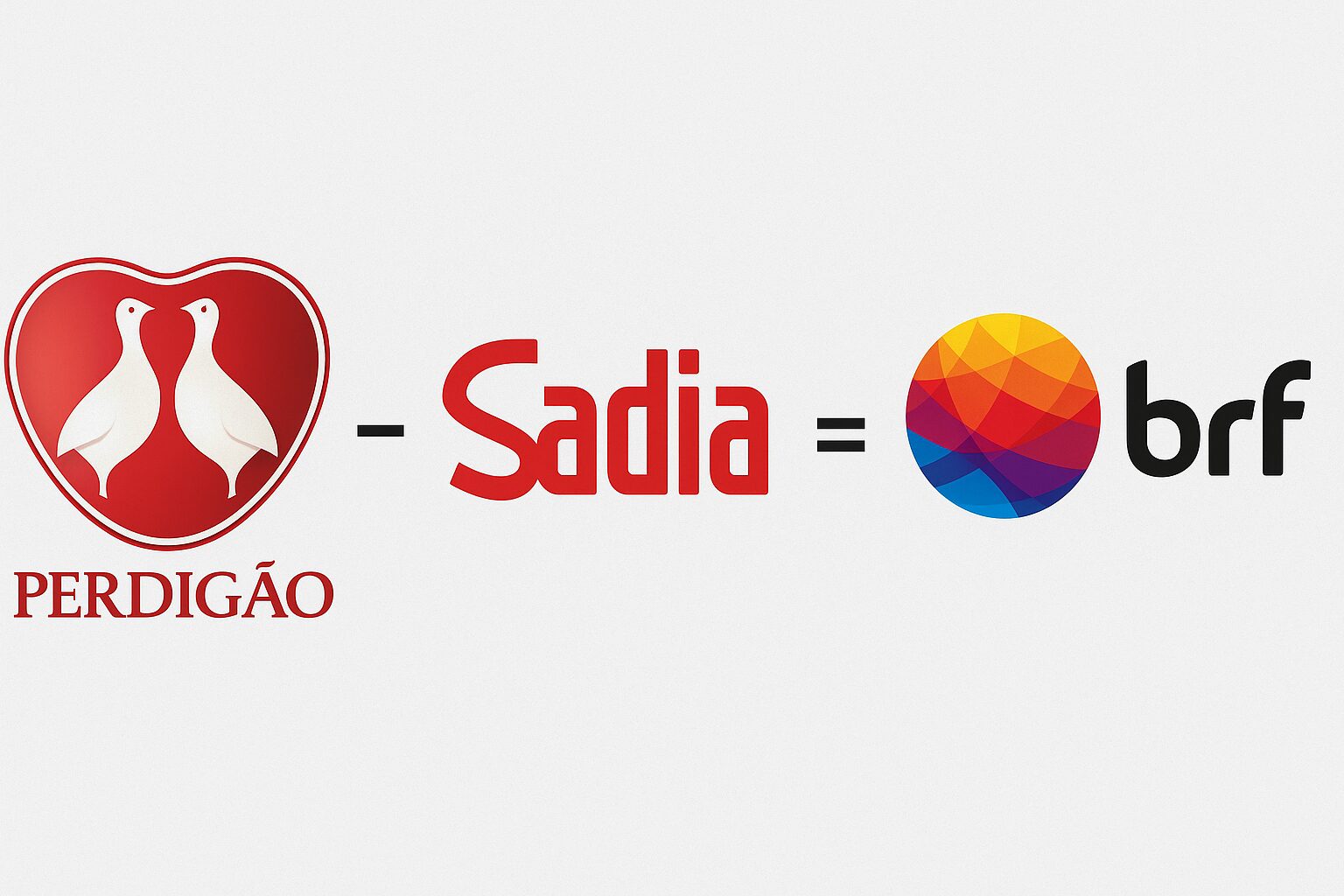


After Merger With Sadia, Brand Perdigão Disappeared From Shelves Due to CADE Requirements and Lost Space in Key Categories; BRF Strategy Prioritized Repositioning and Competitive Focus in the Market.
Understand how Perdigão disappeared from the shelves: For decades, it was a staple on Brazilian tables. Sausages, ham, lasagna, turkey breast, hot dogs, mortadella. Perdigão was synonymous with quality products, tradition, and real food. Along with Sadia, it dominated supermarket shelves and national preference. But, suddenly, it vanished.
Today, entering any major supermarket, it is practically impossible to find a product prominently featuring the “Perdigão” brand. The red and white logo has been replaced by packaging from BRF or, in many cases, by Sadia itself, its eternal rival.
What happened to Perdigão? How did one of Brazil’s most popular brands quietly disappear from the aisles? And what role did the merger between Perdigão and Sadia, announced as historic, play in this disappearance?
-
A couple buys an old chalet, breaks the kitchen floor for renovation, and finds over a thousand coins of gold and silver hidden since the English Civil War over 4 centuries ago.

-
Rigid bags with their days numbered: new trend prioritizes comfort in 2026.

-
YouTuber creates an excavator equipped with a giant 4.5-meter sword to challenge his brother to a rematch, and the invention quickly goes viral on social media.

-
The U.S. Army surprises the world by presenting the UH-60MX Black Hawk helicopter capable of flying without pilots, controlled by a tablet, featuring the MATRIX system, smart sensors, and full autonomy in real combat and rescue missions.

In this article, we will revisit the journey of Perdigão: from foundation to peak, from merger to decline, from disappearance from shelves to what remains of the brand today.
The Origin of an Empire: Perdigão in the Heart of Brazilians


Perdigão S.A. was born in 1934, in the city of Videira, in the interior of Santa Catarina, as a small family-owned pig slaughtering business. Founded by descendants of Italian immigrants, the company was named after the “perdiz” bird—associated with something tasty and regional.
Gradually, Perdigão grew and gained space in the south of the country. In the 1950s and 1960s, it expanded its operations to São Paulo and Rio de Janeiro, taking advantage of the growing urbanization and the increase in consumption of industrialized foods.
With a verticalized production model, the company controlled everything: animal farming, slaughtering, processing, packaging, and distribution. This end-to-end control was one of the keys to its success.
Perdigão invested heavily in advertising and created products that became icons, such as frozen lasagnas, microwave pizzas, and the famous smoked ham. By the 1990s, the brand was already one of the largest in the country, competing closely with its major rival: Sadia.
Rivalry With Sadia: The Food Market War
For much of the 1980s, 1990s, and 2000s, Perdigão and Sadia featured one of the biggest rivalries in the Brazilian food sector. Both companies had origins in Santa Catarina, similar portfolios, and invested heavily in innovation and marketing.
Advertising campaigns from both competed for attention during strategic dates like Christmas and Easter, focusing on processed, frozen, and industrialized foods. Perdigão was seen as more traditional and aimed at a conservative audience, while Sadia focused on innovation, celebrities, and modern packaging.
This competition benefited consumers, who saw new products, promotions, and constant improvements in quality emerge. However, this war also exhausted both companies. The investment to maintain leadership increased, operational costs rose, and logistical challenges were enormous.
By the end of the 2000s, both could no longer grow as they once had. A new chapter began—one of the most important in the history of the food sector in Brazil.
The Historical Merger: BRF Is Born

In 2009, a surprising announcement shook the market: Perdigão and Sadia would unite. After decades of rivalry, the two giants announced a merger that would create BRF – Brasil Foods, one of the largest food companies in the world.
The decision was driven by strategic interests. Sadia had suffered significant losses due to financial derivatives operations in 2008 and was weakened. Perdigão saw the union as a way to grow globally and reduce logistics and production costs.
With the merger, a powerhouse was born: more than 100,000 employees, exports to over 120 countries, dozens of brands under the same umbrella, massive retail presence, and absolute leadership in the meat and frozen foods sector.
But not everything was straightforward.
The Administrative Council for Economic Defense (CADE) imposed severe restrictions to approve the deal. Among them was the requirement to temporarily suspend the use of the Perdigão brand in certain product categories to prevent monopoly and ensure competition in the sector.
This decision initiated the gradual disappearance of Perdigão from the shelves.
The Disappearance of Perdigão From Supermarket Shelves
After the merger, BRF began to focus on the Sadia brand as the main representative of the company’s food products. Sadia had greater international penetration and better brand recall among consumers.
Meanwhile, Perdigão was being pulled from sales points in various categories, especially in the more lucrative ones, such as processed meats, hams, and sausages.
CADE had imposed that BRF could not simultaneously use both brands in the same categories for a period, to avoid harming competition. This forced the company to make strategic decisions—and Perdigão was placed on the back burner.
In supermarkets, products bearing the Perdigão brand gradually vanished. In some cases, the name appeared discreetly on the back of the packaging as the manufacturer. But the visual identity, logo, and advertising presence practically disappeared.
Many consumers felt the loss. There were protests on social media and requests for the brand’s return. But BRF did not back down: the priority was to strengthen Sadia as a global brand.
What Remains of Perdigão Today?
Although it has disappeared from shelves in many segments, the Perdigão brand has not been extinct. It still formally exists within BRF’s portfolio and is used for some specific products, especially geared towards the wholesale market, institutional food, or in regions where the brand still has local appeal.
In 2020, BRF attempted to experiment with a slight return of the Perdigão brand to retail, re-launching products such as burgers, sausages, and breakfast items with a new visual identity. However, without major campaigns, the impact was modest.
Currently, Sadia remains BRF’s main brand in Brazil, followed by others like Qualy, Batavo, and Deline. Perdigão is used in a complementary capacity, without much visibility in advertising or supermarkets.
In other words: Perdigão was not sold, shut down, or forgotten by the company. But its market relevance has been significantly reduced—a direct result of the post-merger strategy and the rules imposed by CADE.
A Success Story Interrupted By Its Own Success
The story of Perdigão is, at the same time, a narrative of success and a warning about how growth can lead to the disappearance of established brands. By merging with Sadia to form BRF, the company created a global powerhouse—but, in doing so, sacrificed part of its original identity.
How did Perdigão disappear from the shelves? The answer lies in a mix of business strategy, regulatory decision, and prioritization of more profitable brands. The end of Perdigão as a standout brand was planned, calculated, and, to some extent, inevitable.
What remains is the legacy: a brand that has fed generations of Brazilians, that helped build the processed food sector in the country, and that showcased the value of national industry. And who knows, in the future, Perdigão may yet return with full force. After all, brands with emotional memory have a better chance of rebirth than one might think.







Como assim?
Como que a líder de mercado seu segmento sumiu?
Completamente equivocado isso,sabe de nada!!
Essa matéria está totalmente errada, qualquer um que entrar nos mercados irá ver tantos os produtos sadia quanto perdigão
Batavo?
Essa marca é da empresa Lactalis e não da BRF…. Faltou fonte segura para essa matéria
A Batavo pertenceu a BRF ,porém por.causa da fusão com.a Sadia foi vendida