





 Portuguese
  English
  Spanish
  2 min of reading
  0 comments


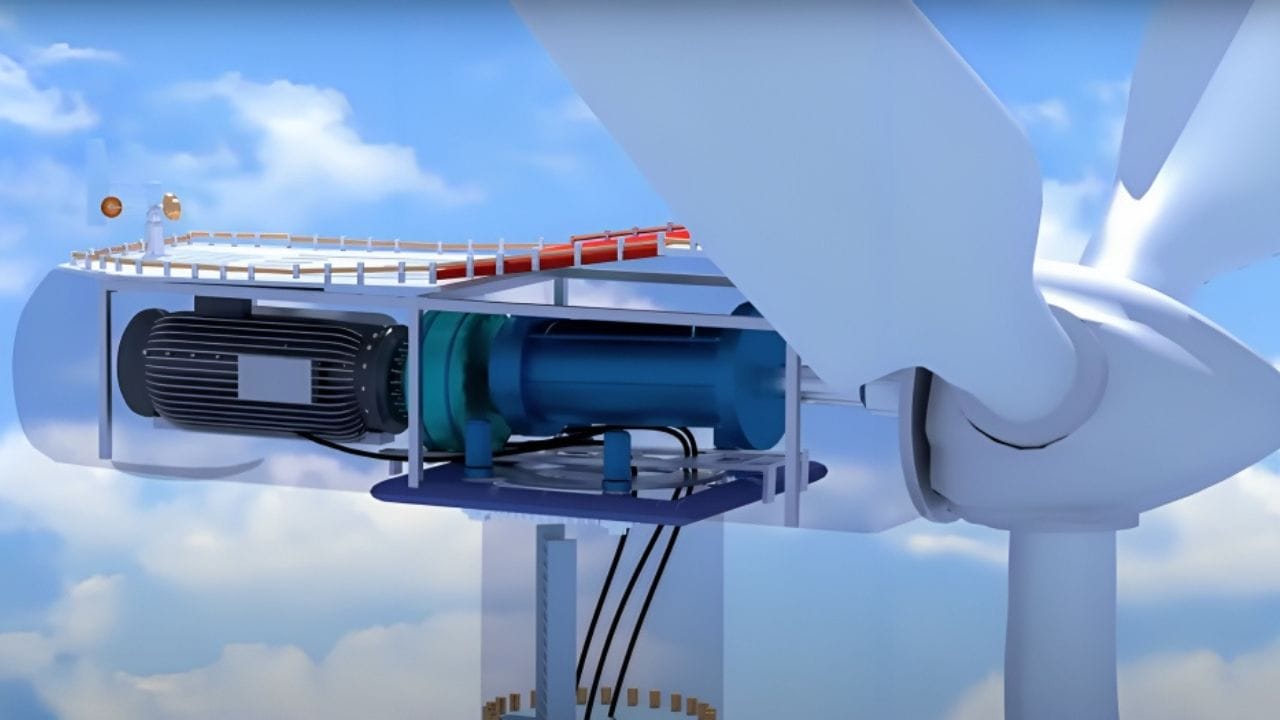
Wind turbines are impressive examples of modern engineering, playing a vital role in renewable energy generation. With ongoing innovation and development, they will remain fundamental pillars in the search for a sustainable energy future.
Wind turbines, these imposing structures that dot landscapes around the world, are true wonders of modern engineering. They convert the kinetic energy of the wind into mechanical energy and, subsequently, into electrical energy, playing a crucial role in renewable energy generation.
The Engineering Behind Wind Turbines
The basic principle of a wind turbine is simple: the wind, by interacting with the turbine blades, generates a rotating motion, this motion is transferred to a generator, which converts mechanical energy into electricity. Simple experiments, such as coupling a blade to a DC motor, demonstrate this basic principle, where the rotating motion generates a voltage.
Wind turbines are designed to maximize energy capture from the wind, they are positioned at high altitudes, where the wind is stronger and less turbulent. The large blades allow for capturing more wind energy, and the elevated height of the turbines ensures access to high-speed winds. The design of the blades, typically made of reinforced fiberglass, is crucial for the turbine’s efficiency, as they have an aerodynamic shape, minimizing resistance and maximizing lift force.
-
Renewable energy advances over protected areas in Brazil, and a survey by the Energy Transition Observatory reveals silent impacts that challenge environmental conservation and pressure sensitive traditional territories.

-
Rio Grande do Sul accelerates energy transition: State invests in renewable technologies and consolidates decarbonization strategies and pathways to attract billions in new industrial investments.

-
With 160,000 m² of collectors, an area larger than 20 football fields, Silkeborg, in Denmark, hosts a solar thermal plant that heats 19,500 homes and could become the largest solar heating plant in the world.

-
A study reveals the expansion of renewable energy procurement in Brazil and shows how companies are taking advantage of opportunities to reduce expenses, ensure energy efficiency, and strengthen strategic environmental commitments.


Control and Operation
Modern wind turbines are equipped with sophisticated control systems, these systems adjust the orientation of the turbine and the angle of the blades to optimize energy capture under different wind conditions. The turbines can be horizontal-axis, more common and efficient, or vertical-axis, which operate independently of the wind direction.
The heart of a wind turbine is the generator, which converts the rotating motion into electricity, the generated energy is transmitted to a substation, where it is converted to the appropriate voltage for distribution on the power grid. Wind turbines can be installed on land or offshore, with offshore installations capable of harnessing stronger and more consistent winds. VEJA made an interesting analysis of what Brazil needs to invest in offshore wind energy.


Challenges and Solutions
Transporting and installing large wind turbines presents significant logistical challenges, and wind turbines can impact the landscape and generate noise. However, technological advancements continue to improve efficiency and reduce the environmental impact of these structures.
Wind turbines are a fundamental part of the transition to renewable energy sources. With the growing demand for clean and sustainable energy, it is expected that wind turbine technology will continue to evolve, becoming even more efficient and accessible.









Seja o primeiro a reagir!