





 Portuguese
  English
  Spanish
  5 min of reading
  0 comments


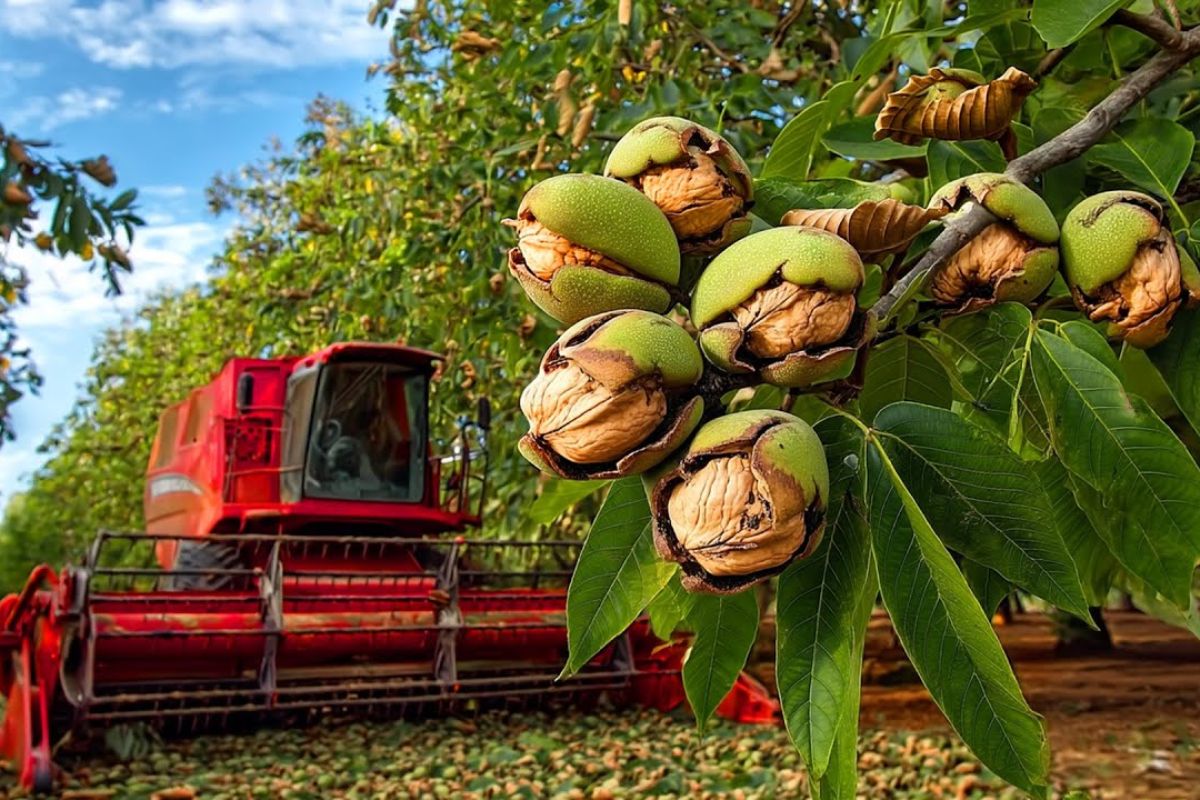
In California Orchards, The Nut Industry Uses Machines To Accelerate The Production Of Nuts, With Harvesting Nuts In Seconds, Processing Nuts With Industrial Washing And Controlled Drying, Ensuring Standardized Nuts For The Global Supermarket On A Large Scale, With Traceability, Energy Efficiency, And Minimal Waste In The Field.
Every year, between the end of summer and the beginning of autumn in the Northern Hemisphere, around mid-September, California orchards reach peak harvest to transform over 400,000 acres into 680,000 tons of nuts destined for the global market. During this period, the outer green shell cracks, the nut reaches ideal ripeness, and the entire machinery operates continuously to take advantage of the perfect quality window.
From the seedling nursery to supermarket shelves, a highly mechanized chain combines equipment that shakes trees in up to 10 seconds, industrial washing, controlled drying, and human sorting in multiple stages to ensure visually perfect, safe, and standardized nuts, ready for both direct consumption and for use in high-value-added processed products.
From Nursery To Adult Nut Trees In California

The productive cycle of nuts starts years before the first harvest.
-
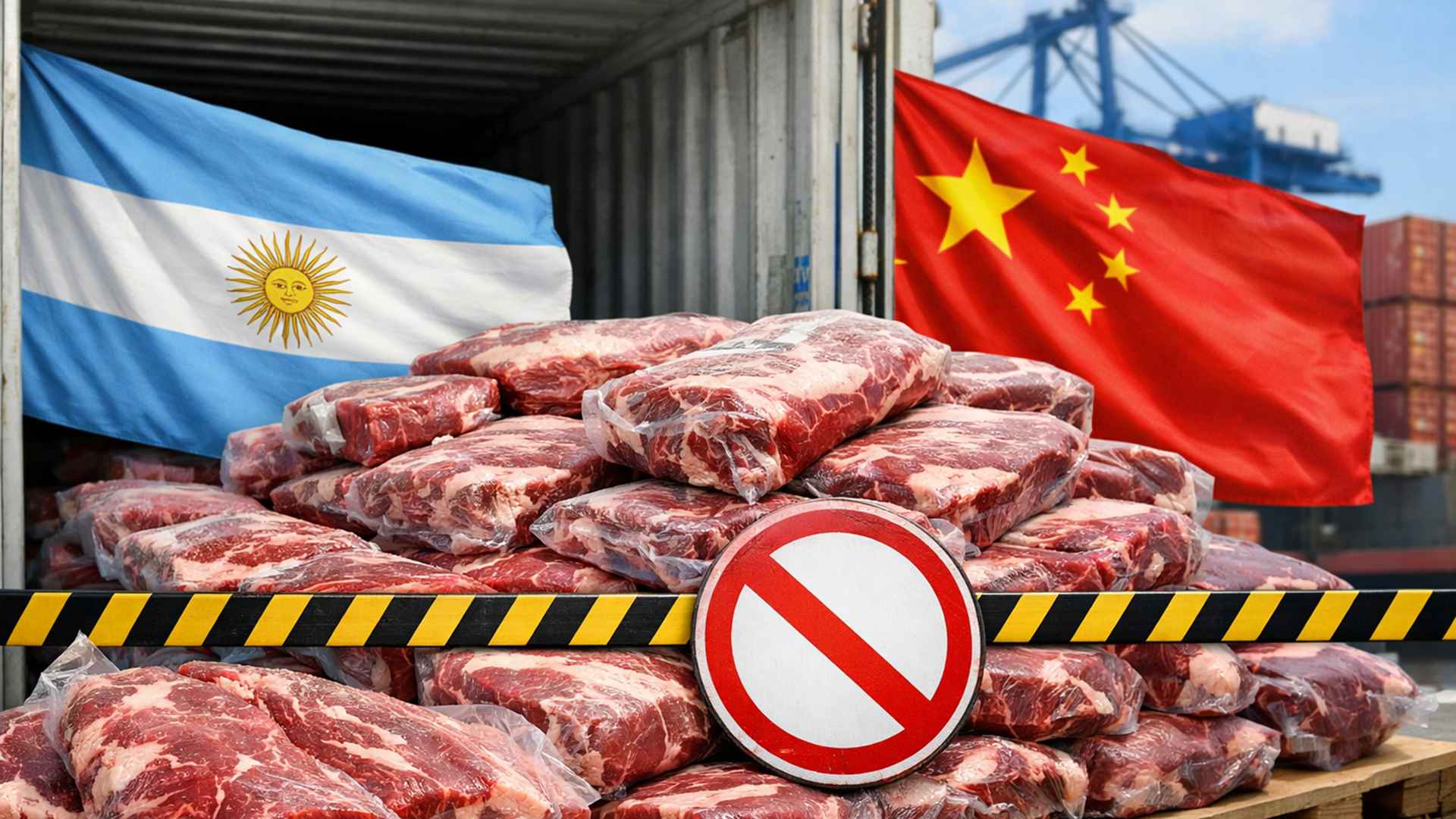
China banned the export of 22 tons of meat from Argentina.
-
While Russia dominates the global wheat market, Brazil emerges as an unexpected competitor in the Cerrado, offering grain available in July and August when stocks in the Northern Hemisphere are at their lowest point of the year.

-
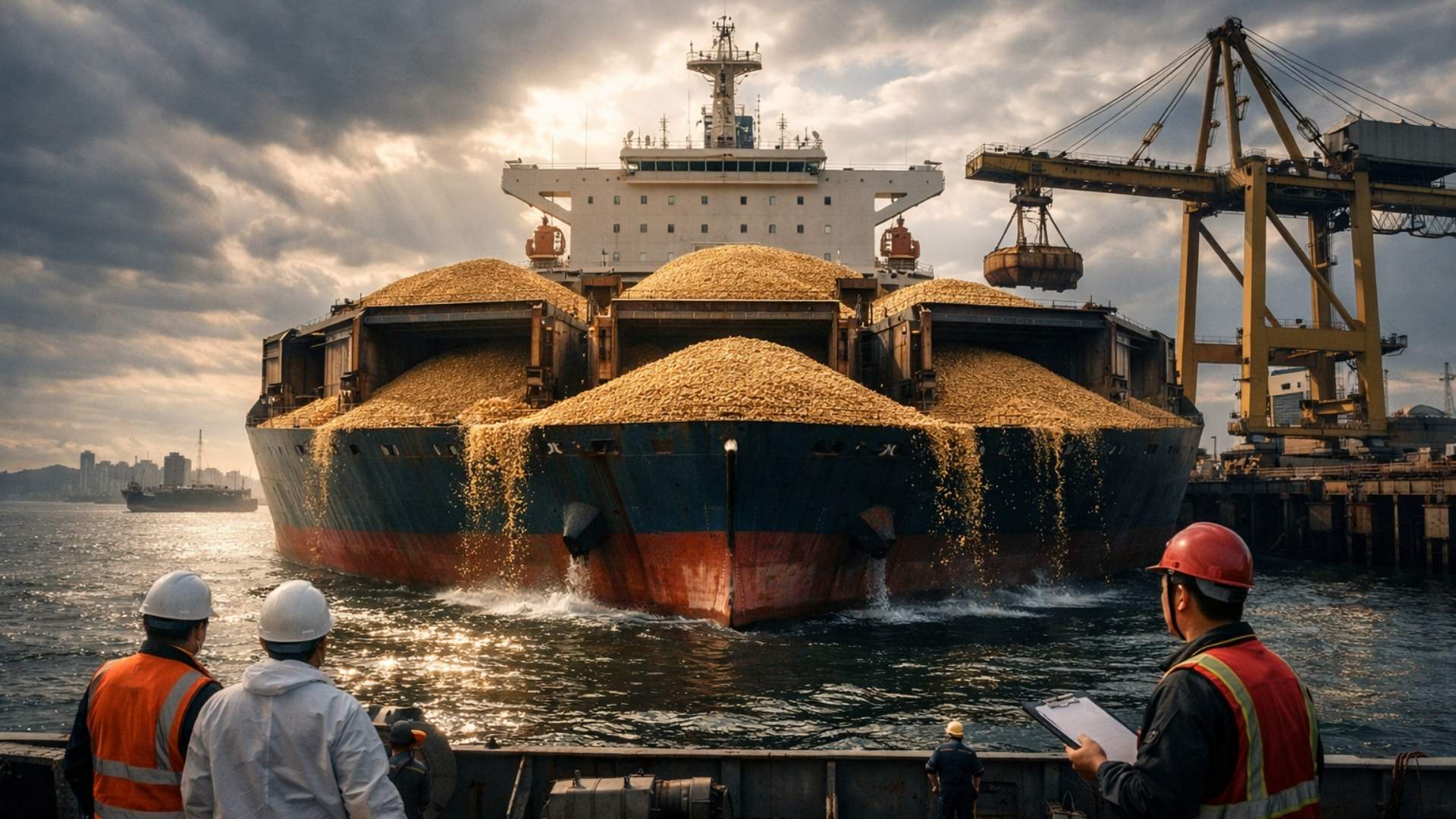
China returned almost 20 Brazilian ships with soybeans, but now everything could change: the country that buys 80% of the grain is considering relaxing regulations after impurities held up shipments of thousands of tons and caused million-dollar losses.
-
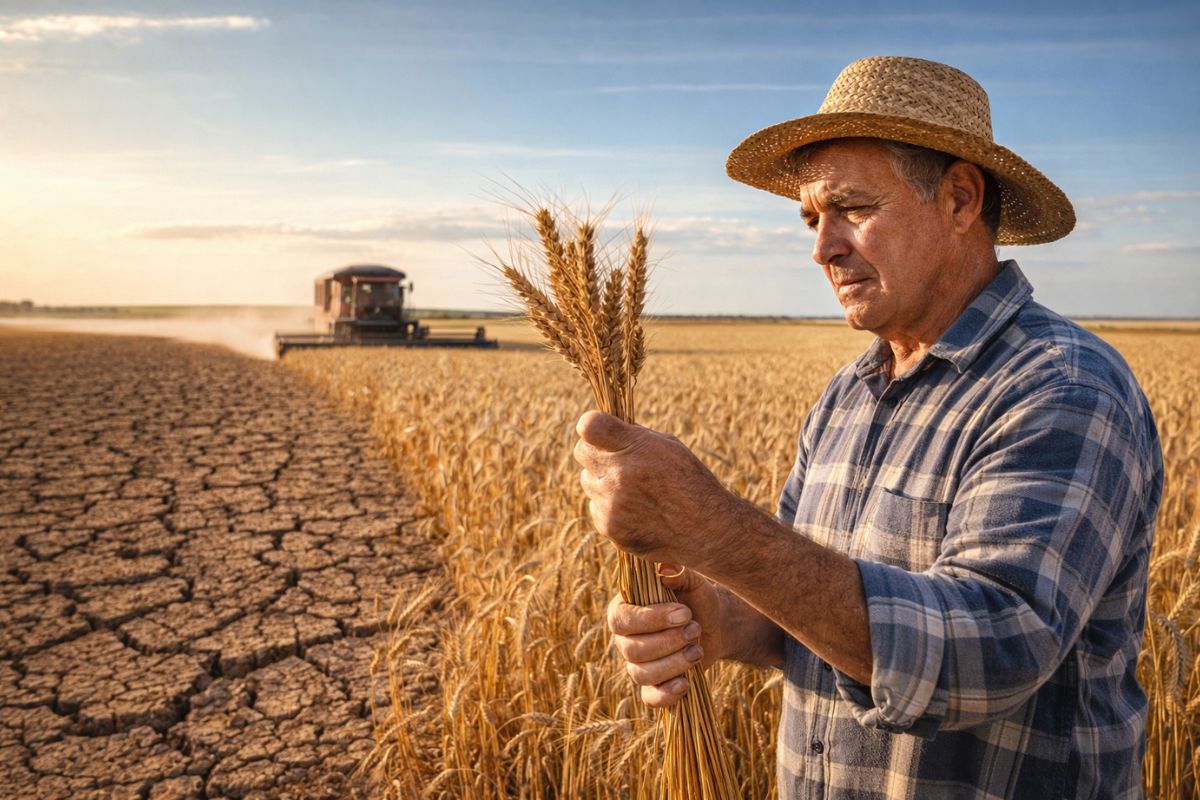
The drought of the cerrado was considered an enemy of wheat, but Brazilian scientists turned the lack of rain into a competitive advantage by creating a grain with quality that is already attracting the attention of international mills around the world.

The seeds are selected, treated, and sown in growing trays with moist, nutrient-rich soil, under carefully monitored conditions of humidity, temperature, and light.
The goal is to form vigorous seedlings, with deep roots and strong stems, capable of withstanding the climate and intensive management of commercial orchards.
When these seedlings reach the ideal point, they are transplanted to large areas in inland California.
The orchards are designed in perfectly aligned rows to maximize exposure to sunlight, facilitate the passage of tractors and harvesting machines, and allow for efficient irrigation.
For years, producers invest in irrigation, soil correction, pruning, and pest control to prepare trees that will produce nuts for many decades.
This long-term investment creates a robust agricultural model.
Well-managed adult trees ensure high and regular productivity, allowing California to consolidate as the largest producer of nuts in the United States, with an annual volume exceeding 680,000 tons from over 400,000 planted acres.
Mechanical Harvesting In Up To 10 Seconds Per Tree

As autumn begins and the outer shells start to crack, the harvesting phase of nuts is triggered.
Instead of teams harvesting manually, as in the past, the properties utilize vibrating machines known as tree shakers, which attach to the trunk or main branches of the nut trees.
These machines are designed to shake the tree for only 5 to 10 seconds, with the exact intensity to drop the ripe nuts without damaging the plant’s structure.
The result is a true “rain of nuts” covering the ground beneath the canopy, in a fast, repetitive, and highly efficient operation throughout the orchard.
After that, sweepers and blowers come into play, organizing the fallen nuts into well-defined rows, facilitating the work of specialized harvesters.
These harvesters collect the product into large containers or trailers, reducing losses and prolonged exposure to the ground.
Then, trucks transport the freshly harvested batches to processing centers, where the industrial process of nuts truly begins.
Industrial Washing And Controlled Drying Of Nuts
Upon arriving at the processing plants, the nuts first pass through screens and conveyors that separate dirt, stones, and coarse shell fragments.
Next, a system of screens and belts takes the product to a stage of complete industrial washing, which removes dirt and harvest residues without compromising the integrity of the hard shell.
Machines and high-pressure nozzles spray water from various angles, ensuring that the nuts exit this phase practically free of external contaminants.
This cleaning standard is crucial to meet sanitary regulations, maintain sensory quality, and prepare the batches for long-distance storage and transportation, both within and outside the United States.
Shortly after, the nuts move to drying systems with strict control of temperature, time, and relative humidity.
At this stage, internal moisture is reduced to the ideal level to extend shelf life, preserve flavor and crisp texture, and prevent mold development during storage and transport.
The balance is delicate: too much heat compromises the flavor, while too little heat reduces durability.
Automatic Sorting, Human Inspection, And Quality Control
Dry and clean, the nuts proceed to specialized units for grading and standardization.
Automatic sorting equipment, such as vibrating screens and calibrated rollers, separate nuts by size and weight, allowing for processing large volumes with speed and consistency.
More uniform batches help standardize roasting time, packaging, and final presentation to consumers.
The nuts approved in this stage undergo rigorous quality tests, including visual inspections and, in many cases, laboratory analyses of moisture and integrity.
Optical sorting systems, equipped with cameras and sensors, identify stained, cracked, or out-of-standard pieces.
However, the decisive stage still relies on the human eye, with experienced workers manually removing defective nuts that escaped the machines.
When the destination is nuts shelled for snacking, a mechanical sheller comes into action, adjusted to apply only the necessary pressure to break the shell without crushing the kernel.
Afterwards, the mixture of shells and kernels passes through air flows, vibration, and new sortings to separate the edible part.
Next, optical sorting and final manual inspection ensure that only the most uniform nuts are released for packaging.
Packaging, Storage, And Arrival At The Supermarket
At the packaging stage, high-speed automated lines receive the sorted nuts in different formats: with shells, whole shelled, in halves, in pieces, or destined for the food industry.
Machines fill vacuum bags, rigid packaging, or large bulk containers, seal and label each unit with information about origin, lot, and expiration date.
This process is designed to ensure hygiene, traceability, and visual standardization, critical factors in a global food market.
The packages are then transported to warehouses by carts and forklifts, where they are organized by product type and logistical destination.
From there, distribution flows supply supermarket chains, wholesalers, and manufacturers of snacks, pastries, and other segments that use nuts as an ingredient.
When the consumer finds a package of crispy nuts on the shelf, all of this nursery, orchard, harvesting in seconds, industrial washing, controlled drying, automatic sorting, and human inspection chain has been carefully executed on an industrial scale.
What seems like a simple product is, in practice, the result of a highly sophisticated agricultural and manufacturing machinery.
Given all of this process behind each package, which stage of nut production in California stands out to you the most and why?








Seja o primeiro a reagir!