





 Português
  Inglês
  Espanhol
  5 min de leitura
  0 comentários


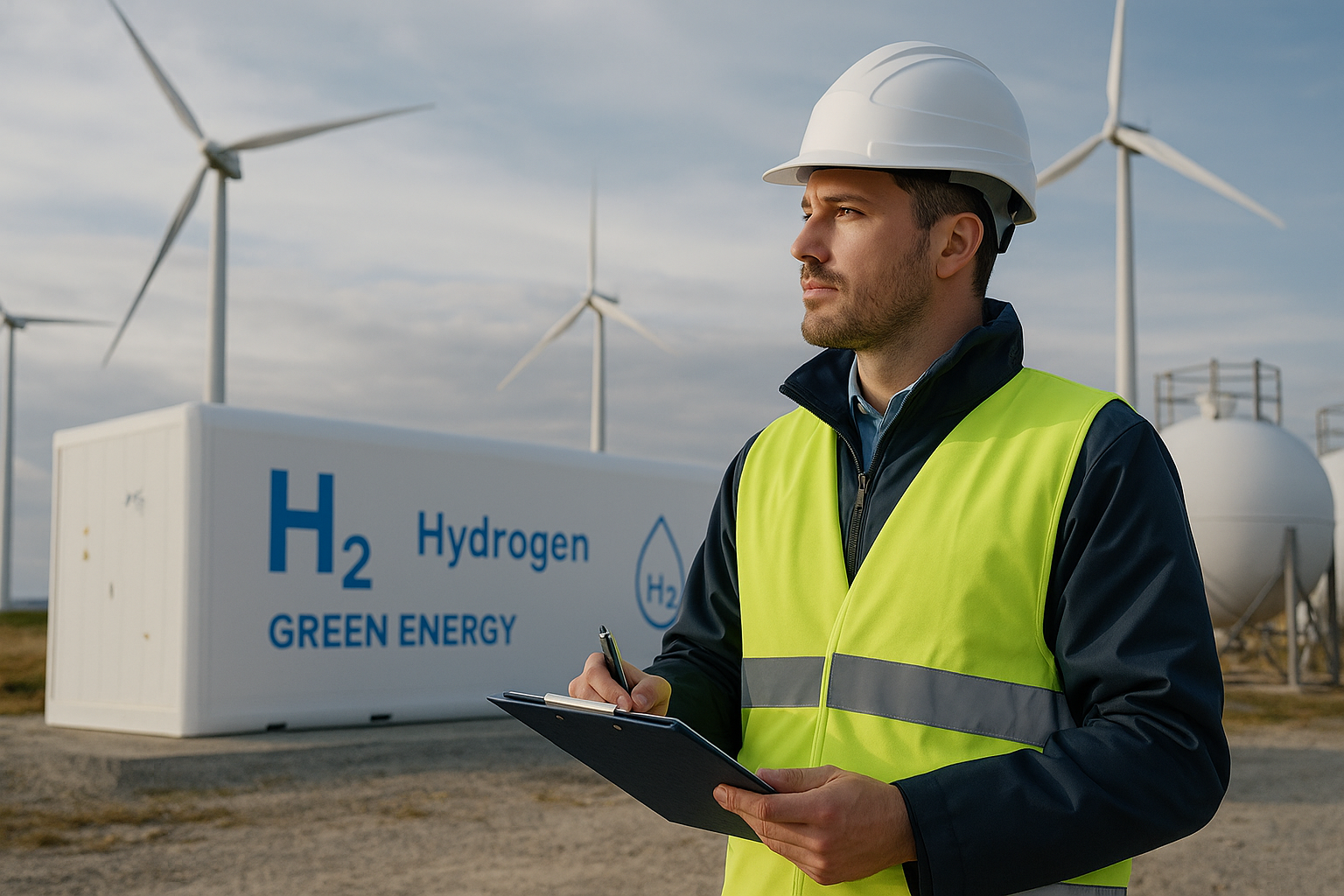
Discover How to Build a Promising Green Hydrogen Career by Understanding Its Context, Opportunities, and Essential Skills to Operate in This Innovative and Sustainable Sector.
In recent years, the term “green hydrogen” has gained traction in discussions about the future of energy and the transition to a low-carbon economy.
Therefore, behind this energy revolution, there is a growing market and a new professional path: the green hydrogen career.
Thus, understanding how to enter and excel in this sector can open doors to a promising, sustainable, and innovative future.
-
Renewable energy advances over protected areas in Brazil, and a survey by the Energy Transition Observatory reveals silent impacts that challenge environmental conservation and pressure sensitive traditional territories.

-
Rio Grande do Sul accelerates energy transition: State invests in renewable technologies and consolidates decarbonization strategies and pathways to attract billions in new industrial investments.

-
With 160,000 m² of collectors, an area larger than 20 football fields, Silkeborg, in Denmark, hosts a solar thermal plant that heats 19,500 homes and could become the largest solar heating plant in the world.

-
A study reveals the expansion of renewable energy procurement in Brazil and shows how companies are taking advantage of opportunities to reduce expenses, ensure energy efficiency, and strengthen strategic environmental commitments.


To understand how to dominate this career, it is essential to look back in time and observe how hydrogen became one of the greatest promises of the energy transition.
A Historical Look at Hydrogen as an Energy Source

Hydrogen is the most abundant chemical element in the universe.
Since the 19th century, scientists, such as the British physicist William Robert Grove, who developed the first fuel cell in 1839, began to study ways to use hydrogen as an energy source.
However, its large-scale use faced technological and economic challenges.
That is, traditional hydrogen, known as “gray”, was produced from fossil sources such as natural gas, releasing large amounts of carbon dioxide (CO₂).
This form was the most common until the early 21st century.
With the growing global concern about climate change and the 2015 Paris Agreement, which set ambitious targets for reducing carbon emissions, the urgent need for cleaner and renewable sources arose.
Thus, green hydrogen, which is produced by water electrolysis using renewable energy, gained prominence as a sustainable alternative.
According to the International Energy Agency (IEA), in its 2021 Global Hydrogen Review, green hydrogen is essential to achieving global carbon neutrality targets by 2050.
As a result, countries and companies began investing heavily in technology, infrastructure, and training to meet the growing demand for professionals prepared for this new market.
Additionally, the growing interest in green hydrogen is linked to its versatility.
It can function as fuel for vehicles, generate electricity in plants, power heavy industries, and even efficiently store renewable energy.
This further expands its potential, requiring the sector to have a qualified workforce for various technical, administrative, and strategic functions.
What Is the Green Hydrogen Career?

The green hydrogen career is a multidisciplinary professional field that involves areas such as chemical engineering, renewable energy, sustainability, project management, industrial technology, and public policy.
Therefore, professionals wishing to work in this sector must understand not only the technical aspects of hydrogen production but also the regulatory, environmental, and economic issues related to it.
Various areas are part of the green hydrogen value chain, including research and development, process engineering, construction, and operation of electrolysis plants.
Moreover, hydrogen storage and transportation, integration with renewable energy systems, marketing, and environmental impact analysis are also included.
In other words, it is a vast field with opportunities for diverse professional profiles.
Additionally, the sector also requires professionals linked to areas such as work safety, occupational health, logistics, and communication, since hydrogen requires specific care due to its high flammability and handling particularities.
This shows that the green hydrogen career is not restricted to just technicians or engineers but involves other specialists who can contribute to the production chain and the corporate environment.
How to Prepare for This Career?

The foundation for entering the green hydrogen career lies in technical and academic training.
Undergraduate courses in engineering, especially in chemical, electrical, environmental, and energy fields, are the most common.
However, professionals with backgrounds in physics, biotechnology, geosciences, and even administration with a focus on sustainability also find opportunities.
In recent years, universities and research centers have created specific programs focused on energy transition and green hydrogen, covering subjects from the principles of electrolysis to public policies that promote clean energy.
According to the Ministry of Mines and Energy of Brazil, in its National Energy Plan of 2020, there are initiatives to encourage training and capacity building in hydrogen technologies, aligned with sustainable development goals.
Besides academic training, staying updated is essential. The sector evolves constantly, with new technologies emerging, legislation changing, and investments being directed to different regions of the world.
Thus, participating in conferences, seminars, and open courses on green hydrogen and renewable energies is an important differentiator for those looking to stand out.
Another essential point is proficiency in languages, especially English.
As this is a globalized area, many research, projects, and job opportunities arise in foreign countries or involve international partnerships.
For those already in the job market, technical certifications add value and indicate specialization, such as training in hydrogen safety, life cycle assessment (LCA), and environmental management.
Additionally, networking at industry events helps to understand trends and build connections that can open doors.
Opportunities in the Job Market
The growth of the hydrogen economy creates a demand for new jobs in various sectors.
Thus, energy companies, chemical industries, technology startups, and governments hire qualified professionals to lead or participate in projects related to green hydrogen.
In Europe, Asia, and North America, large projects are being implemented, with ambitious targets for the coming years.
According to the European Union, in its Hydrogen Strategy launched in 2020, the continent will have a green hydrogen production capacity sufficient to supply a large part of the market by 2030.
In Brazil, the potential is also huge, especially due to the abundance of renewable energy sources.
Therefore, states like Ceará, Rio Grande do Norte, and Bahia are already attracting investments in green hydrogen, opening doors for Brazilian professionals.
The Brazilian government published the National Hydrogen Plan in 2022, highlighting the importance of green hydrogen for the national energy matrix and for generating qualified jobs.
Furthermore, green hydrogen plays a central role in decarbonizing sectors that are difficult to electrify, such as aviation, maritime transport, and heavy industry.
This further expands opportunities for those who qualify early and build a solid career in this field.
Another important point is the growth of startups that develop innovative technologies for the production, storage, and distribution of green hydrogen.
These companies seek professionals with an entrepreneurial profile, capable of working in dynamic and multidisciplinary environments, opening doors for those wishing to work with innovation.
If you are looking for a career with purpose, innovative and full of possibilities, green hydrogen may be the ideal path for your future.










-

Uma pessoa reagiu a isso.