





 Português
  Inglês
  Espanhol
  6 min de leitura
  0 comentários


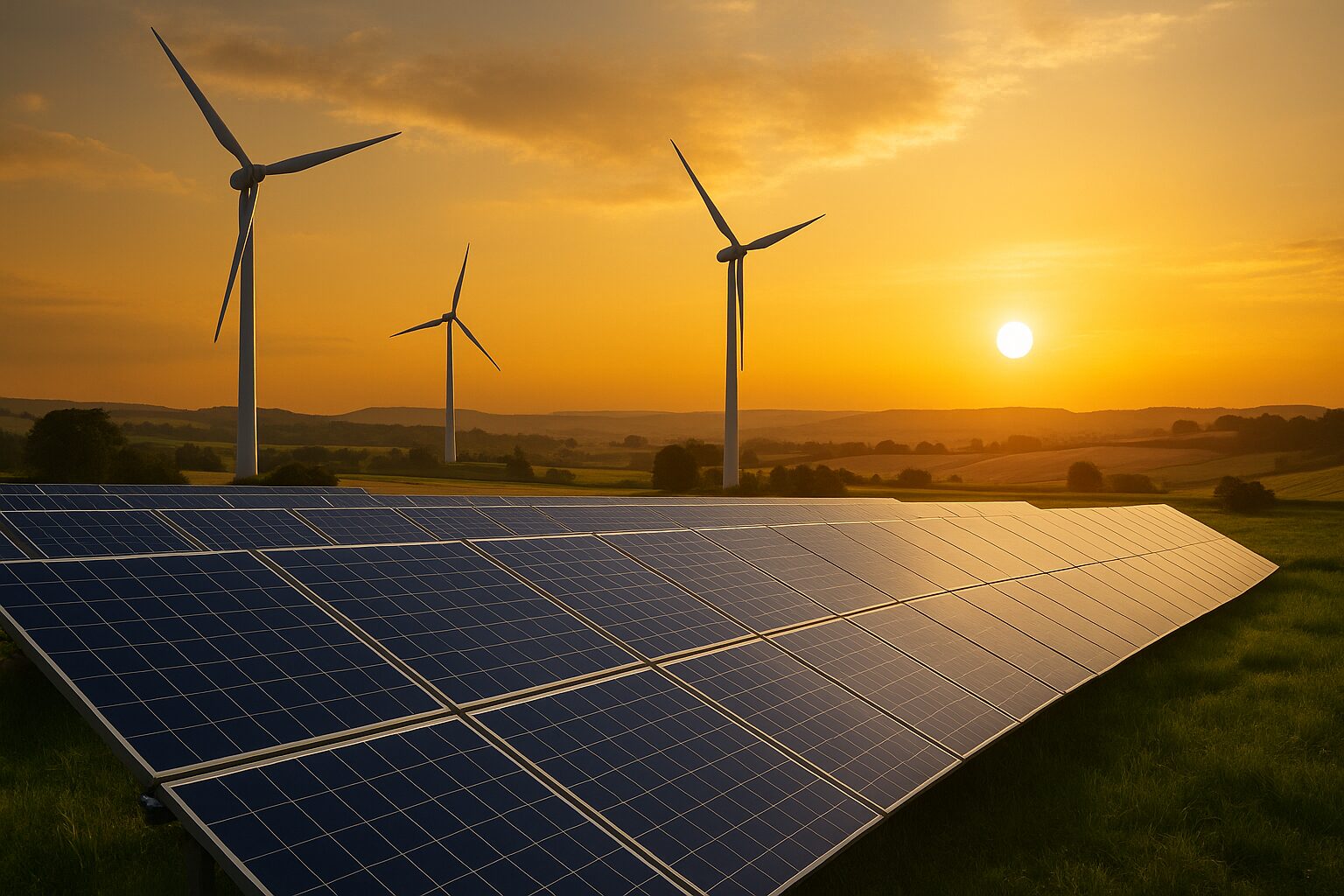
Discover How the Future of Renewable Energy Is Transforming the World and Learn How to Follow This Change Consciously, Sustainably, and Affordably.
In recent decades, the world has begun to rethink its approach to producing and consuming energy. For a long time, we have mainly relied on non-renewable sources, such as coal, oil, and natural gas.
Although these sources have been efficient in generating energy, they have a significant environmental impact and, moreover, are depleted with human use.
With advances in science, technology, and ecological awareness, the future of renewable energy has increasingly gained attention in debates, research, and investments.
-
Renewable energy advances over protected areas in Brazil, and a survey by the Energy Transition Observatory reveals silent impacts that challenge environmental conservation and pressure sensitive traditional territories.

-
Rio Grande do Sul accelerates energy transition: State invests in renewable technologies and consolidates decarbonization strategies and pathways to attract billions in new industrial investments.

-
With 160,000 m² of collectors, an area larger than 20 football fields, Silkeborg, in Denmark, hosts a solar thermal plant that heats 19,500 homes and could become the largest solar heating plant in the world.

-
A study reveals the expansion of renewable energy procurement in Brazil and shows how companies are taking advantage of opportunities to reduce expenses, ensure energy efficiency, and strengthen strategic environmental commitments.


According to the International Energy Agency (IEA) in its 2023 report, renewable energy now represents more than half of the total installed generation capacity in the world, signaling an irreversible global movement.
Therefore, in this article, you will understand how this future is shaped, from its historical roots to projections indicating a cleaner, more sustainable, and energetically balanced world.
Where We Came From: The Beginning of Energy Production
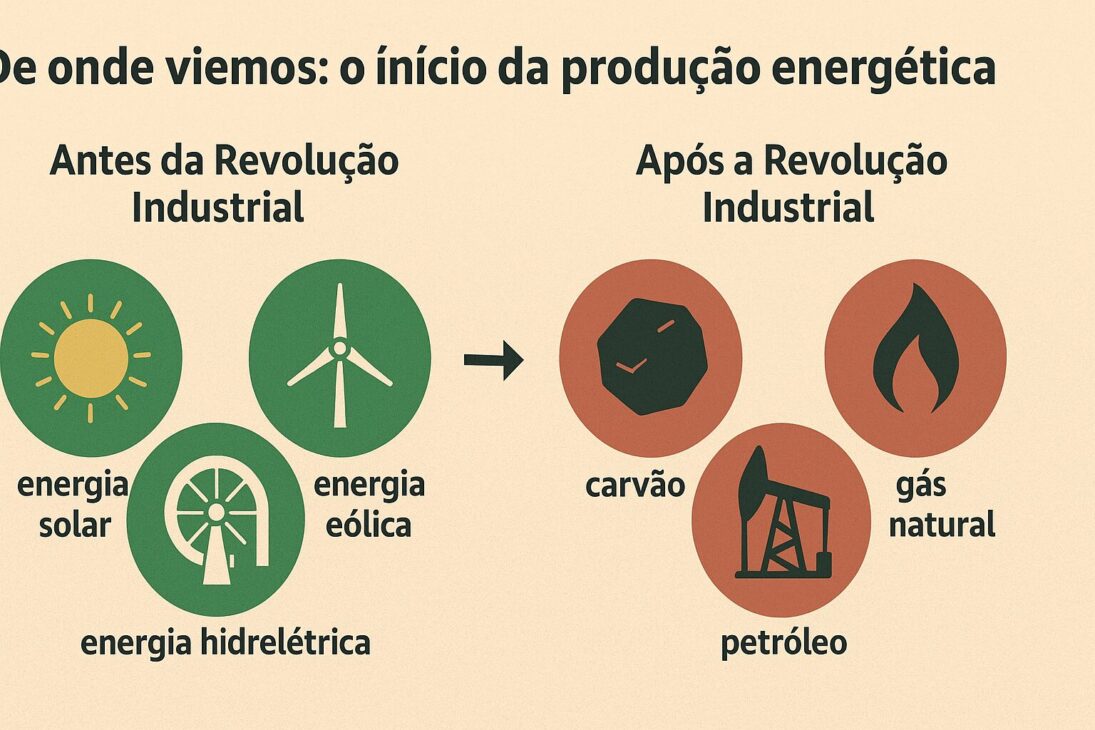
Before the Industrial Revolution, most of the energy used by civilizations came from renewable sources.
For example, the wind powered sailing boats, water turned mill wheels, and the sun helped in food drying.
These natural and simple forms drove the economy and daily activities of the time.
However, with the Industrial Revolution, which began around 1760, as highlighted by the U.S. Department of Energy (DOE), the use of fossil sources began to grow rapidly.
Coal, in particular, became the main driver of industry, enabling large-scale mechanization and city expansion.
Oil entered the scene in the late 19th century, revolutionizing transport with the invention of the internal combustion engine.
For a long time, these fossil sources supported economic and technological progress.
However, the environmental impact caused by this dependence grew significantly throughout the 20th century.
As indicated by the Intergovernmental Panel on Climate Change (IPCC), the increase in greenhouse gas emissions since the second half of the 20th century is directly linked to human activities related to the intensive use of fossil fuels.
These data show that energy cannot be dissociated from the environment and that the energy model needs to evolve to be sustainable.
What Are Renewable Energies and Why Are They Important?
Renewable energies come from natural resources that regenerate quickly and, therefore, do not deplete with human use.
Among them, we can highlight solar, wind, hydropower (water), biomass, and geothermal (Earth’s internal heat) energy.
Unlike fossil sources, renewable sources emit little to no greenhouse gas, classifying them as clean.
Furthermore, they promote energy independence, reduce pressure on natural resources, and generate new economic and social opportunities.
Another important aspect of renewable energies is that they allow for decentralized production. Thus, small communities or households can have access to their own energy.
This contributes to social inclusion, as remote areas, often disconnected from traditional networks, can generate energy locally.
According to the United Nations Environment Programme (UNEP), in its 2022 report, the accelerated development of renewable energies is essential to meet the goals of the Paris Agreement and limit global warming to 1.5°C.
In addition to mitigating environmental impacts, these energy sources stimulate the creation of green jobs and technological advancement in various sectors of the economy.
The Technological Revolution and the Decrease in Clean Energy Costs
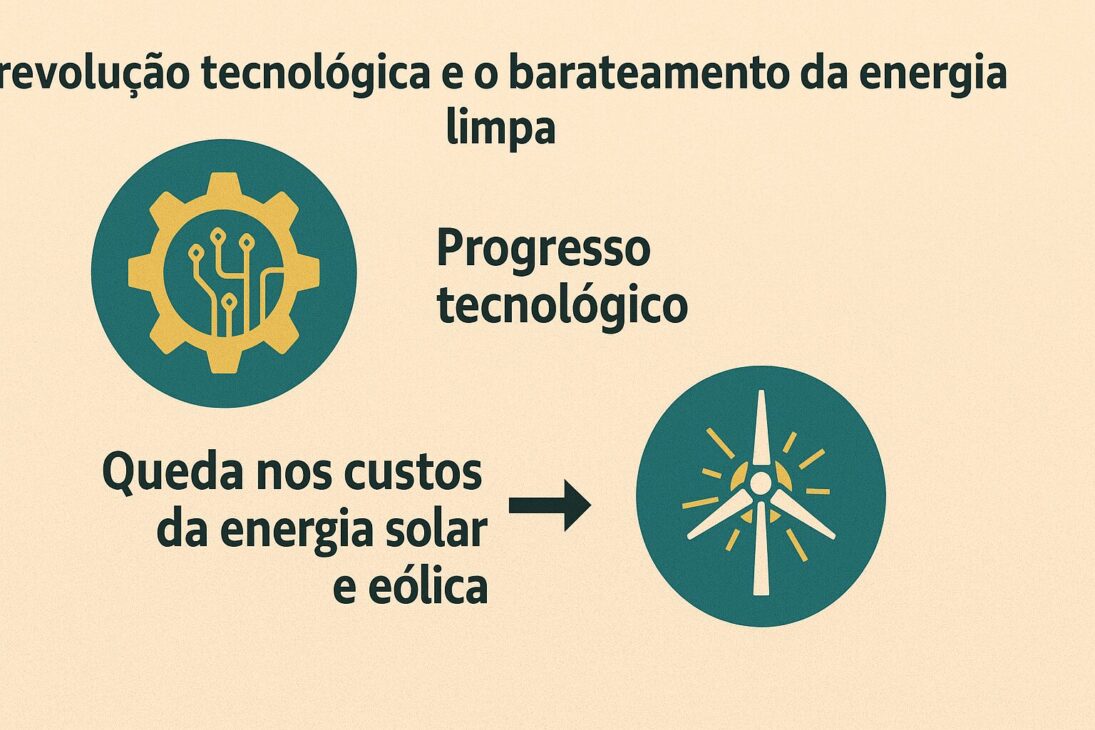
One of the biggest challenges at the beginning of renewable energy development was the high cost. Installing solar panels or wind turbines was expensive, which limited access for a large part of the population and governments.
However, with technological advancements and increasing global demand, these costs have fallen significantly over the past two decades.
Today, in many regions of the world, generating solar or wind energy is cheaper than producing energy from coal or natural gas.
According to data from BloombergNEF in its 2024 report, the average cost of solar photovoltaic energy has fallen by about 85% since 2010, making this source one of the most economical.
Moreover, new solutions are emerging to address issues such as energy storage and the intermittency of renewable sources.
For example, lithium batteries, which have become more efficient and accessible, facilitate the continuous use of generated energy.
Technologies such as green hydrogen and smart grids are advancing rapidly and promise to revolutionize the energy sector.
The digitalization of energy systems also brings significant benefits.
The use of sensors, artificial intelligence, and data analysis allows for better management of energy production and consumption, making the system more efficient and resilient.
According to the International Renewable Energy Agency (IRENA), these technological advancements are vital to accelerate the global energy transition.
The Role of Governments, Companies, and Consumers
The future of renewable energy heavily depends on public policies. Many countries have already set targets to increase the share of clean sources in their energy matrices.
According to the World Bank, in 2023, more than 130 countries have national policies to encourage renewable energy, with tax incentives, subsidies, and credit lines.
In addition, international agreements, such as the Paris Agreement of 2015, pressure nations to adopt more sustainable strategies and reduce their carbon emissions.
Initiatives such as subsidies for renewable energy, tax incentives, credit lines, and research and development programs accelerate this energy transition.
In parallel, public awareness of the impacts of energy consumption is growing.
Today, many consumers prefer companies that adopt sustainable practices and opt for solutions such as residential solar panel installations.
Many small decisions, such as swapping appliances for more efficient versions or joining energy cooperatives, are already impacting the sector.
Moreover, companies seek to stand out by adopting responsible environmental policies, attracting investments and improving their image with customers and the market.
Finally, participation from all sectors of society is essential for renewable energy to dominate the future.
Challenges Still on the Horizon
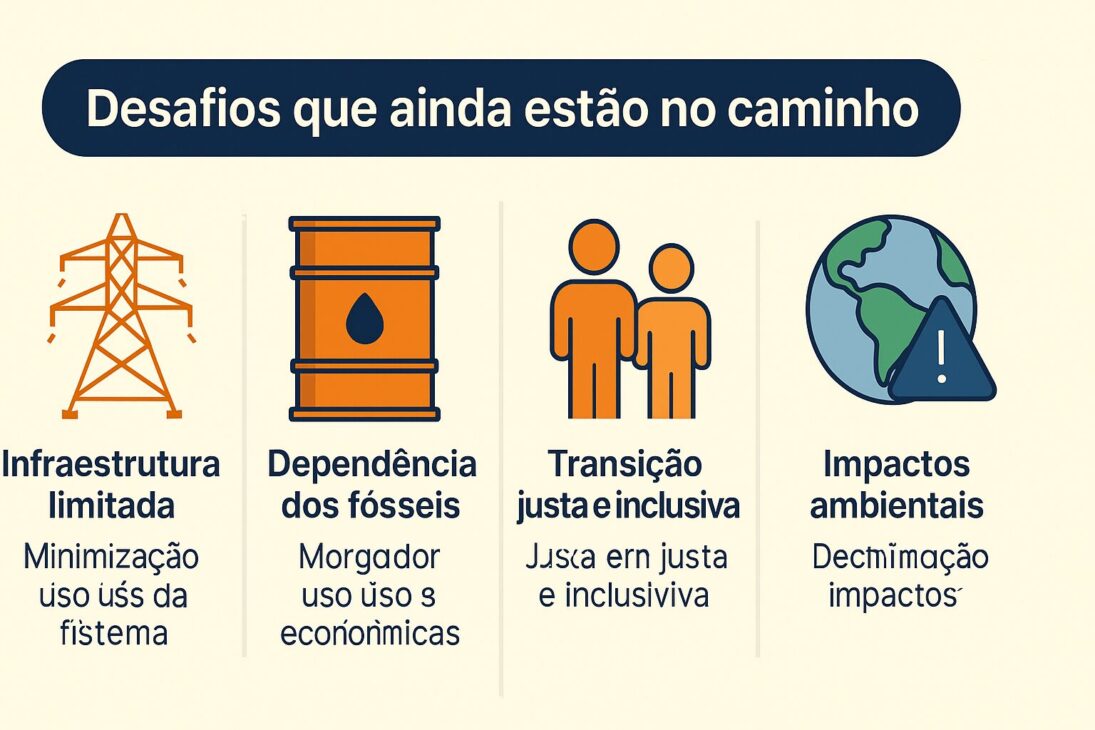
Despite advancements, we still face many challenges. In some countries, infrastructure limits the distribution of clean energy.
The historical dependence on fossil sources also makes the transition slower and more complex.
We also need to ensure that the energy transition is fair and inclusive, taking into account vulnerable populations, workers in traditional industries, and regions that economically depend on oil and coal.
Another important aspect is environmental preservation. Even though they are clean, some renewable sources can have an impact when poorly planned.
For instance, the construction of large hydroelectric plants affects entire ecosystems, as highlighted by the Brazilian Institute of Environment and Renewable Natural Resources (IBAMA).
Therefore, seeking balance between development and conservation is crucial. Investing in education and technical training prepares the next generations of professionals in the sector.
This includes engineers, scientists, managers, technicians, and public policy specialists, so they can develop and implement effective solutions.
A Cleaner and Decentralized Future
The future of renewable energy is promising. Projections indicate that, in the coming decades, most of the energy consumed worldwide will come from renewable sources.
According to the International Renewable Energy Agency (IRENA), by 2050, renewable energies could supply up to 90% of global energy consumption, transforming the world economy.
Moreover, the electrification of sectors such as transport and industry, the expansion of distributed generation (where the consumer also becomes a producer of energy), and the decentralization of the energy system are expected to consolidate.
Another relevant point is the democratization of energy. With decreasing costs and easy access to new technologies, more people will be able to produce their own energy, reduce expenses, and even sell the surplus.
This could create a revolution similar to what happened with the internet: a decentralized, collaborative, and accessible network.
Additionally, renewable energy connects to other global movements, such as the circular economy and sustainable development, promoting a more resilient, just, and healthy future for the planet and its populations.
Therefore, the energy future has already begun to be written — and it is renewable.











Seja o primeiro a reagir!