





 English
  Francês
  Alemão
  Italiano
  Japonês
  Norueguês
  Portuguese
  Spanish
  5 min of reading
  0 comments


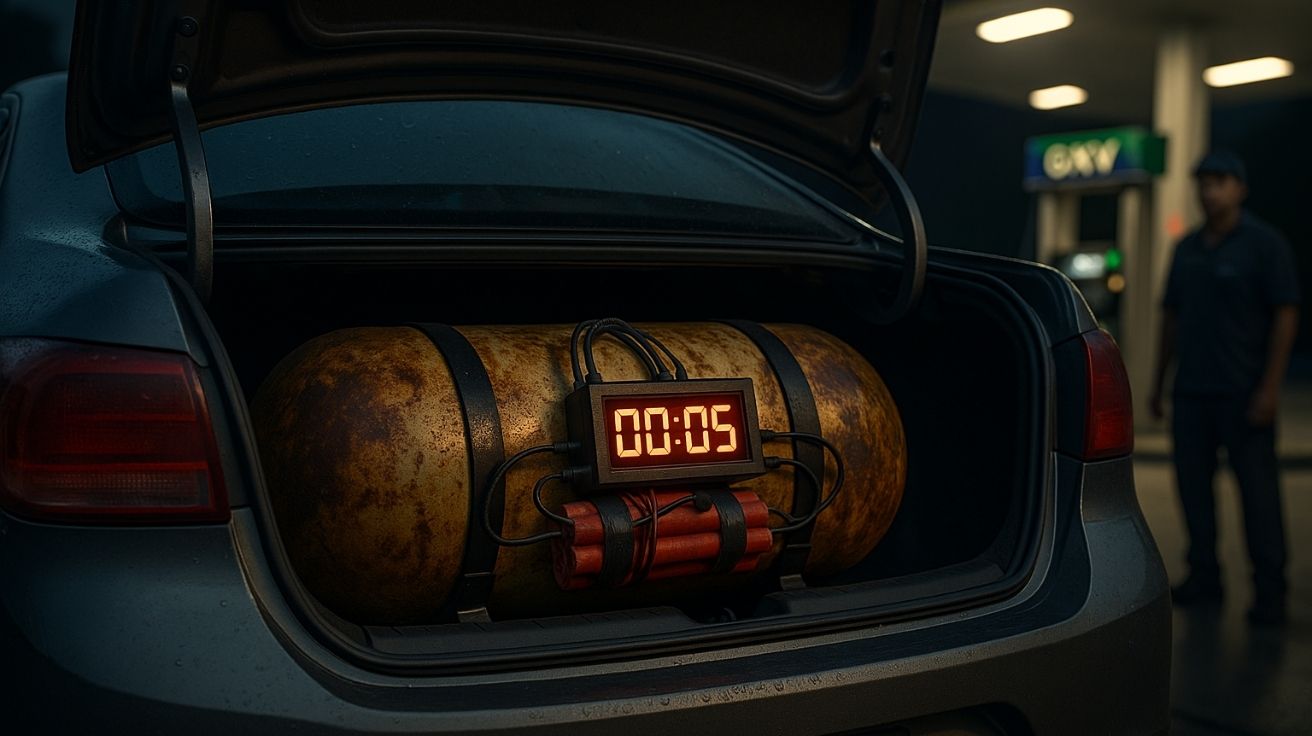
Deaths, Injuries and Vehicles Destroyed in Seconds: Car Explosions with CNG Kits Multiply Across Brazil and Reveal Serious Failures in the Installation and Maintenance of the System
In the early hours of last Saturday (7), a violent explosion at a gas station in downtown Rio de Janeiro resulted in the death of two men, following a failure during the fueling of a vehicle with a CNG kit, as reported by Agência Brasil. Similar cases have repeated in other cities, raising serious doubts about the safety of these systems.
According to experts interviewed by portals such as UOL, Autoesporte, and specialized channels on YouTube, explosions are generally linked to failures in the installation of the gas kit, lack of maintenance, or use of illegal components. Understand now what you need to do to ensure that your vehicle powered by CNG remains a safe and economical option, and not an imminent risk to life.
The Real and Growing Danger of Poorly Maintained CNG Kits
Explosions involving cars with CNG kits have been recorded in different parts of the country, such as the recent tragedy in Rio de Janeiro and an incident in Maceió, where a Polo Sedan exploded during fueling. In both cases, the systems showed clear signs of negligence in maintenance.
-
After launching the new GS3 with a 1.5 turbo engine producing 170 hp, GAC partners with Flamengo, enters the field with the largest fan base in Brazil, and accelerates an ambitious offensive to gain scale and confidence in the national market.

-
The Corolla from 2015 to 2019 depreciates so little that a 10-year-old model is still worth over 76 thousand reais, and owners treat this sedan as a safe investment thanks to its reputation for durability that no competitor has been able to match.
-
Is it worth considering a financed 2025 HB20 Comfort? A simulation with R$ 50,000 in the bank shows installments ranging from R$ 5,687 to R$ 2,365.

-
Road surveillance in Rio de Janeiro enters a new phase with the installation of more than 140 speed cameras on highways RJ-106 and RJ-104, and DER-RJ expands speed control in high-traffic areas.

According to engineer Cleber Willian Gomes from FEI and consultant Ricardo Vallejo from Consulgás, CNG is safe when installed and maintained correctly. But any negligence, such as expired cylinders, rusted components, or irregular pressurization, turns the car into a real bomb.
A CNG cylinder operates at pressures of up to 200 bar. This high pressure demands durable components and regular inspections. Any structural failure or tampering exponentially increases the risk of explosion, especially during fueling.
Another aggravating factor is the clandestine installation of kits without certification from Inmetro. Many workshops offer lower prices, attracting unsuspecting drivers who end up using refurbished or unsuitable parts, such as LPG cylinders.
The absence of a CSV (Vehicle Safety Certificate) also contributes to the risk. This document, issued after mandatory inspection, needs to be renewed annually. Without it, the car cannot even circulate legally.
Additionally, Inmetro highlights that the use of refurbished, oxidized, or reused cylinders without technical inspection can cause internal carbonization, structural failures, and rupture risks during fueling.
In summary: going cheap can end up being very expensive. Every CNG system needs to follow strict regulations and be inspected by accredited companies. If you ignore these steps, you are putting lives at risk.
Proper Installation and Regular Maintenance Save Lives
Since 1984, the installation of CNG gas kits has been regulated by Denatran and Inmetro, which establish technical standards for all components, from the pressure regulator to the fueling valve. Ignoring these requirements is a recipe for disaster.
According to engineer Everton Lopes, a member of SAE Brasil, many drivers try to save money by installing additional cylinders without certification. This overloads the system and eliminates any safety margin provided by the original design.
The requalification of the cylinder is mandatory every five years. This process assesses whether the equipment is still suitable for use and must be carried out by a certified company. Neglecting this test is akin to driving with expired brakes.
Additionally, the CSV must be renewed annually with a new complete inspection. This includes evaluation of pressure, valves, piping, cylinder support, and even items such as suspension, brakes, and tires, which can be affected by the additional weight.
Another critical point is fueling. The car must be properly grounded, with the driver outside the vehicle, without the use of cell phones or nearby electronics. The pump should operate at 200 bar, and any deviation from this is cause to stop fueling.
In daily life, the driver should be attentive to the characteristic smell of gas. Upon detecting a leak, the main valve should be closed immediately, and the car taken to an authorized workshop. Never attempt to fix it yourself.
If the system catches fire, exit the vehicle, move away, and call the Fire Department. The recommended extinguisher is of the ABC type, if available, although its use is optional in passenger cars.
By following these precautions, CNG remains the most economical fuel in Brazil and one of the safest, as long as the system is up to date. Otherwise, it is a ticking time bomb on four wheels.
The Role of Supervision and Driver Awareness
The explosion at the gas station in Rio de Janeiro reignited the debate about the responsibility of drivers, workshops, and authorities in preventing tragedies. The Syndicate of the Vehicle Repair Industry (Sindirepa-RJ) has already requested increased supervision of clandestine workshops.
These illegal workshops do not follow Inmetro standards and use unverified parts, such as kitchen gas cylinders (LPG) adapted for vehicle use. This is a crime and can cost lives.
The lack of effective supervision exacerbates the problem. Many cities do not have the structure to verify all workshops. This requires drivers to act as their own inspectors: only install and maintain in accredited locations.
It is also important that gas stations refuse to fuel cars without a visible CSV or with signs of tampering in the system. Many attendants already have this training, but it needs to be reinforced.
Awareness also needs to reach the general public. The comparison made by experts between a CNG cylinder and one used in hospitals helps to understand: the safety standard is high, but absolute rigor in maintenance is needed.
The mandatory inspection, which analyzes even brakes and suspension, is a way to ensure that the CNG system does not compromise other components of the car. This reinforces the argument that, when well cared for, a CNG car can be safer than conventional models.
Another relevant point is the weight of the system. The trunk with poorly secured cylinders or excessive load can alter drivability and cause indirect accidents, such as loss of control in turns or during braking.
In the long run, increasing the CNG fleet in Brazil depends on awareness campaigns and stricter penalties for those who install kits illegally. Only then can the cheapest fuel in the country continue to be a safe choice for everyone.









-

Uma pessoa reagiu a isso.