





 Portuguese
  English
  Spanish
  7 min of reading
  0 comments


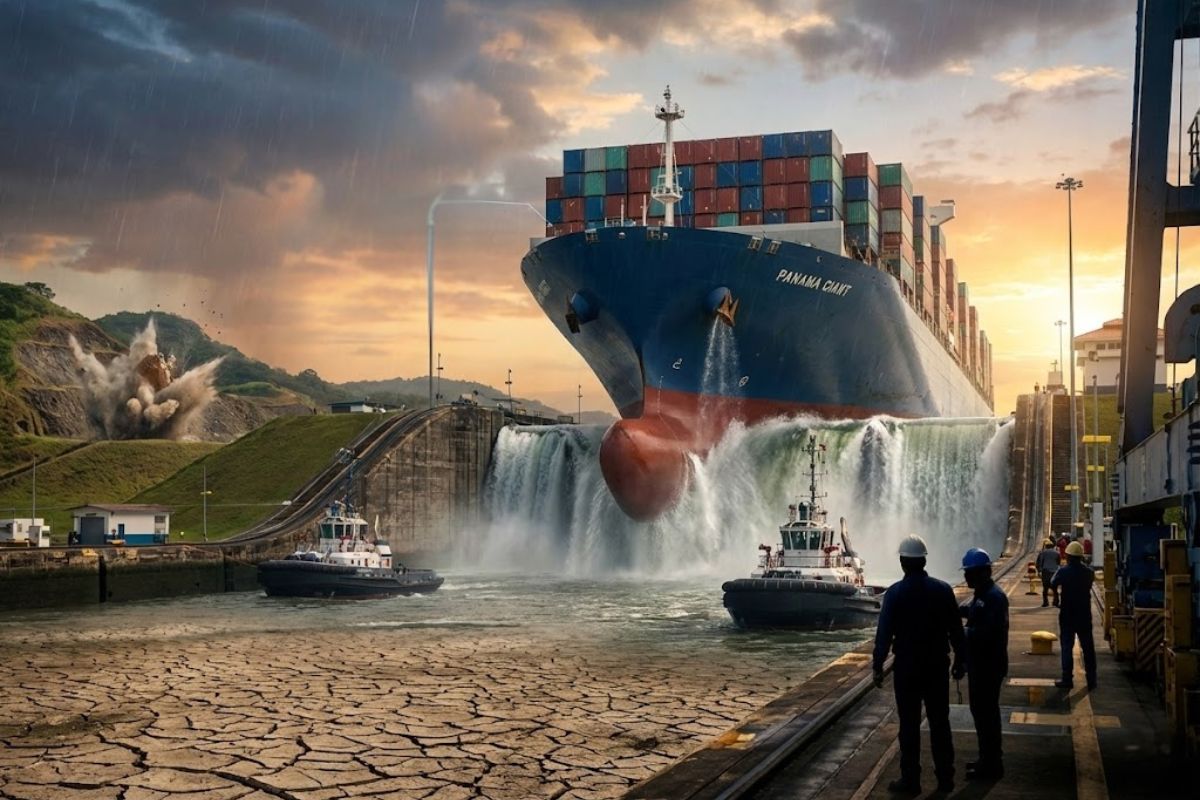
From The 19th Century To The Current Management, The Panama Canal Uses The Locks Of The Panama Canal And Lake Gatun To Lift Giant Ships, Faces Recurring Water Crisis And Remains Essential For Global Trade In All Maritime Directions, Ensuring Daily Crossings Without Paralysis Even In Extreme Drought
Inaugurated in 1914, the Panama Canal shortened the route between the Atlantic and Pacific by up to 20,000 kilometers, reducing trips that could take about two weeks to a journey of 8 to 10 hours. More than a century later, now under full control of Panama since 1999, the route remains essential for global trade, with about 14,000 ships crossing its 82 kilometers of length each year.
While lifting ships of up to 160,000 tons over an artificial lake 26 meters above sea level, the Panama Canal grapples with a delicate equation: with each complete crossing, the system can lose up to 200 million liters of freshwater, depending on the set of locks used. In recent years, such as 2023 and 2024, the combination of severe droughts and increasing vessel sizes has put the operation under pressure, requiring temporary restrictions on daily flow to prevent irreversible impacts on the region’s water supply.
Why The Panama Canal Changed Global Trade

The Panama Canal was designed to solve a logistical problem that limited trade for centuries: the need to bypass all of South America via Cape Horn, a long, costly, and dangerous route.
-
Ocean Giant Could Change Everything: Nuclear Container Ship Project Promises to Transport 16,000 Containers Without Using Fossil Fuels
-
Hormuz Strait: Hundreds of Ships and Oil Tankers Stranded After Attacks in the Middle East
-
World’s Largest Electric Ship, China Zorrilla, Will Connect Argentina and Uruguay Across the Río de la Plata with a $200 Million Investment and Operations Planned for 2026
-
How A 20-Ton Anchor Holds 200,000-Ton Ships Even Under Extreme Winds And Why It Fails In The Deep Ocean

By artificially connecting the Atlantic to the Pacific, the canal transformed a journey of up to 15 days into a route of less than 10 hours, becoming a transcontinental corridor for cargo and passengers.
Since its opening in 1914, more than 1 million ships have transited through the canal, moving millions of tons of goods.
On a typical operational day, up to 40 ships can traverse the system in both directions, transporting around 600,000 tons of cargo.
This route, currently controlled by the Panama Canal Authority, generates more than 2 billion dollars annually in tolls, with larger vessels paying up to around 500,000 dollars per crossing.
The economic importance of the Panama Canal is not limited to toll charges.
By reducing distance, travel time, and fuel consumption, the corridor redefines global logistics chains, influencing routes for grains, containers, industrial products, and even cruise ships.
In many cases, the viability of certain trade routes directly depends on the capacity and operational stability of the canal.
Locks That Lift 160 Thousand Ton Ships

The heart of the Panama Canal is its system of locks, true water elevators that allow ships to ascend and descend in relation to sea level.
Instead of digging through the entire isthmus to sea level, engineers chose to create an artificial lake and connect the oceans through hydraulic steps.
Upon entering from the Atlantic side, a ship arrives at the Gatun Locks, a set of three aligned chambers, each about 320 meters long.
Panamax vessels, over 300 meters long, occupy almost all of the available space, leaving less than 1 meter free on either side.
Even so, the locks can elevate ships that can reach 160 thousand tons of displacement to the level of Lake Gatun, about 26 meters above sea level.
Each chamber functions as a watertight compartment. Giant gates, approximately 2 meters thick and weighing about 680 tons, close behind the ship and retain the water.
Valves at the bottom of the structure open to allow freshwater from the lake to flow in, slowly raising the level inside the lock.
In about 8 minutes, approximately 80 million liters of water fill the chamber, lifting the vessel about 8 meters to the next level.
After completing the set of three chambers, the ship reaches Lake Gatun, which covers an area of about 425 square kilometers and was, in its time, the largest artificial lake in the world.
In addition to being the main reservoir that supplies the Panama Canal, the lake is also essential for the water supply of the Panamanian population and for electricity generation in the region.
The Price In Water: 200 Million Liters Per Crossing

Although it does not use pumps to lift ships, the Panama Canal pays a high price in freshwater with each crossing.
The system relies entirely on gravity: water from Lake Gatun flows into the locks, lifts the vessel, and then is discharged into the sea.
Considering the operation of various chambers along the entire route, the passage of a single ship can result in the loss of up to 200 million liters of water.
In a scenario with up to 40 ships per day, daily consumption reaches hundreds of millions of cubic meters throughout the year.
The balance between navigation, human supply, and energy generation thus becomes a permanent challenge.
In the years of 2023 and 2024, periods of prolonged drought reduced the level of Lake Gatun, forcing the Canal Authority to impose limits on the draft of the ships and temporarily reduce the daily flow to ranges between 24 and 32 vessels per day.
Each adjustment of this kind impacts schedules, freight rates, insurance, and delivery timelines worldwide, highlighting how the region’s hydrology conditions the performance of the Panama Canal.
At the same time, these recent crises reinforce the debate about new solutions, such as systems that recirculate water between chambers or adjustments in the operation of the expanded locks to reduce waste.
Any change, however, must preserve the safety of giant ships and the reliability of a route where margins for error are minimal.
Millimeter Navigation, Practitioners, And 50-Ton Mules
Operating within the Panama Canal is such a delicate task that a unique rule has been established: it is the only place in the world where the captain is required by law to relinquish command of the ship to a local professional.
These specialists are the canal practitioners, highly trained sailors who know in detail every curve, current, and restriction of the locks and narrow channels.
From the moment they enter the canal, the practitioners assume full responsibility for navigation. On a typical day, up to 40 ships need to be positioned, aligned, secured, and raised without incidents, always within tight time windows.
Any mistake can lead to collisions, hull damage, structural failures, or even route interruptions for days, resulting in incalculable losses.
In addition to the practitioners, there is another discreet protagonist: the so-called mules, locomotives that move on tracks on the sides of the locks.
Each one weighs about 50 tons and is connected to the bow and stern of the ship by steel cables. Working in pairs or teams, these machines pull the vessels with precision, constantly adjusting cable tension to keep the ship centered.
As the vessel approaches a lock, tugboats assist in the entry. Then, the mules take over the millimeter control of the position.
Less than a meter of clearance remains between the hull and the walls of the chambers, meaning that any sharper oscillation could tear the ship or damage the structure.
The synchronization between practitioners, tugboats, mules, and land crews is what keeps the continuous flow in the Panama Canal.
Colossal Explosions, Culebra Cut, And An Extreme Construction Site
Long before ships began to rise and fall in the locks, the region housing the Panama Canal was the stage for one of the largest engineering projects of the 20th century.
The most dramatic point of construction is the Culebra Cut, a stretch of about 13 kilometers through a mountain range.
To open this corridor, millions of cubic meters of excavation were required and the use of an amount of explosives described as greater than that used in World War I.
Landslides, heavy rains, and geological instability turned the Culebra Cut into a synonym for extreme obstacle, requiring successive blasting campaigns and slope reinforcement.
The first construction attempt, led by the French starting in 1881, failed due to climatic conditions, landslides, and tropical diseases, such as malaria and yellow fever.
It is estimated that more than 20,000 workers died during this phase.
In 1904, the United States took over the project with a different approach, opting for the lake and locks model instead of a sea-level canal.
Even so, another 5,000 men lost their lives by the time of its completion in 1914.
Today, crossing the Culebra Cut remains one of the most sensitive points of navigation.
After about five hours of internal travel, the ship crosses Lake Gatun, passes through the narrow corridor of the “cut snake,” and proceeds to the Pedro Miguel and Miraflores locks, which gradually return it to Pacific level.
This entire route, including ascent, navigation on the lake, and descent, takes between 8 and 10 hours on a stable operational day at the Panama Canal.
Droughts, Future Of The Canal, And Global Dependence
Even with over 110 years of history, the Panama Canal remains exposed to pressures that go beyond engineering.
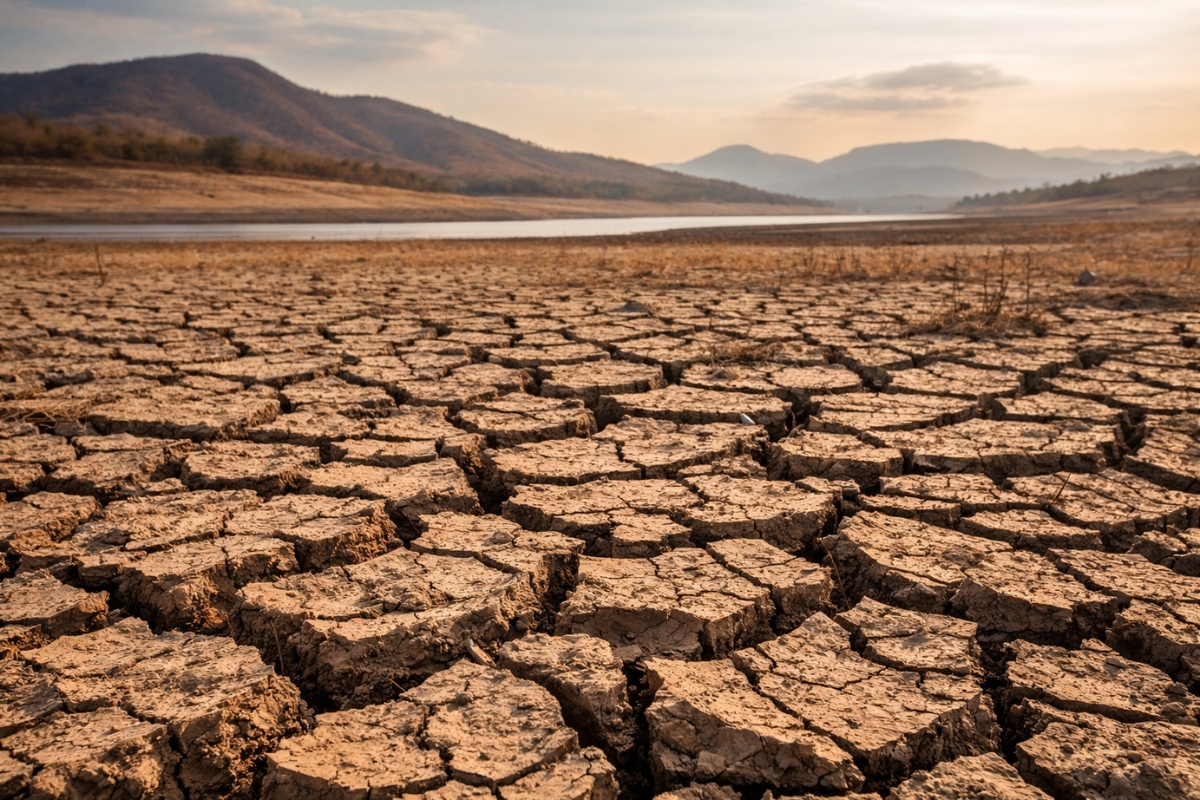
Recent droughts raise the possibility of periods in which the volume of water in Lake Gatun may not be enough to simultaneously maintain navigation, human supply, and energy generation.
By reducing the number of ships per day to ranges between 24 and 32 in 2023 and 2024, the Canal Authority signaled that, if necessary, the priority may shift to preserving the water system, even if this means delays and additional costs for shipowners and logistics companies.
In a world that increasingly depends on efficient global chains, any restriction on the canal’s capacity reverberates in ports across several continents.
The discussion about the future of the Panama Canal involves new lock technologies, lake water management models, possible toll adjustments, and even promoting alternative routes in extreme situations.
It is a matter of balancing a century-old construction with rapidly changing climatic and economic realities, without losing the reliability of one of the planet’s most strategic routes.
In your opinion, is the greatest challenge for the Panama Canal today water scarcity, the constant increase in ship size, or the strong dependence of global trade on this single route?







-

-

-

-

-

-

15 pessoas reagiram a isso.