





 Portuguese
  English
  Spanish
  4 min of reading
  0 comments


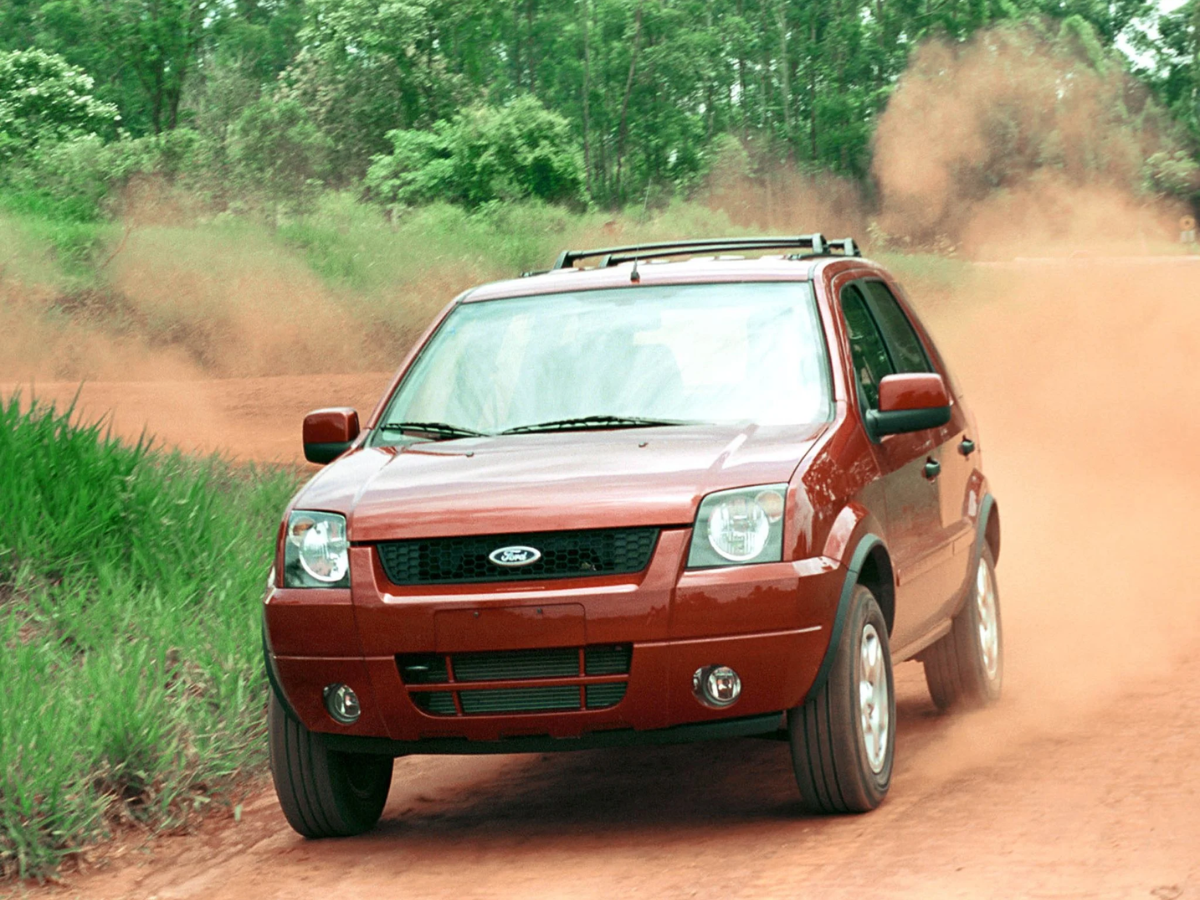
From “Gambiarra” to a Market Phenomenon. Discover the History, Controversies, and Indelible Legacy of the Ford EcoSport, the Car That Changed the Brazilian Automotive Industry
The launch of the Ford EcoSport in 2003 was a milestone for the Brazilian automotive industry. It not only created but also shaped what is now a popular segment of compact SUVs. However, its trajectory is a paradox: while it was a sales success, the Ford EcoSport faced strong initial skepticism, receiving pejorative nicknames that reflected criticism of its quality.
Understand the story of this misunderstood pioneer. We analyze everything from its controversial birth and the creation of a new market to its evolution, legacy and the lasting impact it left in Brazil.
The First Generation of the Ford EcoSport and the “Gambiarra” Stigma
The first generation of the Ford EcoSport was born from the “Amazon Project,” an investment of over US$ 1.5 billion in the modern factory in Camaçari (BA). Ford’s strategy was to use the B3 platform, derived from the then-new Fiesta, to optimize costs. This, while a virtue for the price, was also the source of criticism.
-
A couple buys an old chalet, breaks the kitchen floor for renovation, and finds over a thousand coins of gold and silver hidden since the English Civil War over 4 centuries ago.

-
Rigid bags with their days numbered: new trend prioritizes comfort in 2026.

-
YouTuber creates an excavator equipped with a giant 4.5-meter sword to challenge his brother to a rematch, and the invention quickly goes viral on social media.

-
The U.S. Army surprises the world by presenting the UH-60MX Black Hawk helicopter capable of flying without pilots, controlled by a tablet, featuring the MATRIX system, smart sensors, and full autonomy in real combat and rescue missions.


The design, with its raised body and iconic spare wheel on the back, was innovative. The performance of the 2.0 Duratec engine with 143 hp was a highlighted positive point. However, the car soon received nicknames like “NhecoSport” due to “design flaws and poor finishing quality,” a “noisy dashboard,” and disproportionate gaps between components. These criticisms fueled the perception that the model was a “gambiarra.”
How the Ford EcoSport Launched the Era of Compact SUVs

At the time of its launch, the Ford EcoSport had no direct competitors. Ford bet that hatchback and sedan consumers would be drawn to a vehicle with an adventurous look and elevated driving position, yet at an affordable price. The strategy worked perfectly.
With an aggressive launch price, the EcoSport became a sales success. It effectively democratized access to the SUV style in Brazil, creating a new vehicle standard. Its formula forced all other automakers to develop similar products, creating and consolidating the compact SUV segment in the country.
Evolution and Maturation, the Next Generations, and Attempts to Refine the EcoSport
The trajectory of the Ford EcoSport was marked by constant evolution to correct flaws and stay competitive.
Second Generation (2012): Launched in 2012, this generation was a qualitative leap. Developed on the global B2E platform, it featured a more modern “Kinetic” design and a more refined interior. It introduced more efficient engines, such as the 1.6 Sigma, and the controversial dual-clutch PowerShift automated transmission.
2017 Facelift: For the 2018 model, the Ford EcoSport received a significant update. The front end was redesigned, and the interior gained an entirely new dashboard with better quality materials and the SYNC 3 multimedia system. Mechanically, it debuted the new 1.5 Dragon three-cylinder engine and crucially, a new conventional six-speed automatic transmission, replacing the problematic PowerShift.
The Strong Competition, the End of Production, and the Lasting Impact of the Ford EcoSport
The success of the Ford EcoSport paved the way for a flood of competitors. Models like the Renault Duster, Chevrolet Tracker, Honda HR-V, and Jeep Renegade entered the market, intensifying the competition and eroding the pioneer’s market share.
The gradual loss of popularity, combined with image issues related to the PowerShift transmission and the aging of the design, culminated in the end of Ford EcoSport production in Brazil in January 2021. The decision was part of a global restructuring of Ford, which closed its factories in the country. Despite its end, the legacy of the Ford EcoSport is undeniable, being responsible for the “SUVization” of the Brazilian market.
The Ford as an Unappreciated Pioneer and Its Place in History


The journey of the Ford EcoSport in Brazil was one of contrasts. It overcame initial skepticism to become a cultural icon and a watershed moment in the industry. Its main contribution was democratizing access to the “SUV style” for Brazilian consumers, catering to a latent desire for vehicles with robust design and versatility.
Although its national production has ended, the Ford EcoSport has left an indelible mark. The formula it created – a compact SUV derived from a passenger car platform – continues to be the foundation of the best-selling segment in the country. It was, indeed, an unappreciated pioneer whose vision prevailed and shaped the future of the automotive market in Brazil.








-

-

3 pessoas reagiram a isso.