





 Portuguese
  English
  Spanish
  7 min of reading
  0 comments


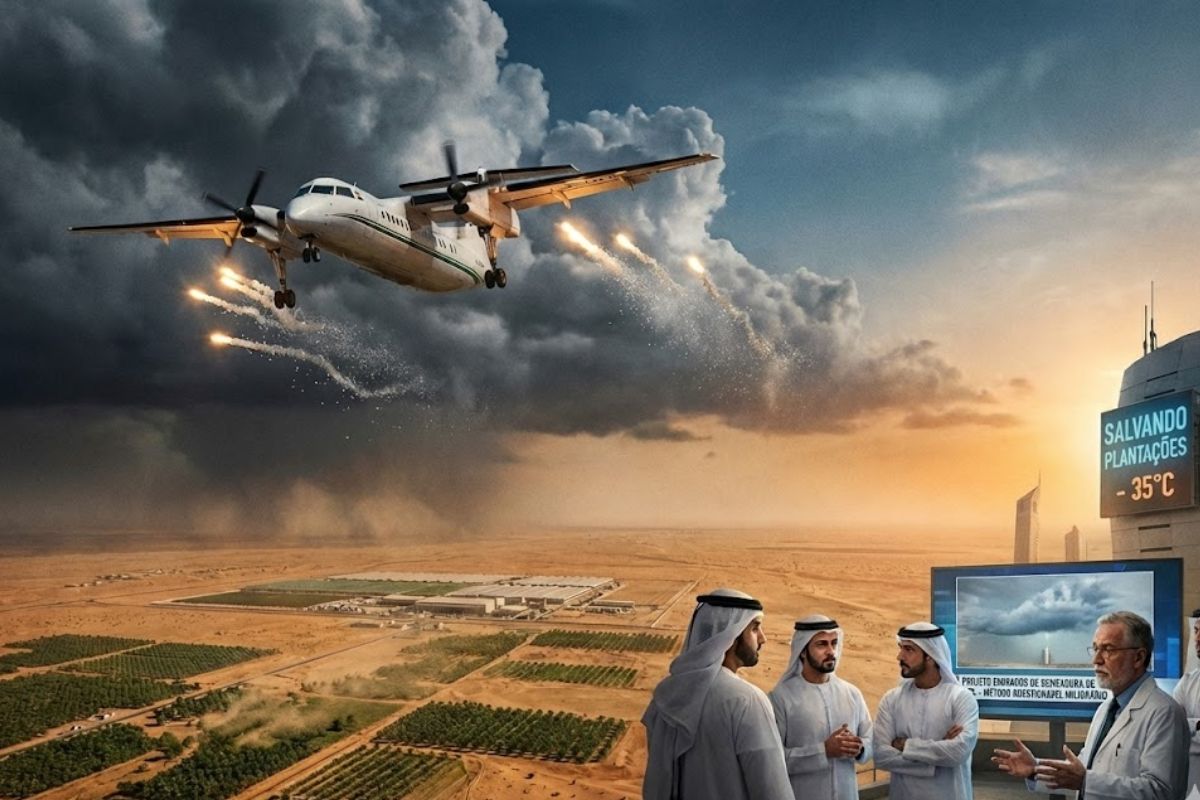
Multimillion Dollar Cloud Seeding Program in the United Arab Emirates Tries to Make It Rain in the Desert Using Salt Cartridges Fired from Airplanes, Promising to Enhance Irrigation in Agricultural Areas Under Extreme Heat and Faces Criticism from Scientists Who Question Effectiveness, Climate Risks, and Transparency of Official Results Disclosed to the Public and Investors
For more than 15 years, the United Arab Emirates has been heavily investing in a cloud seeding program that literally promises to make it rain in the desert. The strategy is simple in form and ambitious in proposal: small airplanes take off on days of 35 degrees heat with salt cartridges on board, under the command of pilots like Swedish Anders Mard, to try to turn dry clouds into rain over agricultural areas and supply regions.
While metropolises like Dubai continue to consume water on a large scale and pressuring aquifers that recede year after year, meteorological authorities argue that the country can no longer depend solely on natural reservoirs and desalination. On the other hand, part of the scientific community considers the program that attempts to make it rain in the desert an expensive experiment, based on little proven science and effects still insufficiently measured on the regional climate.
Airplanes, Salt Cartridges, and the Operation to Make It Rain in the Desert

The pilot Anders Mard, a 57-year-old Swede, is presented as one of the main “rainmakers” in the country.
-
Scientists from an international project drill 1,800 meters of ice in Antarctica using hot water and discover details about one of the most intriguing places on planet Earth.
-
Seen from space, a colossal volcano nearly 5,000 meters high in Russia has released 1,600 km of smoke over the Pacific, forming “devil’s horns” of lava and revealing the brutal force of the Ring of Fire.
-
Expedition 501: Scientists drill into the ocean floor and discover a giant reserve of fresh water hidden beneath the sea, extracting nearly 50,000 liters and revealing an invisible system that could reshape the map of water scarcity.
-
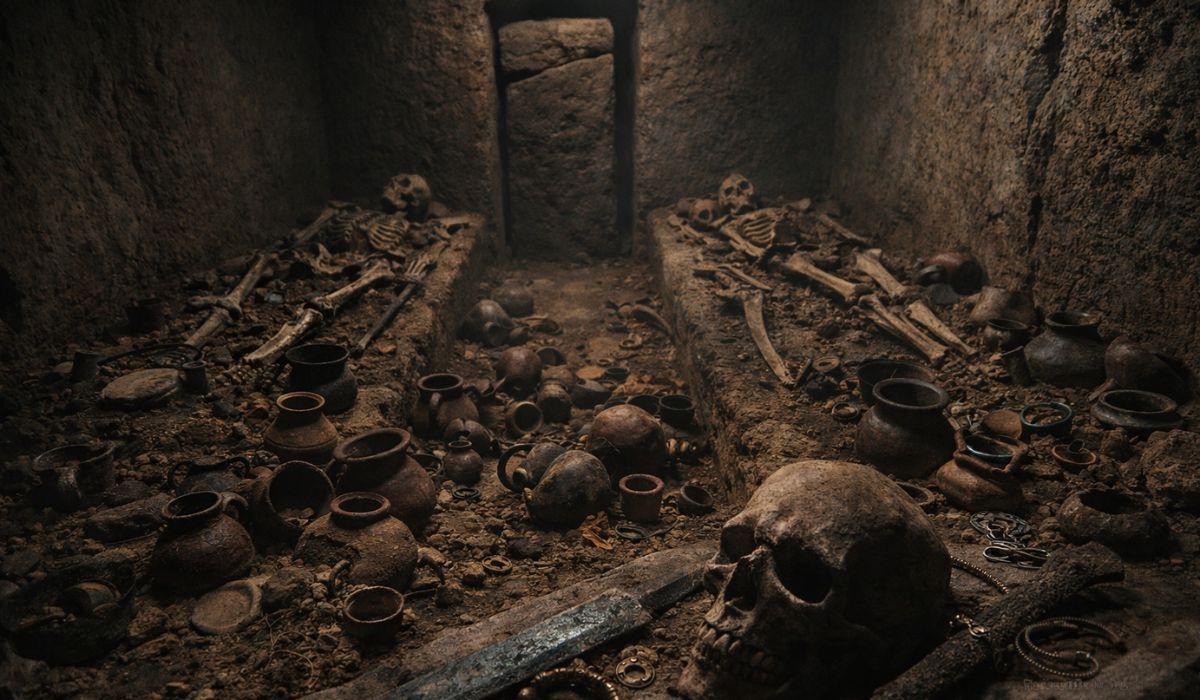
Archaeologists find an intact tomb over 2,500 years old, with more than 100 preserved objects, weapons, jewelry, and human remains never touched.

Before each takeoff, he equips the plane with an unusual load for civil aviation: cartridges containing sodium chloride and potassium chloride, which will be fired directly at the base and inside the clouds.
The operational plan is tight. Anders has about three hours to locate the most promising formations, align the aircraft at the correct altitude, and activate the devices.
In flight, visibility is often foggy, and the temperature of about 35 degrees Celsius reinforces the scenario of hot, dry air over the desert.
When he receives coordinates for a cloud considered suitable via radio, the pilot executes circular maneuvers and, under the command of the operations center, fires successive loads of salt.
In a single mission, he can seed up to 20 clouds in three hours, slowly rotating the aircraft as the cartridges are detonated.
At the end of the flight mentioned in the report, Mard got off the plane exhausted but satisfied to have seeded four clouds with forty cartridges.
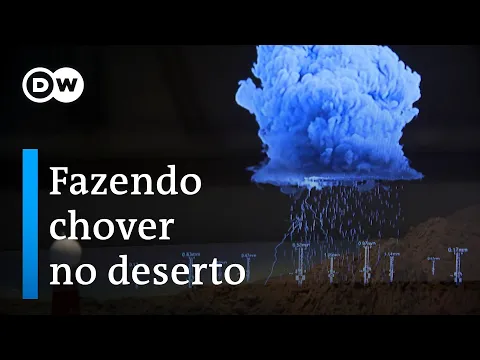
The alleged physical logic is known: salt particles would act as condensation nuclei, joining with the water already present in the clouds.
As they become heavier, the droplets would tend to fall as rain, theoretically increasing local precipitation.
It is this mechanism that, in the government’s view, would make it possible to “make it rain in the desert” with the support of relatively simple technology.
Agriculture Under Extreme Heat and Deeper Wells

Far from the command center in Abu Dhabi, the impact of the lack of rain is felt daily in small properties like that of Salah al-Hamadi, a 63-year-old retired farmer on the outskirts of Dubai.
He grows figs, pomegranates, corn, and dates on a limited plot of land and relies on a well approximately 300 meters deep to irrigate the crops.
Year after year, Salah observes the water level drop and the time available for irrigation shrink.
Today, he calculates that he can water the fruits for a maximum of three hours a day, which is insufficient to protect all the plants during scorching heat periods.
Many fruits end up wilting, losing commercial value and cannot be sold, compromising the family’s income.
Increasingly deeper groundwater is just a symptom of a larger picture.
Gleaming metropolises like Dubai consume water abundantly, the construction industry continues to expand, and about 800,000 people move to the country every year, according to local authorities.
In an environment with rising temperatures and scarce rainfall, the challenge is to maintain supply and sustain some agricultural production.
In this reality, any promise of making it rain in the desert is observed with interest, expectation, and, in many cases, faith.
National Center of Meteorology and Cloud Management

The heart of the program that attempts to make it rain in the desert is located at the National Center of Meteorology in Abu Dhabi. There, teams led by scientists like Ahmed al-Kamali monitor satellite data, radar, and regional forecasts in real time.
The goal is to accurately identify when and where clouds form and which of them is most likely to respond to seeding.
Ahmed presents the maps to the team and ventures a short-term forecast regarding the evolution of the clouds.
In the United Arab Emirates, clouds are not rare, but they often pass without producing rain.
The center coordinates a fleet of four propeller planes, prepared for launching salt at different points in the country, with priority for agricultural areas and regions of water interest.
As soon as a formation is deemed suitable, the meteorologist sends coordinates via radio to the pilot on mission.
The order is clear: speed is critical. The window of opportunity for a cloud with minimally favorable structure is short, and any delay reduces the chance of obtaining precipitation.
While Anders Mard operates on one cloud, the team on the ground is already looking for another cell in radar images, trying to maximize each hour of flight.
The center maintains that the results obtained in 15 years of practice are encouraging and denies that seeding diverts rain from other regions.
According to meteorologists, there is no evidence that the process reduces precipitation in neighboring countries or in areas outside the aircraft’s operational zone.
Multimillion Dollar Program Under Severe Scientific Criticism
Despite official enthusiasm, the multimillion dollar program in the Emirates that aims to make it rain in the desert constantly faces criticism both inside and outside the country.
Climatology and hydrology experts question the methodological basis of the experiments, point out lack of independent controls, and state that the exhibited success cases are, at best, anecdotal.
For these critics, proving that there was rain after a seeding operation is not enough.
It would be necessary to demonstrate, with long data series, that the amount of precipitation consistently and statistically significantly increased compared to periods without intervention.
The main accusation is that the program is “not very scientific”, with results not yet robustly demonstrated in the specialized literature.
The direction of the National Center of Meteorology reacts to these allegations.
The head of the institution states that the objections ignore evidence accumulated over more than a decade and insists that seeding is cheaper than desalination of seawater, a process widely used in the region but intensive in energy and investment.
In the agency’s view, the combination of cloud seeding and desalination is the only way to meet growing demand without system collapse.
Even so, the perception that the country attempts to make it rain in the desert with an instrument of questioned effectiveness continues to fuel public debate.
Part of the academic community fears that significant resources are being channeled toward a solution with lower returns than advertised, instead of being directed toward consumption reduction, water reuse, and structural adaptation of cities.
Faith, Technology, and the Vision of Those Who Wait for the Rain to Fall
For Salah al-Hamadi, who has been observing climatic phenomena on the horizon of Dubai since childhood, the discussion is rarely abstract.
Whenever possible, he films the rain with his cell phone, records thunder and heavy clouds, and keeps these images as a memory of a rare event.
A devout Muslim, Salah says he considers it legitimate for humans to try to “make it rain”, as long as it is recognized that the final control is not in the hands of pilots and scientists.
He sees in the program that tries to make it rain in the desert a way to seek help in a scenario of extreme heat and parched lands, not seeing a conflict with faith.
On a symbolic level, every drop that falls after a seeding operation is celebrated as a small technological triumph in an arid region. For Anders Mard and his team, moments when rain begins shortly after the cartridges are fired are recorded as victories.
In practice, however, the balance between investment, risk, real benefit, and still unknown impacts remains open.
Given an expensive program, with disputed effectiveness and designed to literally make it rain in the desert, do you believe that governments should continue to invest in cloud seeding as a water policy or should they prioritize other solutions for conservation, reuse, and water management?









Seja o primeiro a reagir!