





 Portuguese
  English
  Spanish
  4 min of reading
  0 comments


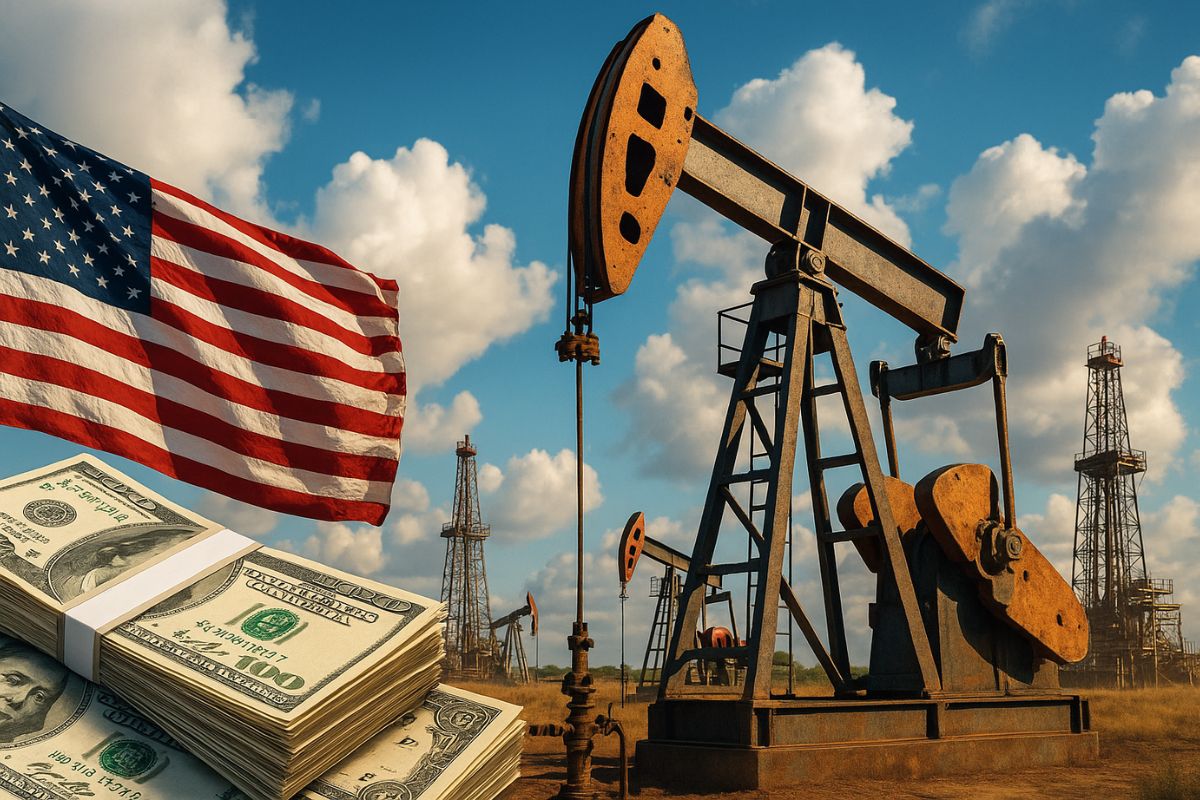
The Rise of the United States to the Top Came Through the Combination of Hydraulic Fracturing and Horizontal Drilling, Changing Geopolitics and Solidifying the Country as the Largest Oil Producer in the World
The United States’ arrival at the position of largest oil producer in the world was no accident. It resulted from the convergence of two technologies that moved from the laboratory to the field in the early 2000s: hydraulic fracturing and horizontal drilling. With this combo, rock formations previously considered unviable began to produce at scale, paving the way to surpass Saudi Arabia and Russia.
The phenomenon became known as the shale revolution. First, natural gas skyrocketed, and then shale oil gained traction. The result was an energy turnaround with chain effects: less external dependence, reconfiguration of the global market, and competitive pressure on traditional producers. What seems simple had decades of trial, error, and refinement before becoming an industrial success.
From Decline to Technological Turnaround
For a long time, the American trajectory in oil was one of highs followed by maturity and decline. Conventional wells dwindled, and production seemed doomed to the past.
-
Offshore industrial demand in Macaé skyrockets with the recovery of oil and gas and could grow by up to 396% by 2026 in the Campos Basin.
-
Offshore industrial demand in Macaé surges with the recovery of oil and gas and could grow by up to 396% by 2026 in the Campos Basin.
-
Brazilian giant expands borders in the Southeast: Petrobras confirms new oil discovery in ultra-deep waters in the pre-salt of the Campos Basin.

-
Alert in the global energy market: Severe tropical cyclone hits the coast and disrupts gas production at major plants in Australia, threatening global supply.

Small and medium-sized companies, however, insisted on exploring low-permeability rocks, where oil and gas are trapped in micropores.
The turnaround came when technical innovation and operational scale met.
Horizontal drilling allowed for sweeping large portions of the rock from a single surface point, while fracturing opened microfissures held open by sand to maintain flow.
The combination of methods changed the economics of the well and brought entire regions back onto the oil map.
Hydraulic Fracturing and Horizontal Drilling, the Combo That Freed Shale
Hydraulic fracturing injects water, sand, and additives at high pressure to create and enlarge fractures in the shale rock.
The sand keeps the fractures open, allowing the hydrocarbon to migrate to the well. Without this granular “prop,” the fractures would close, and production would drop drastically.
Horizontal drilling, in turn, multiplies contact with the formation in a single well.
Instead of advancing only vertically, the drill advances long lateral distances, reaching larger areas and reducing the need for multiple locations. Together, the techniques unlocked productivity and reduced unit costs, key to making shale competitive.
Who Led the Charge, How Much Was Imported, and Why It Happened in the U.S.
Contrary to popular belief, it was not just the giants of the sector that led the revolution.
Smaller, agile, and risk-tolerant companies tested and refined the combination of techniques, paving the way for the later entry of the big players.
This ecosystem of capital and knowledge explains why the advancement gained momentum.
The economic effect was broad. The production jump reorganized industrial chains, boosted petrochemicals based on cheap gas, and repositioned the U.S. on the geopolitical chessboard.
The question of why is answered at the intersection of technology, favorable regulatory framework, existing infrastructure, and a dense network of services and suppliers capable of scaling quickly.
Where Shale Grew and How This Altered the Global Market
Shale basins in American territory concentrated the expansion and brought new investments to entire regions. The additional production shook up the global supply, influencing prices and forcing traditional producers to recalibrate strategies.
The market began to price not only decisions by exporting countries but also the pace of drilling and completion in North American shale.
Geopolitically, less dependence on imports changed the U.S. posture on energy issues.
Meanwhile, new trading routes for oil and derivatives became consolidated, and export projects gained relevance, amplifying the country’s influence on prices and the balance between supply and demand.
The Technical-Operational Side That Sustains Leadership
The shale economy has particularities. Wells decline quickly, with a large portion of the volume produced early in the lifespan.
To maintain or expand production, continuous drilling is necessary, something that only works with streamlined logistics chains, access to quality frac sand, and completion services available at the right time.
Another point is data management. Decisions about well spacing, fracture design, and fluid mixing are adjusted based on field results.
Iterative learning and standardization raise the productivity curve. In short, technology plus execution is what sustains the position of largest oil producer in the world.
Costs, Criticisms, and the Environmental Debate
The advancement of shale also brought about legitimate debates. Communities and experts began to discuss water usage, wastewater management, fugitive methane emissions, and induced seismic activity associated with fluid disposal.
Responses range from improvements in monitoring to stricter processes, with the industry seeking to mitigate impacts and preserve the social license to operate.
On the economic front, oil price cycles tested the model’s resilience.
The ability to quickly adjust CAPEX, renegotiate contracts, and prioritize higher-return assets was crucial to navigating adverse phases and maintaining leadership.
The rise of the United States to the position of largest oil producer in the world is the story of applied technology, industrial execution, and geopolitical effects.
In your opinion, what is the most decisive factor in this turnaround: the technical combo of fracking with horizontal drilling, the ecosystem of companies and capital, or the geopolitical pressure for energy security? Do you see space for other countries to replicate this model on the same scale or are the American conditions unique? Tell us in the comments your market insights and what risks or opportunities you see ahead.








Seja o primeiro a reagir!