





 English
  Francês
  Alemão
  Italiano
  Japonês
  Norueguês
  Portuguese
  Spanish
  5 min of reading
  5 comments


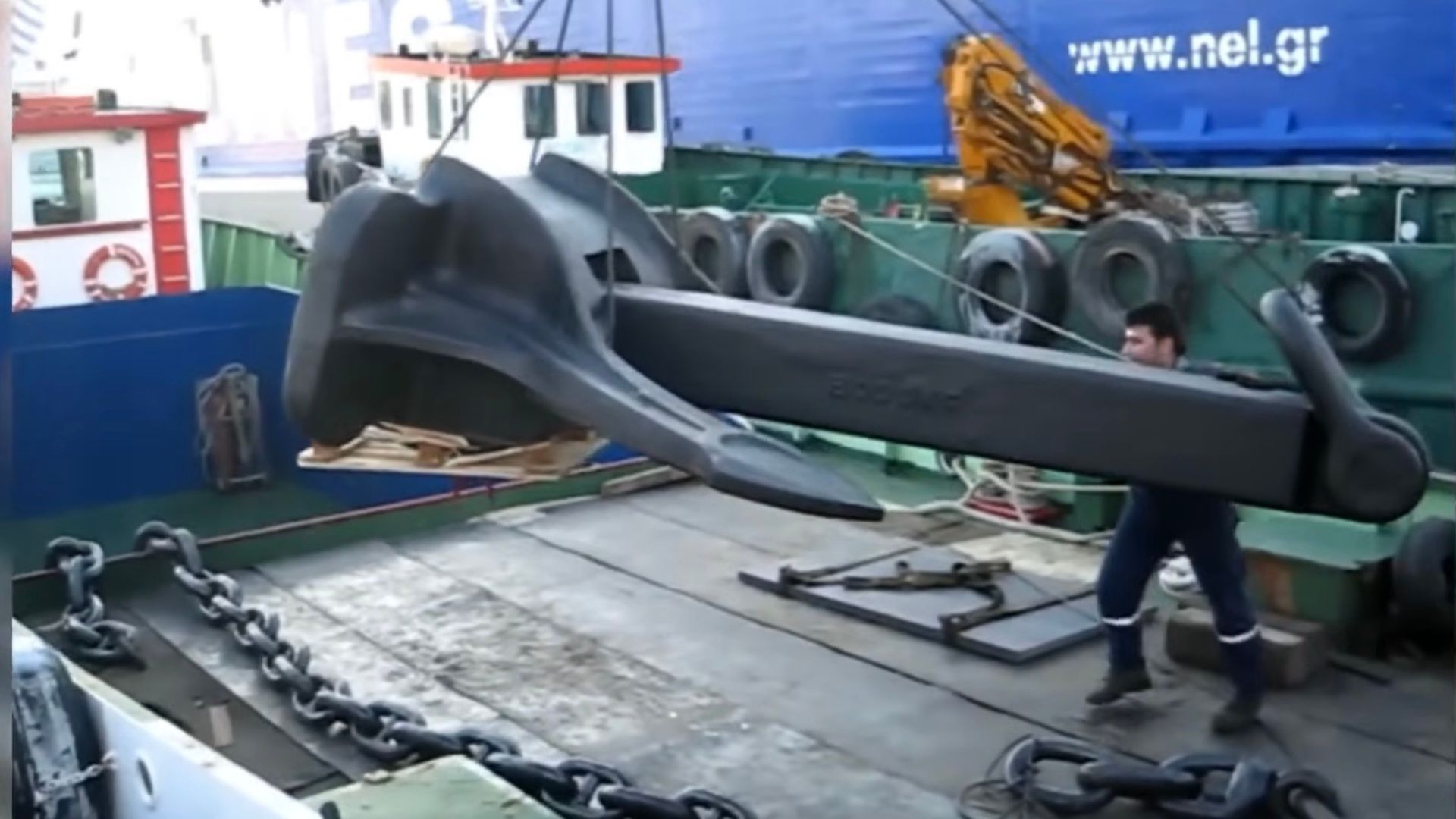


Understand The Invisible Engineering That Keeps Real Floating Cities In Place Even Under Colossal Forces, Revealing The Physical Limits Of The Anchoring System In Deep Waters
A modern container ship can exceed 200,000 tons. When the wind howls and the ocean currents press against the hull, the force exerted against this colossal structure is enough to snap steel cables like they were simple threads. Even so, these true floating cities remain stable thanks to a system that, at first glance, appears surprisingly simple: a single anchor connected to a metal chain.
This information was disclosed by technologiaportuaria according to a technical analysis published on naval engineering and maritime anchoring systems. According to the channel, although the mechanism seems basic, it involves precise calculations, applied physics, and a structure designed to withstand extreme forces of the ocean.
But here’s the detail few know: if a captain were to release the anchor in the middle of the deep ocean, it simply wouldn’t work. Furthermore, if the crew were to pull the chain at the wrong angle, it could compromise the structural integrity of the ship itself. Therefore, the inevitable question arises: how do captains know how much chain they need to let out? How do they manage to lift a 20-ton anchor from the seafloor? And why do commercial ships generally not anchor in waters deeper than 100 meters or approximately 300 feet?
-
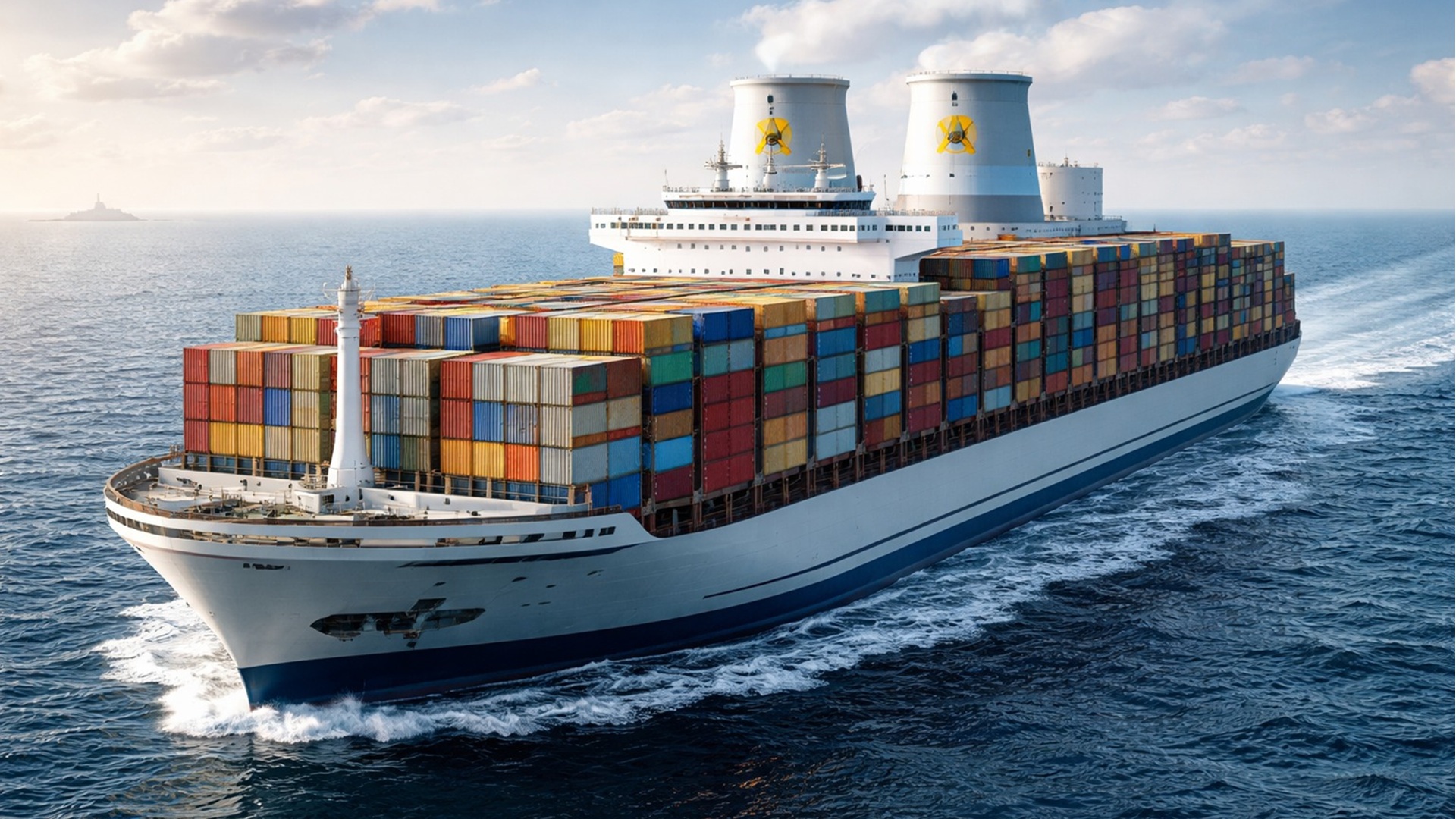
Ocean Giant Could Change Everything: Nuclear Container Ship Project Promises to Transport 16,000 Containers Without Using Fossil Fuels
-
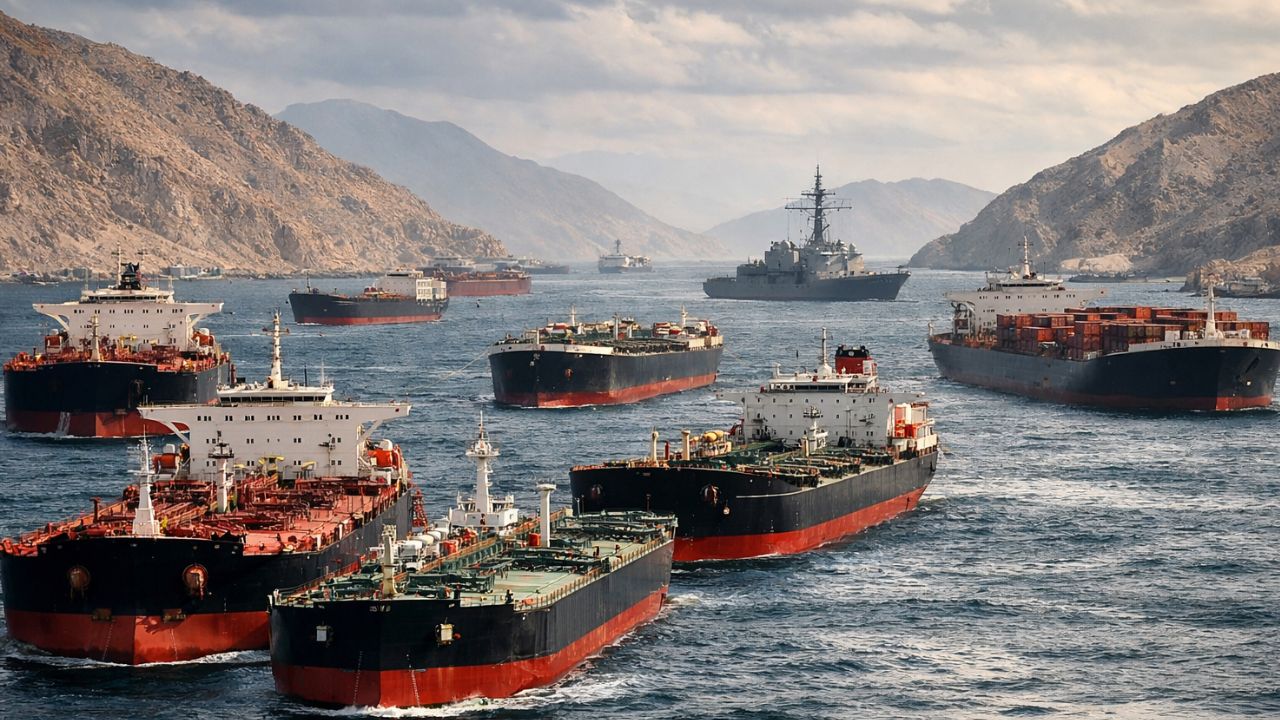
Hormuz Strait: Hundreds of Ships and Oil Tankers Stranded After Attacks in the Middle East
-
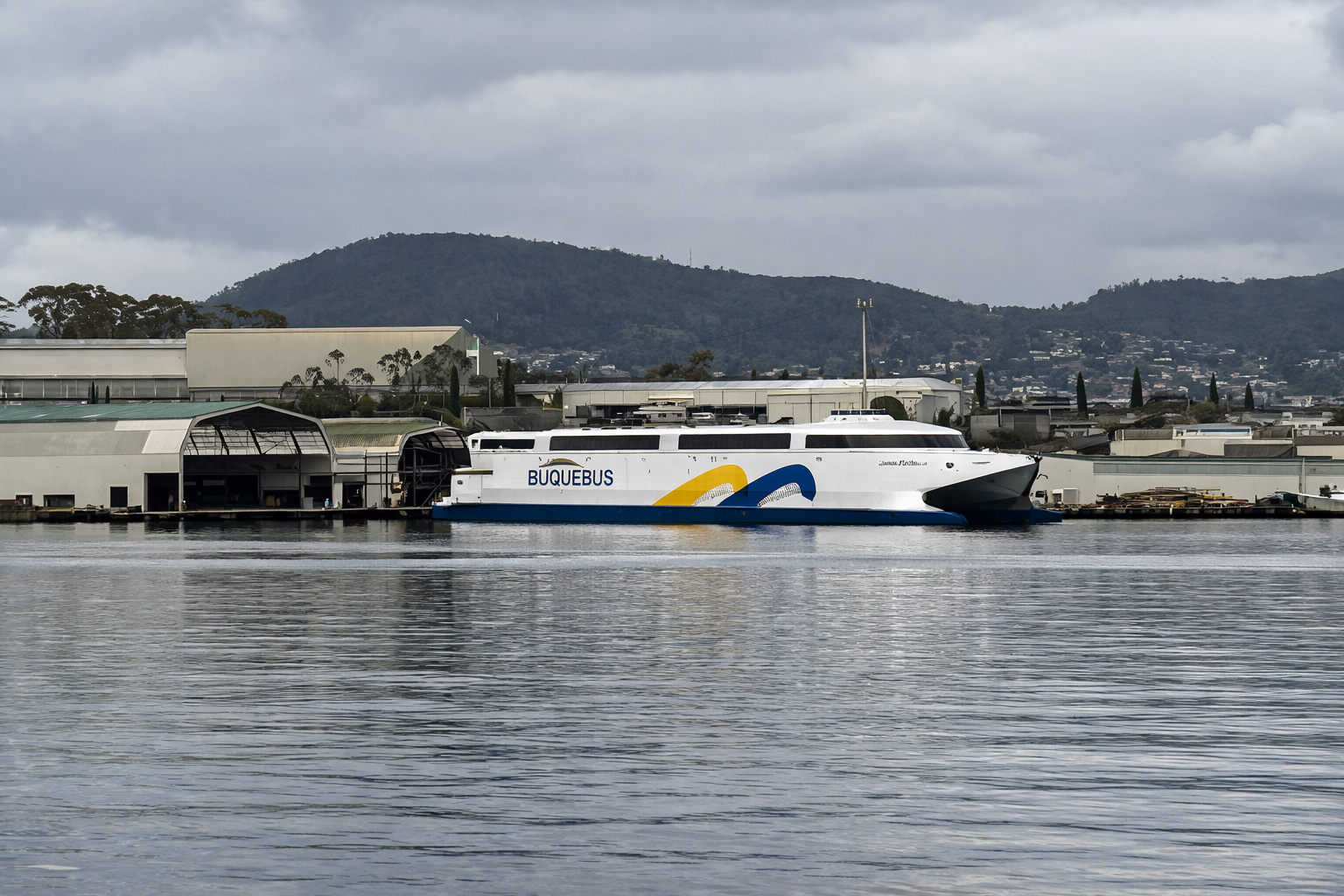
World’s Largest Electric Ship, China Zorrilla, Will Connect Argentina and Uruguay Across the Río de la Plata with a $200 Million Investment and Operations Planned for 2026
-
China Launches 10,000-Ton Electric Container Ship with 19,000 kWh in Interchangeable Batteries and Autonomous Navigation for Coastal Trade Routes
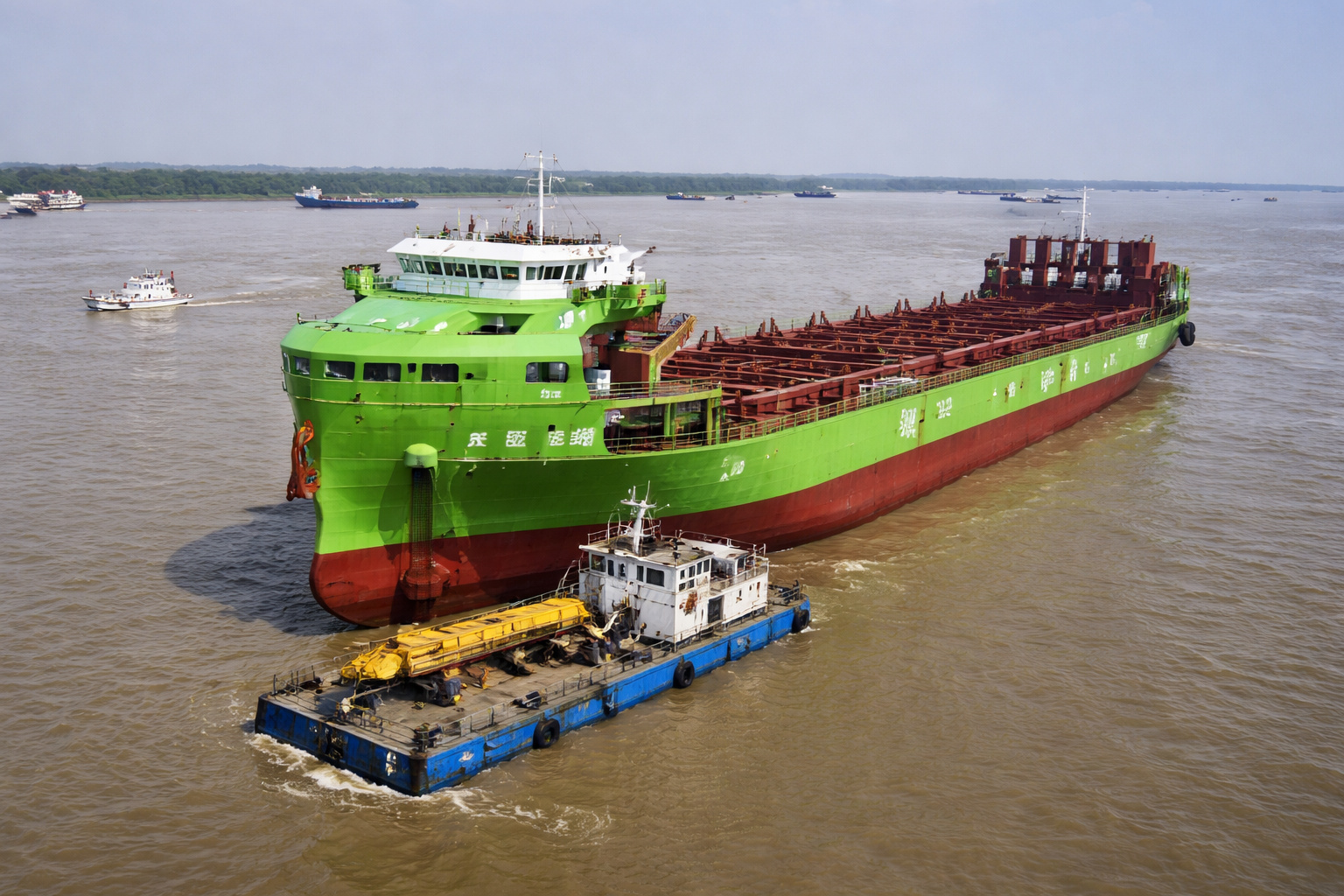

The Secret Lies In The Heavy Chain And The Curve Called Catenary
To Understand The Functioning Of The Anchoring System, it is first necessary to respect the weight of the chain. On a large vessel, this is not just an ordinary chain. A single link can weigh more than 300 pounds, equivalent to a large refrigerator.
The anchor, which can weigh between 15 and 20 tons, does not act alone. In fact, the chain attached to it is often even heavier than the anchor itself. And it is precisely in this weight that the secret of stability lies.
When the captain anchors the ship, he doesn’t simply throw the anchor to the bottom. On the contrary, he lets out a long stretch of heavy chain over the seabed. This setup forms a curve known as catenary. As a result, the weight of the chain rests on the bottom and acts as a natural shock absorber.
Thus, when a wave pushes the ship backward, the vessel needs to first lift tons of chain before transferring force directly to the anchor. Consequently, when the force finally reaches the anchor, it acts horizontally, pressing it even more against the ground, rather than pulling it out.
Why Ships Do Not Anchor In The Middle Of The Deep Ocean
However, this system has clear limits. In open waters where the depth can reach about 2 miles, anchoring becomes unfeasible. If a ship breaks down in the middle of the Pacific, for example, it cannot drop anchor.
Commercial ships generally cannot anchor in waters deeper than 100 meters or approximately 300 feet. If the chain were to hang vertically in very deep waters, its own weight could damage the deck or even compromise the ship’s structure.
For this reason, in deep waters, ships do not anchor — they drift. Alternatively, modern vessels use dynamic positioning, a system that combines computers and thrusters to keep the ship fixed in the same point without touching the bottom.
Shackles, Colors, And How The Captain Measures The Scope Accurately
When the ship is at the right depth, another essential question arises: how does the captain know how much chain has been let out? The answer lies in a traditional system called shackle, also known as shackle.
A Standard Length of chain receives this name and measures exactly 175 feet or 90 feet, depending on the standard used. Each section is connected by a special detachable link.
To facilitate identification, crew members paint these links with bright colors, usually white, red, or blue. In addition, they wrap wires around certain points to allow for identification in the dark, either by touch or with the help of a flashlight.
As the chain descends, an officer positioned at the bow visually counts the colored markings. Then, he communicates via radio to the bridge: “three shackles in the water.” In this way, the captain knows exactly how much weight is resting on the bottom and whether there is enough length — known as scope — to keep the ship safe.
The Moment of Breaking Free: How To Recover A 20-Ton Anchor
The most critical moment occurs when recovering the anchor. A 20-ton anchor, when embedded in the seabed, generates an extremely powerful suction force. Therefore, the crew cannot simply pull it directly.
To Solve This Challenge, the ship slowly moves forward to position itself exactly over the point where the anchor is fixed. This maneuver completely alters the physics of the situation. The chain takes on an almost vertical position, applying upward force.
This movement breaks the suction of the ground, in an instant known to the crew as breaking free.
As soon as the anchor emerges, it usually appears covered in thick, smelly mud. Before being stowed away, high-pressure water jets installed on the scupper remove all the dirt. Only after this cleaning does the anchor return to its place, and the ship continues its journey.
From the massive weight of the anchor to the strategic painting of the links, the anchoring system combines brute force and millimetric calculation. Every link, every meter of chain, and every decision by the captain represents the balance between heavy engineering and applied physics.
Would You Trust Your Safety To A Single Anchor In The Middle Of The Ocean, Or Did You Imagine The System Was Much More Complex?








Soporta porque en barco está flotando
‘Ancla’ es femenino. Es correcto decir ‘el ancla’, pero no, ‘el propio ancla’ ni ‘un solo ancla ancla’; sino ‘la propia ancla’, ‘una sola ancla’, etc.
Es una norma básica de ortografía. Siempre se está a tiempo de corregirlo
Vaya mierda de traducción del artículo.
No hay quien lo entienda. Nadie vigila esto?
Se entiende perfectamente. Ups cierto que soy técnico y me es más fácil comprnderlo.
Excelente la explicación no hay que ser tan **** para no entender