





 Português
  Inglês
  Espanhol
 3 min de leitura


Wind Farm in Bahia Relies on Siemens Turbines and Women’s Empowerment in Plant Operation and Maintenance
In the heart of Bahia, a landmark in the transition to clean energy is about to be inaugurated. On October 3rd, AES Brasil and Unipar will hold an inauguration event that will resonate not only in the region but throughout the country. The Tucano Wind Farm, a project of remarkable magnitude, emerges as a symbol of innovation and progress.
Bahia will host distinguished visitors who will gather at the Wish Hotel da Bahia in Salvador for the inauguration ceremony of the Tucano Wind Farm. Located in the municipalities of Tucano, Biritinga, and Araci, this massive project represents a milestone for northeastern Brazil and for the renewable energy sector as a whole. A colossal investment of R$ 1.5 billion has been allocated for the construction of this complex, indicating the commitment of the companies involved to a more sustainable future.
Watch the Video and Check Out How the Project Was Built


Plant Features the Largest Turbines in Terms of Power and Size Ever Installed, Capable of Operating 322 MW!
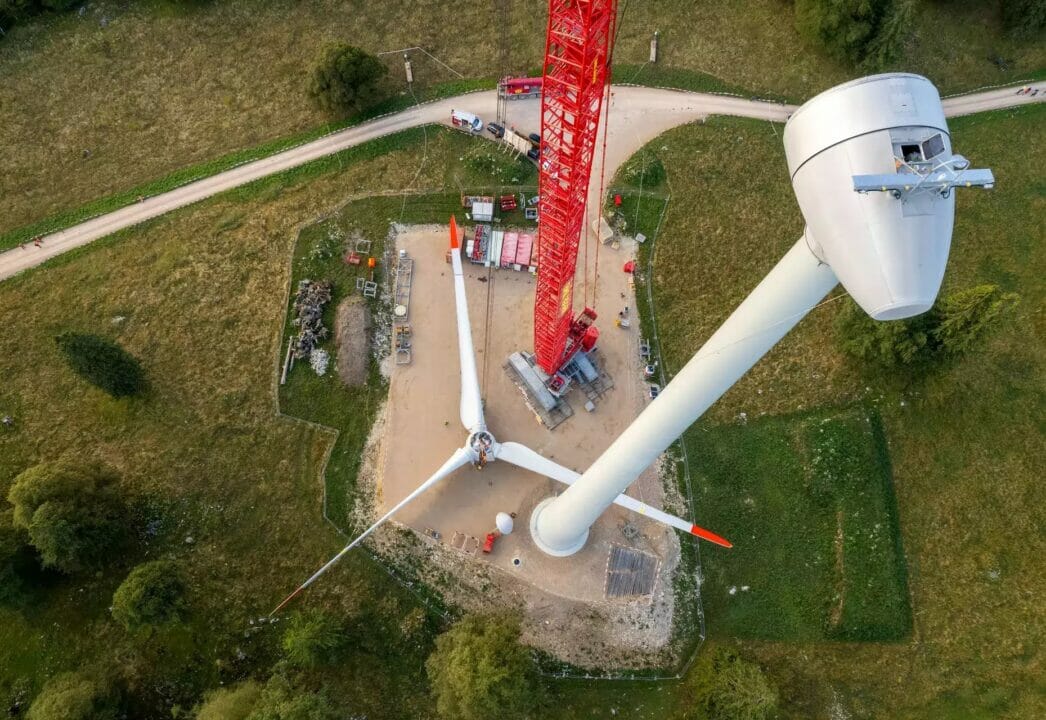
The Tucano Wind Farm in Bahia boasts an installed capacity of 322 Megawatts (MW), a remarkable achievement in wind power generation. What makes it even more exceptional is the selection of turbines provided by Siemens Gamesa, which are true giants in terms of power and size. Each turbine is capable of operating at up to 6.2 MW, totaling 322 MW across the wind park.
-
Renewable energy advances over protected areas in Brazil, and a survey by the Energy Transition Observatory reveals silent impacts that challenge environmental conservation and pressure sensitive traditional territories.

-
Rio Grande do Sul accelerates energy transition: State invests in renewable technologies and consolidates decarbonization strategies and pathways to attract billions in new industrial investments.

-
With 160,000 m² of collectors, an area larger than 20 football fields, Silkeborg, in Denmark, hosts a solar thermal plant that heats 19,500 homes and could become the largest solar heating plant in the world.

-
A study reveals the expansion of renewable energy procurement in Brazil and shows how companies are taking advantage of opportunities to reduce expenses, ensure energy efficiency, and strengthen strategic environmental commitments.


These turbines are impressive not only for their performance but also for their remarkable size, with steel towers reaching 115 meters in height and blades over 80 meters long, forming a diameter of 170 meters. They are the largest turbines ever installed in Brazil in terms of power and size, a feat that demonstrates the technological forefront of the project.
In addition to technical excellence, the Tucano Wind Farm stands out for an extraordinary achievement: the operation and maintenance of the park will be conducted locally by a 100% female team. This pioneering effort is the result of a training program in partnership with Senai – Bahia, which provided women in the region with the opportunity to specialize in the maintenance and operation of wind farms. This initiative not only promotes gender equality but also enriches the local workforce.
Construction of the Plant Created Over 500 Jobs in Bahia
The Tucano Wind Farm not only represents a technological advancement but also a significant economic boost. During the construction of the plant, over 500 jobs were created, contributing to the local economy and utilizing Bahia’s workforce. This demonstrates the project’s commitment to the region’s development and job creation.
Angelo Almeida, Secretary of Economic Development (SDE), highlighted the importance of this venture for Bahia: “The State Government has institutionally supported the implementation of the project, and it is no surprise that renewable energies are a source of pride for the State. Some reasons include the strength they have in promoting jobs, stimulating the economy of the entire Bahia territory and positively impacting the environment.”
Furthermore, the Tucano Wind Farm in Bahia aligns with the company’s industrial sustainability goals. It aims to help avoid the annual emission of 57,600 tons of greenhouse gases. With its role in expanding the supply of renewable energy in the national electrical grid, the project contributes to the global energy transition and offers an inspiring model of sustainable development.









Seja o primeiro a reagir!