





 Portuguese
  English
  Spanish
  5 min of reading
  0 comments


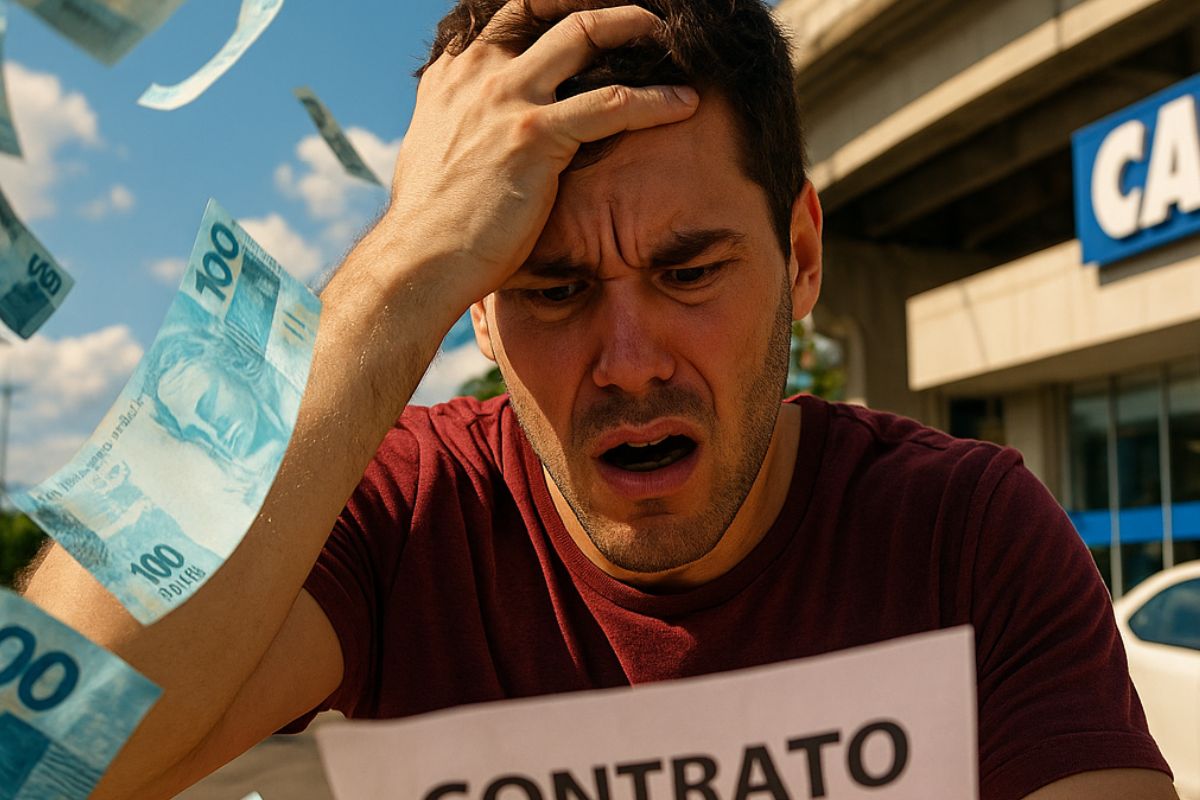
Seller Promises Awarded Letter, Hides Contract Clauses, and Client Ends Up at a Loss; Understand the Steps of the Scam and How to Protect Yourself.
The promise of a awarded letter continues to ensnare victims across the country. In the case that came to light, a self-employed worker paid R$ 33,300 believing he would quickly receive a van through a consortium and discovered, too late, that he had signed a pre-contract with answers filled in by the seller and essential clauses hidden.
As Celso Russomanno, who is monitoring the case and recorded conversations with the seller, emphasizes, “there is no awarded letter for sale”: awards occur through a lottery or bid, and those who have already been awarded do not transfer the credit to a stranger.
The consumer, however, was misled by audios, vehicle photos, and unrealistic deadlines.
-
The Senate approves a bill that criminalizes misogyny, hatred, or aversion towards women, and includes the crime in the Racism Law with a penalty of up to 5 years.

-
Chamber Approves Bill That Allows Pepper Spray for Women Over 16 and Imposes Strict Rules for Purchase, Possession, and Use as Self-Defense

-
Chamber Approves Law to Combat Leucaena, Fast-Growing Plant That Dominates Land and Threatens Native Species in Various Regions of the Country

-
Asset Division: Know What Cannot Be Divided in Case of Divorce

The Case: How the Sale Was Set Up
The negotiation began with the offer of a Sprinter 19+1 seats for around R$ 205,000. The seller claimed to work with consortiums and “already awarded letters”, stating she had a “partnership with manufacturers” and that the factory “only sells for cash,” hence the need for the awarded letter.
This technical speech gives an appearance of credibility, but it does not hold up: it is illegal to promise an award.
After requesting R$ 33,300, the seller presented a pre-contract and, according to the client, laid sheets over each other so he would only sign, without full reading.
The answers were filled in by her, including in the field where the consumer “declares being aware that he did not receive a promise of an award.” It’s what’s called a ‘trap contract’, where the paper states the opposite of what the seller promised.
Where the Scam Holds Up and Why It Is a Crime
Promising an “awarded letter” is a deceptive practice. Article 66 of the Consumer Protection Code (CDC) classifies false or misleading claims as a crime (penalty of 3 months to 1 year).
The conduct may also constitute fraud (art. 171 of the Penal Code) when there is induction into error to obtain economic advantage.
Another central point is joint liability. According to article 34 of the CDC, the provider is liable for the acts of its agents and representatives.
That is, the consortium’s administrator cannot “wash its hands” saying it was the consultant’s fault: it is responsible for preventing, supervising, and repairing the damage. This legal detail changes the game when the victim seeks to recover the amount.
The Escalation of Pressure and the “Faster” Offer
Days passed, and the vehicle did not leave. The seller then offered another car “already ready” and tried to get another R$ 25,000 to “speed up delivery in three days.”
This is a classic escalation tactic: the initial scam creates urgency, and the new proposal promises instant solution through new payment. When the victim hesitates, silence and delay follow.
Another red flag appeared at the business address: the service took place in a coworking space, without a fixed structure.
Shared spaces are legitimate, but scammers take advantage of passing people and the lack of permanent identification. Always verify the CNPJ, authorized administrator by the Central Bank, and official channels before signing.
What the Company Says and the Agreement Made
Contacted by Celso Russomanno, the administrator acknowledged that the “sale is irregular” and negotiated a refund in three installments of R$ 11,100 (with possibility of early payment</strong)), on 09/15, 10/15, and 11/15. This is a partial victory for the consumer and a message to the market: when there is evidence of misleading promise, the company must repair.
Attention: even with an agreement, the case may continue in civil and criminal spheres. Filing a police report, registering with Procon, and keeping evidence (audios, prints, contracts) are essential to pressure for full restitution and prevent recurrence.
How to Identify Traps with “Awarded Letter”
Beware of urgency and miraculous deadlines. Scammers create windows of 3 to 7 days to reduce your verification time. Promise of “certain” delivery is incompatible with the logic of consortiums, which depends on lottery or bidding.
A contract without reading is a contract without defense. Never sign loose pages or “signature markers.” Request the complete PDF, check already filled fields and do not accept forms with false statements (e.g., “there was no promise”).
A cheap legal consultation today avoids an expensive loss tomorrow.
If You’ve Already Fallen for It, What to Do Now
- Collect and save evidence: audios, prints, receipts, cards, CNPJ, address, names (consultant, supervisor). Organize by date.
- File a report (fraud/CDC), file a complaint with Procon and notify the administrator in writing citing art. 34 of the CDC and requesting immediate return.
- Seek the Special Civil Court (when applicable) or a trusted lawyer to request restitution and damages. Do not accept predatory agreements (many installments, waiver of rights).
- Notify the Central Bank if there are indications of irregular mediation. A consumer who reports helps prevent new victims.
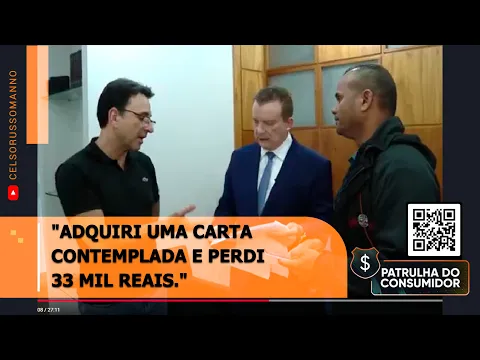

Scammers have sophisticated the script, but the plot remains the same: “awarded letter” is not for sale. Celso Russomanno reiterates: verbal promises are ineffective against the cold letter of the contract and a contract with “manufactured” answers is a trap. If the proposal depends on urgency, secrecy, and upfront money, the right thing to do is say “no” and walk out the door.
Have you or someone you know ever received an “awarded letter” offer? What was the speech used (deadline, “partnership with manufacturer”, “approved quota”)? And what hidden clause almost slipped by in your contract? Share in the comments — your story could prevent another consumer from losing a lifetime’s savings.










-

-

-

-

10 pessoas reagiram a isso.