





 Portuguese
  English
  Spanish
  5 min of reading
  9 comments


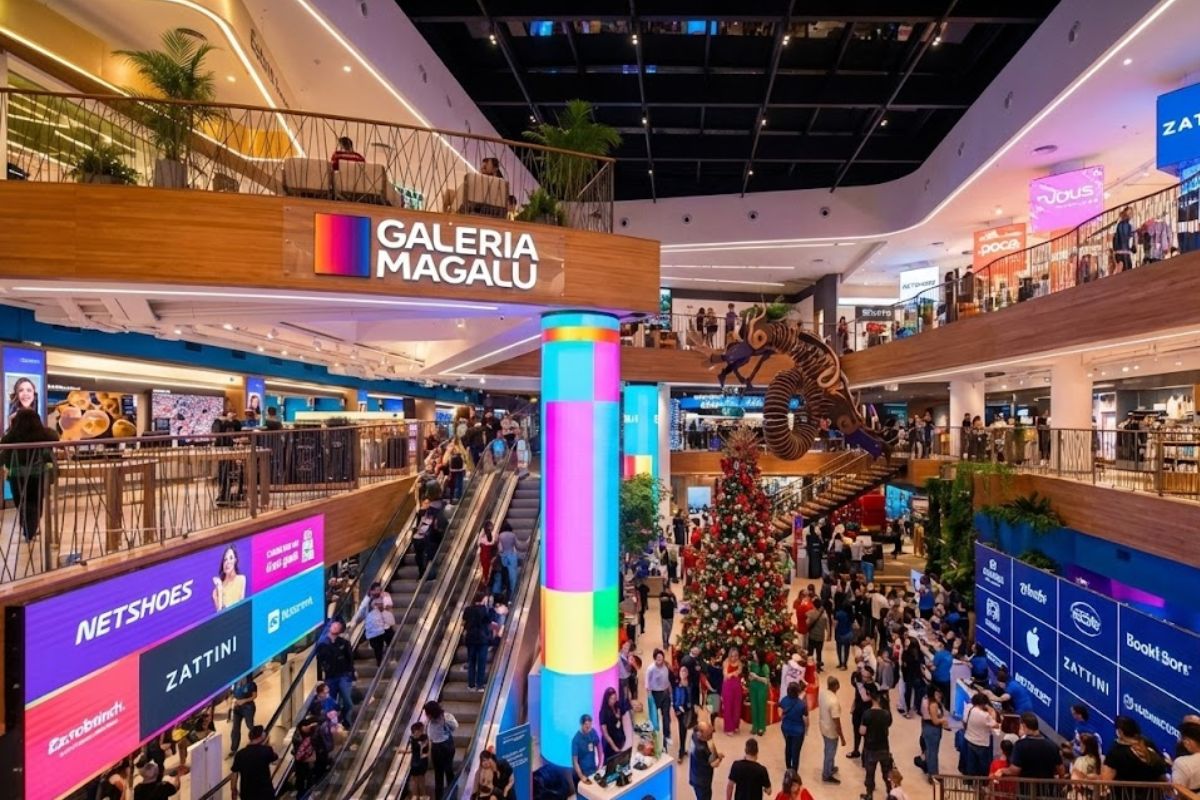


Magalu Gallery Opens Megastore of 4,000 m² in the Former Space of Livraria Cultura on Avenida Paulista, Expecting 100,000 Visitors per Month, Integration of Five Brands, 150 Activation Areas, Theater, Collection of the Pinacoteca, and New Digital Strategies Supporting Expansion to More than 50 Giant Physical Units of the Network.
Direct competitor of Havan, Magalu Gallery inaugurated its megastore of 4,000 m² on Avenida Paulista, in São Paulo, this Tuesday, December 9, 2025, occupying the former space of Livraria Cultura. The company detailed to the market the project, which was born with the ambition of making the unit the highest revenue generator in the entire network.
The retailer expects to receive around 100,000 visitors per month in the new gallery, which integrates five brands of the group in a single strategic physical address. The mega space brings together activation areas for 150 brands, a theater for events, part of the collection of the Pinacoteca, product customization services, and the first physical stores of Época Cosmetics and Estante Virtual, in addition to new digital strategies designed to strengthen the Magalu ecosystem.
Megastore on Paulista Becomes Showcase for the Offensive Against Havan
Despite already holding a prominent position in Brazilian retail, Havan saw the competition raise a red flag with the opening of Magalu Gallery on Avenida Paulista.
-
Larger than entire cities in Brazil: BYD is building a 4.6 km² complex in Bahia with a capacity for 600,000 vehicles per year, but the discovery of 163 workers in conditions analogous to slavery has shaken the entire project.

-
With an investment of R$ 612 million, a capacity to process 1.2 million liters of milk per day, Piracanjuba inaugurates a mega cheese factory that increases national production, reduces dependence on imports, and repositions Brazil on the global dairy map.

-
Brazilian city gains industrial hub for 85 companies that is equivalent to 55 football fields.

-
Peugeot and Citroën factory in Argentina cuts production by half and opens a layoff program for more than 2,000 employees after Brazil drastically reduced purchases of Argentine vehicles.


The new megastore of 4,000 m² was designed to be both a showcase and a laboratory for the network, bringing together the main physical and digital assets of the group in one location.
According to internal projections, the Paulista unit is expected to become the top revenue generator for the Magalu network, supported by the high traffic of the region, the visibility of the address, and the combination of physical experience, technology, and real-time services.
The space is regarded as a central piece in the strategy for competitive repositioning against Havan and other major retail players.
Five Brands of the Group Together and 150 Activation Areas
In the new gallery, the group brought together five brands under one roof, in a model that seeks to fully explore the ecosystem concept.
The mega space integrates different operations of Magalu into a single circulation flow, encouraging consumers to navigate various product and service categories within the same visit.
In addition to the company’s main brands, Magalu Gallery reserves areas for activations of 150 partner brands, allowing for launches, immersive experiences, and ongoing promotional events.
The project also includes a theater for corporate and cultural events, part of the collection of the Pinacoteca, spaces dedicated to product customization, and an area called the home of the virtual influencer Lu, a central figure in the retailer’s digital communication.
Another highlight is the arrival of the first physical stores of Época Cosmetics and Estante Virtual, brands of the group that were previously concentrated in the online environment.
By bringing these operations into the 4,000 m² megastore, Magalu is practically testing how the public responds to the migration of digitally born businesses to a hybrid format that combines physical presence and online sales in the same location.
Omnichannel Strategy and New Digital Fronts
According to Magalu CEO Frederico Trajano, the company was already recognized as multichannel, but the complete ecosystem was not yet fully integrated, especially in the brands acquired over the last five years. Magalu Gallery emerges precisely to materialize this integration.
The goal is to use the 4,000 m² megastore as a physical stage for a strategy that remains deeply digital.
In practice, this means connecting inventories, payment methods, applications, marketplaces, and in-person experiences into a single flow, allowing consumers to discover products in the physical space and complete their purchase online, or do the reverse with in-store pickup and engagement.
For the company’s leadership, having a physical presence continues to make a difference, especially in categories where testing, experimenting, and direct contact with the product still weigh heavily on the purchase decision.
Magalu Gallery aims to transform this contact into an experience enhanced by digital content, brand activations, and additional services that increase the average ticket and recurrence.
Pilot Project on Marginal Tietê Tripled Revenue and Enabled Expansion
Before launching the grand showcase on Paulista, the group tested the concept in a pilot project at a Magalu store on Marginal Tietê, also in São Paulo.
At that time, the unit began to host physical operations of KaBuM! and Netshoes, two brands from the ecosystem that were digitally born.
The result was considered decisive. According to the company, the store generated around 5 million reais as a standalone Magalu point and jumped to 21 million reais in November, after the entry of the other brands in outlet format.
The performance of the pilot was seen internally as proof that the convergence between brands and channels can multiply revenue without the need to open multiple isolated stores.
With this track record, Magalu Gallery on Paulista was designed to serve as a concrete model for expansion.
The company plans to open more than 50 megastores of 4,000 m², replicating the concept of integration of brands, activations, services, and digital experience in new strategic locations across the country.
The definition of the next cities has not yet been announced, but management indicates that the focus will be on large urban centers with high traffic and strong commercial relevance.
Megastore as a Symbol of the New Retail Competition
The inauguration of Magalu Gallery in one of São Paulo’s most iconic addresses reinforces that the competition for attention, traffic, and revenue in physical retail remains intense, even with the advancement of online sales.
By occupying the former space of Livraria Cultura with a 4,000 m² megastore filled with technology, culture, and services, the group sends a direct message to Havan and other competitors.
More than just opening a store, Magalu transforms Paulista into a stage for a new phase of its strategy, combining aggressive expansion, integration of brands, in-person experiences, and digital reinforcement.
In your case, are you excited to visit a 4,000 m² megastore like the one on Paulista or do you prefer to continue focusing your shopping only on online channels?








Muito bom…
Sou de Campinas Sp e acho que comporta uma mega loja como essa da Paulista
Meu Deus!
Desde quando Havan, foi concorrente do Magalu.
Quem é Havan?
Kkkkkkkkkkk
Eu jamais irei nessa loja sabendo que a veinha do magazine luiza é a proprietária.
Vou deixar a canja e o 9 dedos comprarem á vontade na loja da sua amiga: a veinha do magazine
A empresa vai falir se você não for gastar seu salário mínimo lá