





 Português
  Inglês
  Espanhol
  5 min de leitura
  0 comentários


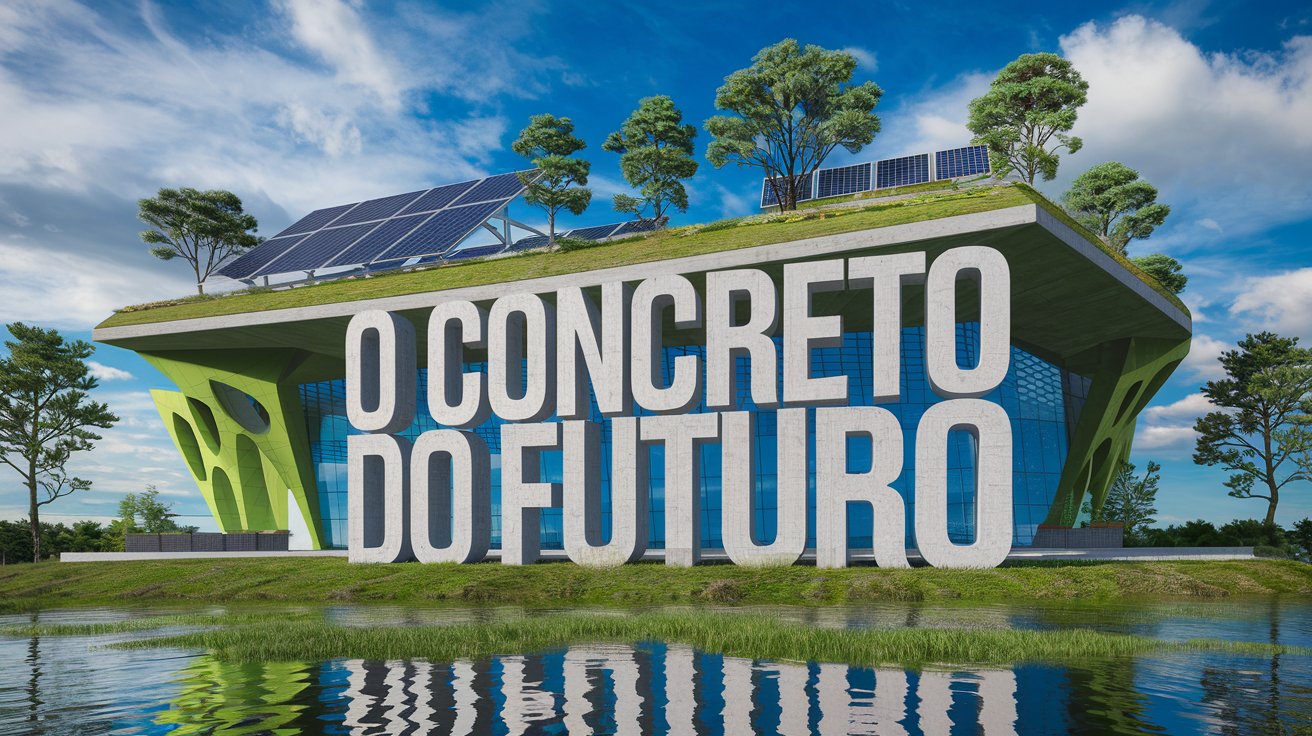
Cementless Concrete Is About to Transform Civil Construction! The Innovation Is an Ecological Solution, Drastically Reducing CO₂ Emissions. Created by the Company C-Crete, This Sustainable Concrete Uses Alternative Materials and Is Already Being Tested in Real Projects. This Technology Could Revolutionize the Industry and Create Greener and Smarter Cities!
The civil construction, one of the most impactful industries regarding the emission of polluting gases, faces a significant challenge: reducing its environmental footprint.
One of the main villains in this equation is cement, responsible for a significant share of CO₂ emissions on the planet.
However, an innovation that promises to transform this scenario is emerging with full force: a sustainable concrete that completely dispenses with the use of cement, offering an environmentally friendly alternative without compromising the strength and durability of constructions.
-
Found in one of the most radioactive places on Earth, this Chernobyl fungus may be doing something with radiation that no one has been able to explain to this day.

-
The world’s first octopus farm wants to open in the Canary Islands and is already provoking an international reaction: the plan aims to produce 3,000 tons per year.

-
A bright yellow mushroom imported from Asia escaped from a cultivation farm in the United States in 2010 and is now aggressively spreading across 25 states, destroying entire communities of native fungi in American forests.

-
Buried under China, a colossal machine weighing 20,000 tons began operating as the largest neutrino detector on the planet and, in just 59 days, surpassed results that science took half a century to achieve.


Cementless Concrete: A Revolutionary Innovation
Created by the company C-Crete, this new type of concrete is gaining attention for being a commercially viable solution that is fully capable of meeting the demands of traditional civil construction.
In other words, the substitution of Portland cement, which is widely used in concrete production, does not affect the essential properties of the material, such as strength or durability.
The secret of this innovative concrete lies in the use of alternative components, such as industrial waste and natural minerals, that replace conventional cement.
These components not only maintain structural performance but also have a significantly lower environmental impact, substantially reducing the carbon emissions associated with cement production.
The big advantage is that for every ton of cementless concrete used, one ton of CO₂ is not released into the atmosphere.
Considering that cement production is responsible for around 8% of global carbon emissions, this innovation can play a pivotal role in the quest for greener and more sustainable construction.
Understand the Difference Between Concrete and Cement
It’s common for people to confuse concrete and cement, since both are essential in civil construction.
However, they have distinct functions. Cement is a fine powder that when mixed with water forms a paste that hardens over time.
The most commonly used type is Portland cement, produced by burning limestone and clay at high temperatures. Its main function is to be a binder, that is, to unite the materials used in construction.
On the other hand, concrete is a mixture of cement with other components such as water, sand, and crushed stone.
When it hardens, it turns into a strong structural material, used in pillars, slabs, beams, and foundations.
Additionally, it is common for concrete to be reinforced with steel, resulting in reinforced concrete, widely used in modern construction.
The Practical Use of Cementless Concrete
Although still a novelty, cementless concrete has already begun to be applied in real projects.
C-Crete, for example, used about 140 tons of this material in various constructions, showing that the innovation is not just a theory, but a practical and scalable solution.
Moreover, the company received significant investments, including funding of nearly US$ 1 million (approximately R$ 5.6 million) from the U.S. Department of Energy.
In September 2023, financial support increased with an additional US$ 2 million (about R$ 11.2 million), reflecting the growing government interest in the scalability and potential of this technology.
The Future of Civil Construction Could Be Greener
If the use of cementless concrete expands, it could have a profound impact on the civil construction industry.
In addition to reducing polluting gas emissions, this sustainable alternative could encourage other companies in the sector to invest in green technologies, creating a significant shift in the market.
The trend is that, with increasing investments and growing environmental awareness, cementless concrete will gain even more space in large-scale projects in the coming years.
MIT Concrete: Energy Stored in Its Own Structure
The innovation doesn’t stop there. Researchers at MIT (Massachusetts Institute of Technology) have developed concrete that can store energy, transforming buildings into true batteries.
This modified concrete can store electricity from renewable sources such as solar and wind, and release it efficiently.
Although its operation is different from traditional lithium-ion batteries, it can provide quick charges and instant discharges, making it ideal for complementing other energy storage solutions.
This technology has promising applications, such as the possibility of charging electric vehicles while traveling on roads or even in buildings where walls, columns, and foundations store energy for future use.
In a scenario of smart cities, supercapacitor concrete could revolutionize how electricity is managed and distributed in urban centers.
Other Innovations in Sustainable Concrete Around the World
In addition to C-Crete’s cementless concrete and MIT’s concrete, various other innovations around the world are making concrete more sustainable and eco-friendly.
Check out some examples:
Recycled Polymer Concrete: Researchers at the University of Melbourne, Australia, have developed concrete that replaces part of the cement with crushed plastic, contributing both to the reduction of carbon emissions and the recycling of plastic waste.
Biological Concrete: The British company BioMason created biological concrete that uses bacteria to form a limestone matrix similar to Portland cement. This process eliminates the need for high temperatures, significantly reducing energy consumption during production.
Self-Regenerating Concrete: In the Netherlands, the startup Green Basilisk developed concrete that contains bacteria activated by moisture. When the concrete cracks, these bacteria produce limestone, automatically sealing the cracks and prolonging the structure’s lifespan.
Photocatalytic Concrete: In European cities like Milan, photocatalytic concrete, which contains titanium dioxide, is used, a material that neutralizes atmospheric pollutants, contributing to improved urban air quality.
Challenges and Perspectives for the Future of Sustainable Construction
Despite the transformative potential of these innovations, there are still challenges to be overcome.
Issues such as production costs, adaptation of traditional construction methods, and technical regulations are obstacles that must be faced for these sustainable solutions to become standard in the construction industry.
Even so, with increasing public and private support, the trend is that the use of sustainable concrete will expand, paving the way for a greener and more efficient future.
If civil construction continues to advance towards sustainability, we can expect that soon, the concrete of the future will not only reduce CO₂ emissions but also be capable of integrating innovative energy solutions, promoting smarter and more durable cities.
And you, what do you think? How do you imagine sustainable construction can transform our cities in the future? Leave your opinion in the comments!






Seja o primeiro a reagir!