





 Portuguese
  English
  Spanish
  3 min of reading
  0 comments


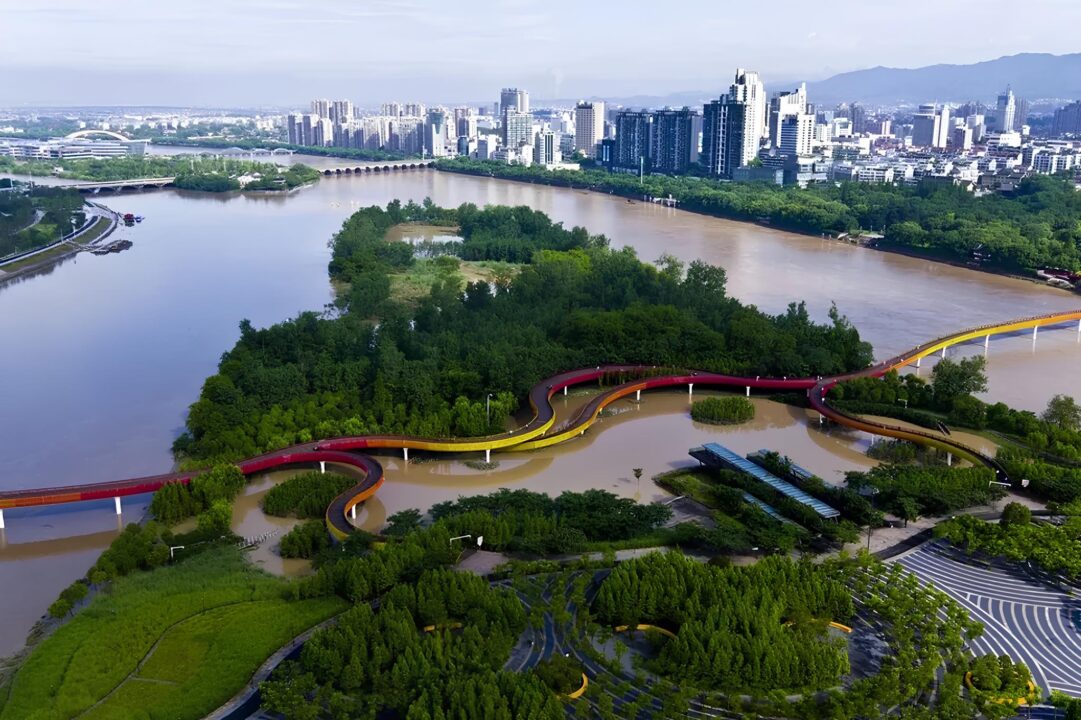
Chinese Architect Develops Sponge City Method to Prevent Tragedies Like Those in Rio Grande do Sul. Discover How This Innovation Could Revolutionize the Fight Against Natural Disasters.
With so many scenes of destruction caused by the rains in Rio Grande do Sul, one question has been widely pondered: what can cities do to avoid this type of natural disaster? One of the most innovative ideas in this area comes from China and involves the creation of sponge cities designed to absorb large volumes of water and prevent tragedies.
How Does the Sponge City Capable of Preventing Tragedies in China Work??
The Chinese Kongjian Yu, currently one of the world’s leading architects, is the inventor of the concept and claims he was born in a small village with a river. Yu lived in this place for 17 years as a farmer, which taught him how to work with nature.
His village is in a monsoon area where it rains continuously in the summer. When he moved to the big city, Yu understood why they flood. According to him, nature adapts, is alive, and the sponge city concept to prevent tragedies is based on the principle that nature regulates water.
-
A “silent skill” is allowing Brazilians to earn up to R$ 22,000 per month without a degree and become indispensable for companies that rely on millions of data to survive.

-
Researchers at the Toyota Research Institute found that if a human uses robotic arms to flip a pancake 300 times in an afternoon, the robot learns to do it on its own the next morning, and this is currently the most promising method to solve the biggest bottleneck in modern robotics.

-
Goodbye iron: a common item in households is starting to lose space to technology that smooths clothes in minutes without an ironing board and with less energy consumption.

-
Antarctica reveals an unusual clue high in the Hudson Mountains, and what appeared to be just an isolated rock began to expose a secret hidden under the ice for ages.


Yu is now the consultant for the Chinese government and has designed for over 70 cities, which are currently capable of receiving more rain than has fallen in Rio Grande do Sul. It is important to mention that, in 2012, China’s capital Beijing experienced a flood that took the lives of over 80 people. The event mobilized the country’s government to reverse the situation.
Learn How the Sponge City Works in Practice to Prevent Tragedies


According to the architect who developed the solution, there are three main points in all the projects he undertakes. The first point is to retain water as soon as it falls from the sky, as Yu states that 20% of the entire farm area must be reserved for water in reservoir systems, so that it doesn’t all flow to the main river. He also states that there must be large permeable areas: porous, unpaved.
The second step for a sponge city to prevent tragedies is to reduce the speed of rivers, as slowing down the water allows nature the opportunity to absorb it. To slow down, it is necessary to use vegetation and create a system of lakes.
The third point is to adapt cities so that they have floodable areas where water can flow without causing destruction: creating large natural floodable structures so that water can be contained for a while and then quickly absorbed into the groundwater without invading homes.
The system was implemented in Taizhou and Jinhua, China, where concrete walls that channeled rivers were demolished and replaced with parks. Other cities around the world, such as Berlin, Copenhagen, and New York, have also adopted similar proposals to prevent rain-related disasters.
Other Benefits of the System Created by China
According to the architect, building a sponge city to prevent tragedies helps not only in facing the force of water during the rainy season but also in keeping it flowing through the taps during the drier months of the year.
Here, the waters of the Guaíba and the rivers that run through the Rio Grande do Sul have not yet receded, but the state is contemplating reconstruction.
Although experts and authorities classify that a full assessment of the tragedy cannot yet be made, international examples, like this one from China, raise debates about what can and should be done to readapt cities in the face of climate emergencies. According to the National Confederation of Municipalities, only 22% of managers believe that cities are ready to face climate changes.







Seja o primeiro a reagir!