





 Portuguese
  English
  Spanish
  6 min of reading
  0 comments


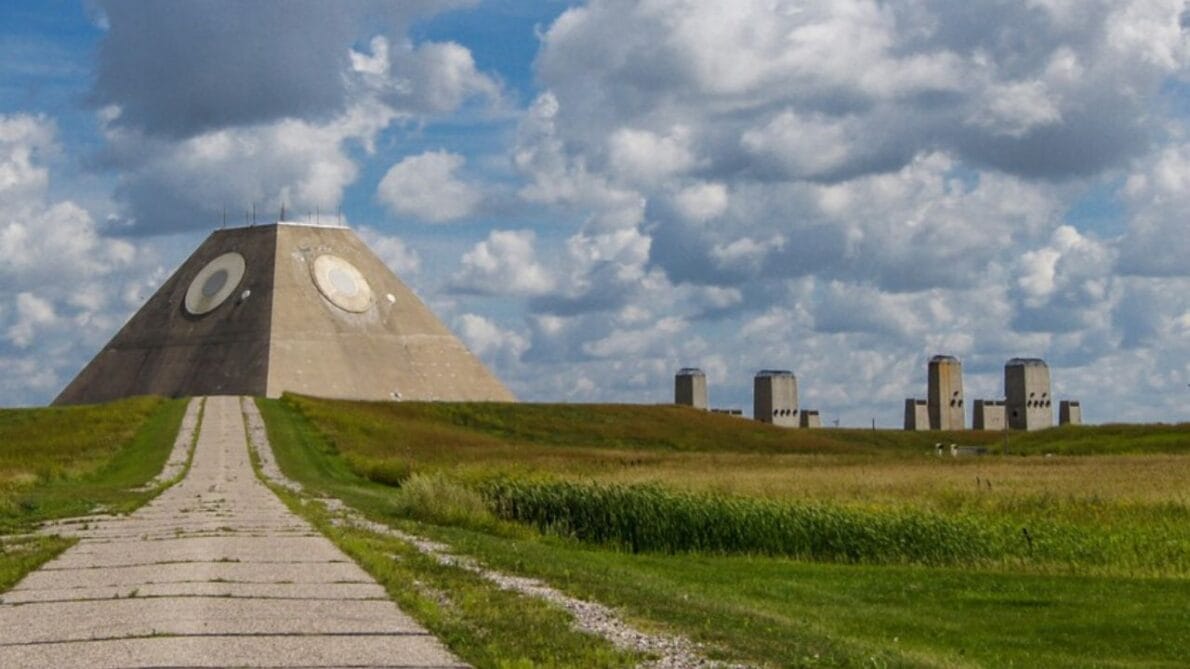
Explore The History Of The Construction Of The U.S. Defensive Pyramid That Cost $30 Billion. Learn How It Was A Shield Against Intercontinental Missiles During The Cold War
While traveling through North Dakota, we came across Nekoma. It is a population with a density of 31 people in 2020, made up of 100% whites and with an average age of over 50 years. It’s not the most interesting tourist destination, but a few miles away, we can encounter a gigantic and strange structure, a pyramid in the middle of the field. It is the Stanley R. Mickelsen Safeguard Complex, or SRMSC, a facility that looks futuristic, but is really a legacy of the Cold War.
Its goal was to defend the United States from Soviet intercontinental missiles and it did not intercept any, but it may be that its mere construction was such a powerful deterrent that the Soviet Union did not dare launch an attack on American soil. The other interpretation is that it was a failure of biblical proportions.
The Cold War And The Construction Of The SRMSC
During the Cold War, countries like the United States and those belonging to the Soviet Union allocated billions to constructions that now seem disproportionate. It was a time when the fear of nuclear war was fully justified and when the armament and technology of both powers developed significantly. And this technology also included the defenses of each nation. The SRMSC is a vestige of that defensive technology and a construction in which the United States invested heavily.
-
USA and China compete for Brazil over resources that could be worth trillions — rare earths put the country at the center of a global dispute

-
Motorola launched the Signature with a gold seal from DxOMark, tying with the iPhone 17 Pro in camera performance, Snapdragon 8 Gen 5 that surpassed 3 million in benchmarks, and a zoom that impresses even at night.

-
Satellites reveal beneath the Sahara a giant river buried for thousands of kilometers: study shows that the largest hot desert on the planet was once traversed by a river system comparable to the largest on Earth.

-
With 74% of companies facing difficulties in hiring, technicians and engineers in renewable energy are becoming scarce in Brazil and are essential to support the expansion of solar, wind, and green hydrogen projects.


The Pyramid: Heart And Brain Of The Complex
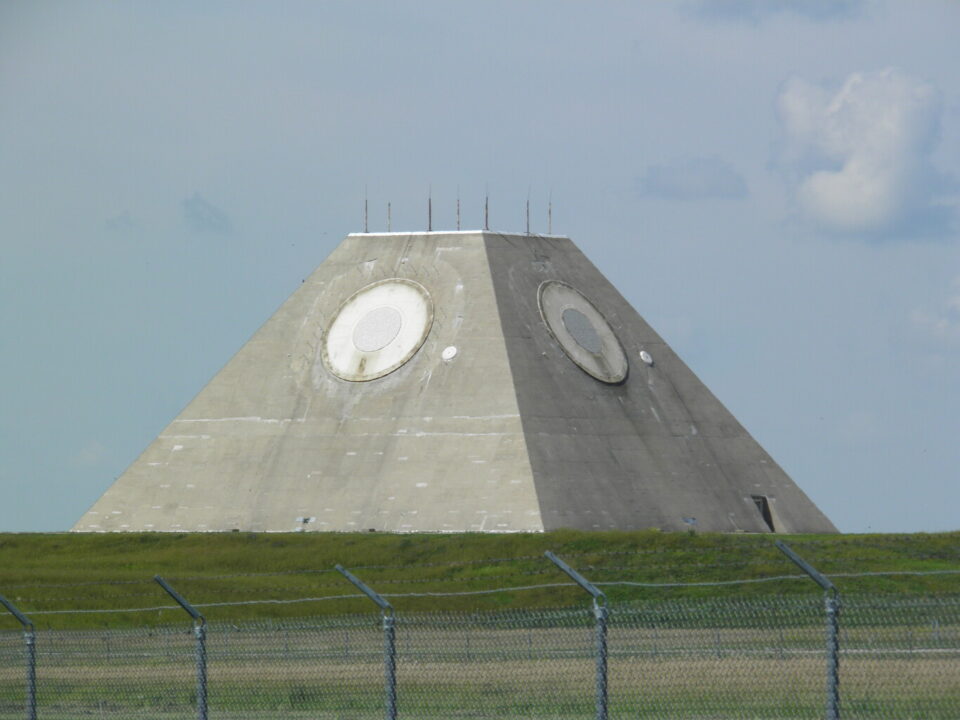
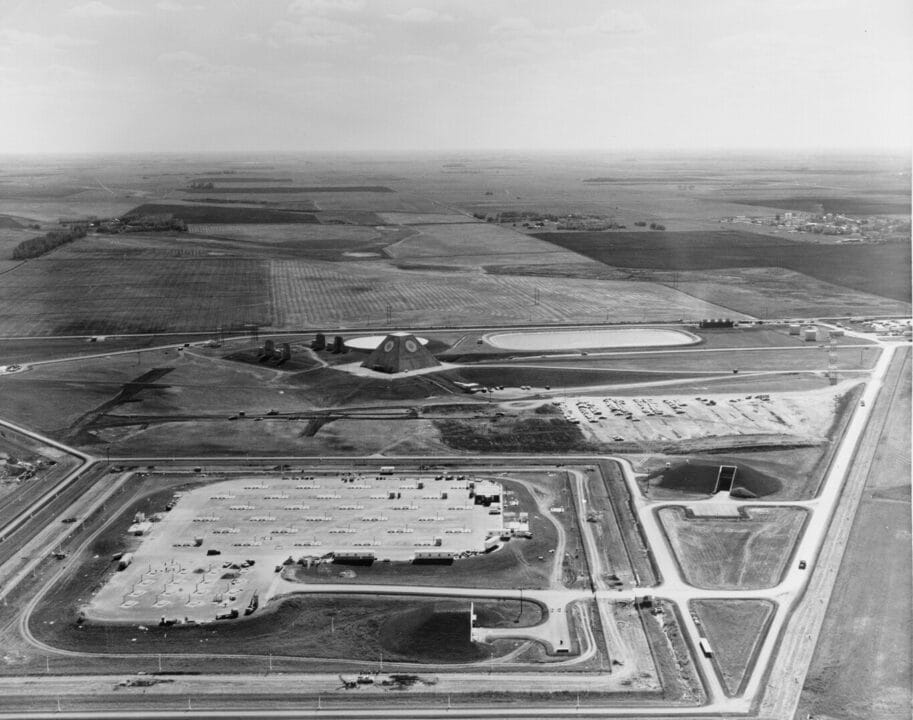
The SRMSC is a military complex, which means it consists of several buildings, with the pyramid being the heart and brain of the site. What we see is imposing, but is really just part of the structure, as below it lies an intricate network of corridors and rooms where office work could be performed, where the central computer and power source for the entire complex were located. Besides the pyramid, there was a huge field full of missile silos.
Concrete was used in its construction, but also over 22,000 tons of iron and steel. The aim was for the facility to be a stronghold, resistant to nuclear and electromagnetic attacks. Construction began in the late 1960s, and the government invested $6 billion, which today would be equivalent to about $33.97 billion.
MSR: Cutting-Edge Radar In The Construction Of The Complex
The most important point of the building was the radar. On the four sides of the pyramid (MSR), we can see phased array radars. It was a brilliant contribution to radar technology because it allowed the radar to be focused in multiple directions very quickly without having to move any antennas. It represented the pinnacle of American technology at the time, and its purpose was to detect missiles at long range, before they entered American soil.
This radar had 20,000 antenna elements evenly distributed among its faces and was controlled by a powerful central computer built by Bell System, IBM, and Lockheed. Together with the PAR system (other phased radars located about 40 kilometers from the MSR and also with a phased radar), the United States could identify any intercontinental missile launched by the Soviet Union. The computer was responsible for distinguishing between warheads and other objects, providing interception trajectories, launching, and guiding the missiles.
PAR: Enduring Radar Technology
We have already mentioned the PAR (Perimeter Acquisition Radar Complex), but it deserves a bit more recognition as it is the only piece of the complex and the American Safeguard system that is still operational. Sixty years later, this Cold War technology remains useful, as it is a radar that can detect and track multiple objects the size of a basketball at a distance of 3,218 kilometers.
The initial function was to scan toward the North Pole, and if it detected a threatening intercontinental missile, it would calculate the preliminary trajectory, pass the data to the MSR, and begin interception operations. It stands about 36 meters tall and is also capable of withstanding the effects of nuclear explosions and electromagnetic pulses.
A Self-Sufficient Bunker
As we said, below the pyramid were many rooms that included offices, computer rooms, and weapon arsenals. However, partially buried, there was also a fuel storage system, a heat dissipator, and a complete power plant that supplied the entire facility. Naturally, there was a community center, a cafeteria, officer complexes, a chapel, a gym, and recreational facilities.
The Apocalypse Shield
The goal of the site was for the computer, by cross-referencing data from all radars, to be able to direct several missiles simultaneously in the event of multiple simultaneous attacks. This type of shield for the country was composed of 30 Spartan LIM-49 anti-ballistic missiles and 70 shorter-range Sprint missiles. The Spartans could intercept Soviet nuclear missiles while they were still outside the atmosphere, and the 30 were in the silos alongside the MSR.
Of the Sprint missiles, 16 were in the MSR silo, but the rest were distributed in remote launchers at distances of 15 to 32 kilometers to have a more effective defensive perimeter. The first resource was the Spartan missile, but if it failed to destroy the target, the ultra-high acceleration Sprint missiles would come into play.
Six Months Of Operation
So far, this complex is the authentic base of a James Bond villain. An expensive base, very expensive, but well, the last line of defense against nuclear missiles is worth more than $30 billion. On April 1, 1975, it achieved IOC (Initial Operational Capability), with full capability with the 100 operational missiles reached on October 1 of the same year. After those billions, representing the pinnacle of a defense research effort that lasted nearly two decades, on October 2, 1975, Congress voted to deactivate the system.
That is, one day after the base reached full capacity, a vote was held for complete deactivation. This impressive construction, which operated 7 days a week, 24 hours a day and had a reported success rate of 99.5% according to simulations, remained in service for six months. The PAR continued to be maintained.


Virtual Tour Of The Complex
You can visit from home. Gradually, parts of the complex were sold, some transferred to private investors, and some sold to the Hutterite brothers, an ethnoreligious commune, but it is not expected to be put into operation, as the buildings and facilities will be repurposed for other uses. It will cost money to clean everything (between four and six million), as it remains an abandoned base for decades, where water has corroded much of the internal structure.
I can’t help but recommend that you visit the Coldwartourist gallery, which has impressive photographs of the site, but you can also take a beautiful virtual visit where the story of the place is narrated with all the details while we can see its current state.
The Deterrent Value Of The SRMSC
In the end, this important element of the Safeguard system never entered real combat, but it may be that precisely because of the imposing nature of its systems, it had enormous deterrent value.
Images | Troy Larson and Terry Hinnenkamp






Seja o primeiro a reagir!