





 Portuguese
  English
  Spanish
  4 min of reading
  0 comments


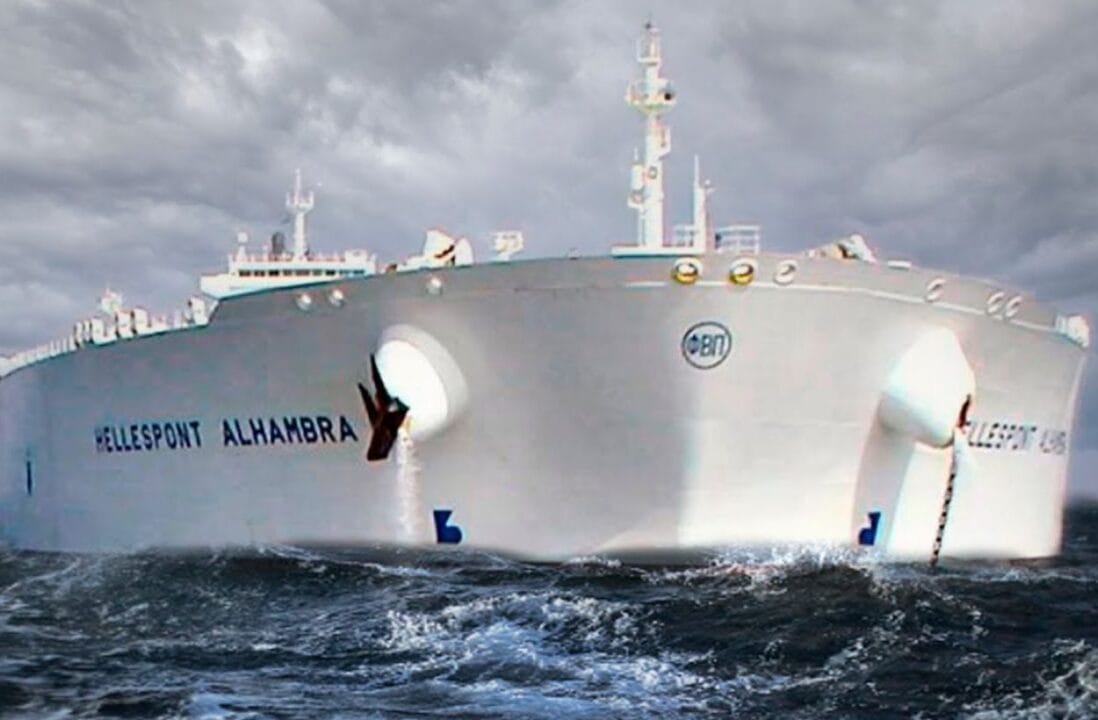
A Detailed Look At The 9 Largest Oil Tankers In The World And Their Vital Importance In The Global Oil Trade.
In a world where oil still reigns as one of the main sources of energy, oil tankers play a crucial role in transporting this essential commodity. And when it comes to these true colossi of the oceans, size and capacity are everything. Explore the fascinating universe of the largest oil tankers in the world, true giants that traverse the seas, transporting millions of barrels of oil.
1. Sea Emerald
Registered under the flag of Greece, the Sea Emerald, built in South Korea in 2019, measures an impressive 335.8 meters in length and 59.7 meters in width. Weighing 156 thousand tons, its capacity is equally formidable, supporting up to 300 thousand tons of cargo. Its 44 thousand horsepower engines provide a maximum speed of 17 knots, making it an undeniable leader in efficiency and capacity.
2. Saham Ship
The Saham Ship, flying the flag of Panama, was built in Japan in 2010. Its dimensions are nearly as imposing as those of the Sea Emerald, with a length of 331 meters and a width of 60 meters. This leviathan weighs 157 thousand tons and has a capacity of 299 thousand tons of oil, powered by 33 thousand horsepower engines that also reach a speed of 17 knots.
-
Historic bankruptcy of Centauro shocks the market, and the century-old company puts more than 500,000 products, machines, and complete infrastructure up for online auction.

-
New shoe factory in Ceará is expected to create 400 jobs and strengthen the local economy.
-
No one imagined it, but a mixture of sawdust with a mineral that fights fires surprises scientists with a result that changes the course of fire-resistant construction.

-
From empty land to a high-end house, wooden construction uses a lightweight system, metal structure for the foundation, ventilated ceramic cladding, and special windows to create an efficient and comfortable living space throughout the year.


3. Universal Leader
Under the flag of Panama, the Universal Leader shines with its cargo capacity of nearly 300 thousand tons. With a draft of 15.6 meters, this ship spans 336 meters in length and 60 meters in width, setting standards in the maritime oil transport.
4. Dubai Beauty
The Dubai Beauty, under the flag of the Marshall Islands, stands out with a gross tonnage of 63,298 tons and a deadweight of 115,382 tons. Built in 2011, this 44-meter-wide oil tanker is a testament to advanced maritime engineering.
5. Andaman
Registered under the flag of Liberia, the Andaman was built at a South Korean shipyard in 2016. Measuring 333 meters in length and 60 meters in width, this ship is capable of carrying 299 thousand tons of oil and can achieve speeds of up to 14 knots, thanks to its 32 thousand horsepower engines.
6. Diamond Gas Orchid
The Diamond Gas Orchid, under the flag of the Bahamas, stands out with its cargo capacity of 94,028 tons. Built in 2018, it has a length of 293.5 meters and a width of 50 meters, proving to be a force to be reckoned with.
7. Eagle Hamilton
With the flag of the Isle of Man, the Eagle Hamilton was built in South Korea in 2010. Its dimensions are slightly more modest, at 249.9 meters in length and 43.8 meters in width, but it is still a formidable competitor in maritime transport.
8. Flex Courageous
Under the flag of the Marshall Islands, the Flex Courageous was built in 2019. With a capacity of 95,277 tons, measuring 295 meters in length and 46 meters in width, it represents the new era of oil tankers.
9. Winson N 5
Built by the company in South Korea in 2001, this ship, registered under the flag of Panama, is a true giant capable of transporting up to 2.2 million barrels of crude oil. Its dimensions and capacity reflect the magnitude of the largest oil tankers in the world.
These giants of the seas are not just marvels of modern engineering; they are the beating heart of the global oil trade. As they navigate the oceans, these oil tankers keep the world moving, transporting the lifeblood of modern economies. The fascination with these colossi lies not only in their impressive dimensions or cargo capacity but also in the human ingenuity that enables their existence and ongoing operation.
History Of Oil Tankers
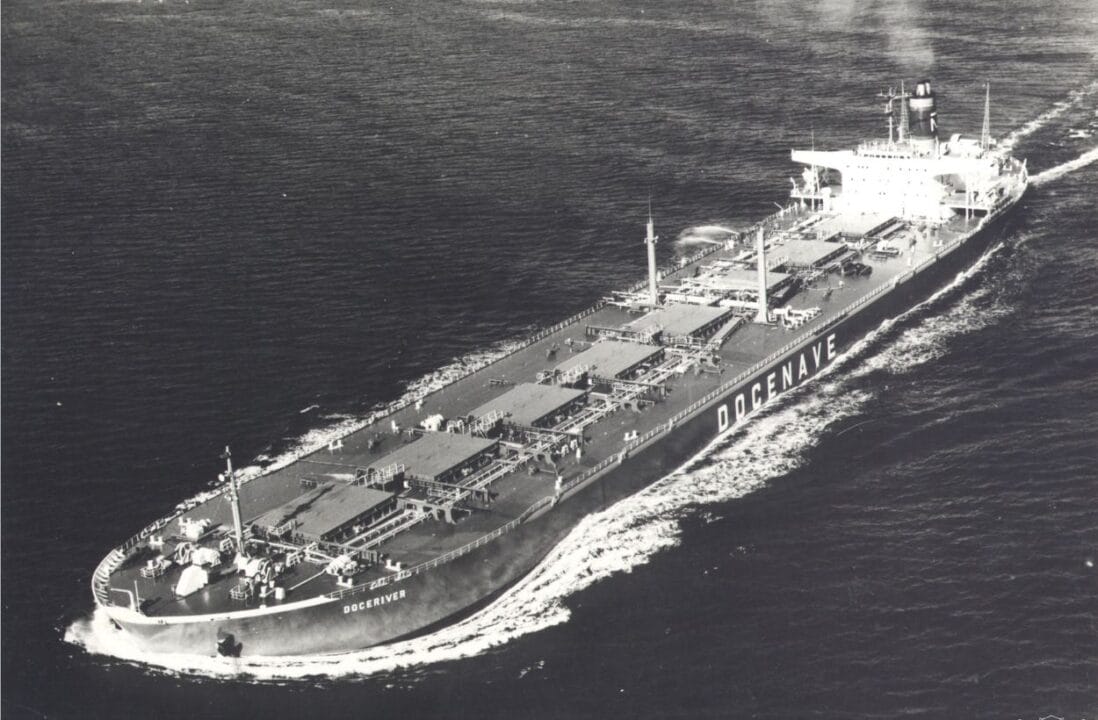
The saga of oil tankers, essential in the global oil trade, begins in the second half of the 19th century, marking the start of an era of technological innovations and expansion of international trade. The need to transport oil efficiently and safely from producing regions to consuming centers led to the development of specialized ships, evolving from simple vessels to today’s colossal supertankers.
Shell Oil introduced the AFRA system in 1954, a milestone in the history of tankers, providing a standard method for classifying these giants of the sea by size. This classification ranges from Panamax, adapted to pass through the Panama Canal, to the impressive ULCC, which symbolizes the pinnacle of naval engineering, capable of transporting astronomical loads.
Super tankers face unique challenges due to their monumental size, such as port restrictions and the need for specialized marine terminals or cargo transfer to smaller vessels. Despite these limitations, the energy efficiency of these ships in terms of fuel per ton of cargo transported highlights maritime oil transport as one of the most effective ways of moving commodities.
The Brazilian Contribution
In Brazil, the history of oil tankers is linked to the formation of Fronape, essential for the national autonomy in oil transportation. The expansion and modernization of this fleet reflect the country’s commitment to energy self-sufficiency and the strategic importance of oil in the national economy.
In addition to the economic and logistical aspects, the operation of oil tankers raises significant environmental issues. Oil spills, such as the Exxon Valdez disaster in 1989, highlight the urgent need for safer and more sustainable practices in maritime oil transport. The industry has responded with improvements in shipbuilding standards, such as double hulls, and stricter regulations to minimize environmental impacts.










-

Uma pessoa reagiu a isso.