





 Portuguese
  English
  Spanish
 4 min of reading
  14 comments


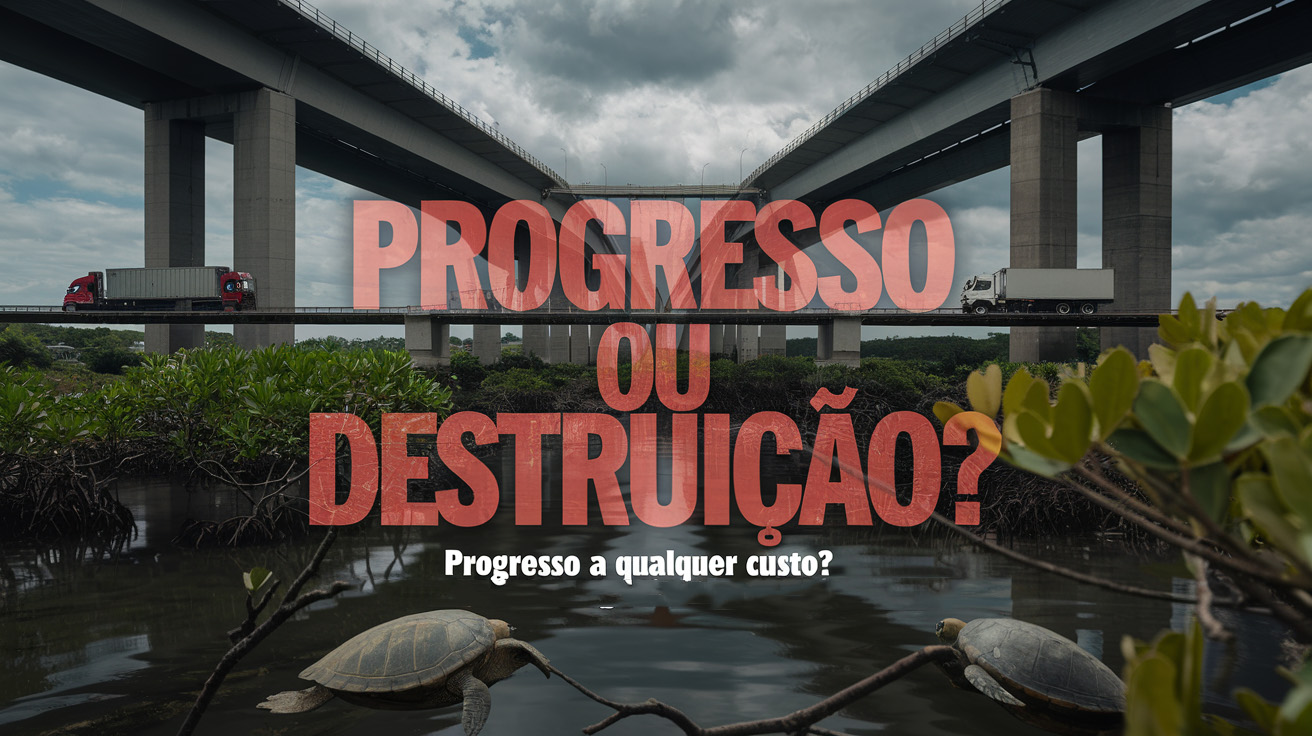


With 12.4 km, the new bridge promises to revolutionize transportation. However, progress comes at a high price: destruction of mangroves, threat to biodiversity, and impact on fishing communities. Environmentalists and experts warn of ecological and social risks, while the debate over sustainable alternatives continues.
Bahia is about to experience a monumental project that promises to shorten distances and accelerate economic development.
However, under the guise of progress, a silent threat hangs over delicate ecosystems and entire communities that depend on them for survival.
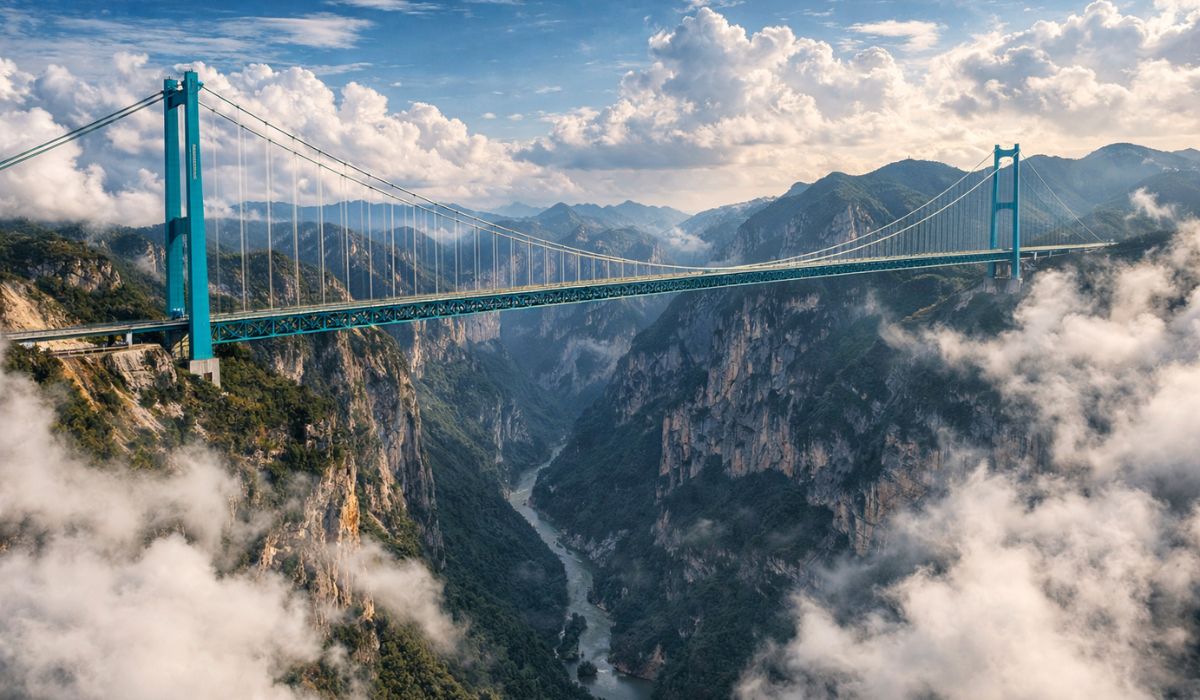
With 12.4 km in length, the Salvador-Itaparica bridge will be the second largest in Brazil and is budgeted at R$ 9 billion.
-
With an investment of R$ 612 million, a capacity to process 1.2 million liters of milk per day, Piracanjuba inaugurates a mega cheese factory that increases national production, reduces dependence on imports, and repositions Brazil on the global dairy map.
-
A megaproject worth R$ 89 billion is advancing in Iraq and promises to change the game in global trade by creating a new corridor between Asia and Europe, reducing traditional routes and repositioning the country as a logistics powerhouse.
-
Goodbye bedside table: floating shelves become a trend in 2026 by freeing up space in the bedroom, improving circulation, bringing visual lightness, and integrating technology without taking up floor space.

-
Brazilian city gains industrial hub for 85 companies that is equivalent to 55 football fields.


The project, led by a consortium of Chinese companies, is set to begin in 2025, with completion expected in 2029.
According to journalist Lobato Felizola from Mongabay, the bridge promises to reduce the crossing time between Salvador and the Island of Itaparica from 50 to just 15 minutes, making it attractive for both residents and productive sectors, such as agriculture.
However, environmentalists, fishermen, and experts alert to the high environmental and social costs of this venture.
The project threatens mangroves, reefs, and the rich biodiversity of All Saints Bay, in addition to compromising the livelihoods of traditional communities.
A Bay at Risk
All Saints Bay, the largest bay in Brazil, is a mosaic of biodiversity that hosts threatened species, such as sea turtles and humpback whales.
According to Severino Agra, a biologist at the Federal University of Bahia and co-founder of the Bahia Environmentalist Group (Gambá), the impacts of the work include underwater noise caused by the driving of pillars, which affects the behavior of various species.
“The 139 planned pillars may act as physical barriers, hindering the movement of large marine mammals and other essential animals for the balance of the local ecosystem,” Agra stated to Mongabay.
Moreover, the noise and vibrations may damage coral reefs and render spawning areas used by turtles unviable.
Enrico Marcovaldi, a researcher at the Humpback Whale Project, highlights that the waters of All Saints Bay have become increasingly important for these mammals.
In 2024, during the 90 days of the observation season, 1,008 sightings were recorded in the region, with 72 of them inside the bay.
Threatened Mangroves and Female Seafood Collectors
The work plans for the duplication of roads and the construction of a 22 km highway, which will result in the destruction of mangroves in Vera Cruz, in the south of the Island of Itaparica.
According to Lobato Felizola, mangroves are essential for carbon capture, protection against erosion, and support for marine biodiversity.
Furthermore, the activities of female seafood collectors, who support their families through artisanal shellfish gathering, are under threat.
“The shellfish gathering will drastically reduce with the loss of vegetation cover over the mangroves,” Agra laments.
The Pressure on Itaparica
With the bridge, the Island of Itaparica may face a population explosion that threatens to overload public services and disrupt traditional ways of life.
For Tânia França, representative of the Cultural and Environmentalist Religious Association (Arca), “the bridge will be invasive and will bring more harm than benefits to the island.”
This scenario contrasts with the current crossing made by ferry boat, which, despite criticism of neglect, is defended as the most sustainable alternative.
“It seems that there has been a deliberate process of neglecting the ferry to justify the bridge,” denounced Maria José Pacheco, executive secretary of the Pastoral Council of Fishermen in Bahia.
Bridge: Development or Destruction?
Although it is a logistical shortcut that favors agricultural transportation, the bridge project raises a crucial question: Does progress justify the destruction of ecosystems and the impact on vulnerable communities?
The controversy continues amid the analysis of the environmental licensing, which so far has only obtained a preliminary license.
Severino Agra points out flaws in the Environmental Impact Report, claiming that it does not adequately cover the expected damages.
As the Bahia government and the consortium move forward with planning, it remains to be seen whether the promise of development will offset the ecological and social costs.
Can the price of progress be paid by the destruction of ecosystems and the compromising of traditional community ways of life?






Uma **** quando se diz melhorar algo no brasil. Sempre , sempre essa lereia .
Um projeto que promete dar um jeito na vida do Brasil, mas em troca está destruindo as nossas reservas naturais e os ambientes que fiscalizam, abandonando regularmente as nossas riquezas recall durante séculos.
A ponte vai destruir a ilha de Itaparica. O efeito mais imediato será a total especulação imobiliária ao lado da favelização generalizada. Criminalidade crescente. Além dos impactos ambientais que os estudiosos apontam. O governo do estado se omitiu totalmente da gestão e fiscalização do sistema ferry, entregando a população aos abusos dos abutres capitalistas. O sucateamento do ferry só pode ter sido proposital, e com certeza foi algo vergonhoso.
É revoltante como o governo do estado pode se omitir de suas responsabilidades e entregar a população a especulação imobiliária e criminalidade. O sucateamento do ferry foi proposital, e a construção da ponte só irá piorar a situação. A falta de gestão e fiscalização é vergonhosa!
O povo não podem ver um progresso que já começam a fazerem críticas mas não tem nada haver, esse ambientalista são uns imbecis que tudo querem proibirem a ponte tem espaços pra um navio imagine uma ****