





 Portuguese
  English
  Spanish
  3 min of reading
  0 comments



The Incredible Journey of the Construction of Christ the Redeemer: A Symbol of Brazilian Engineering
If you think that the construction of Christ the Redeemer was simple, you’d better rethink! We are talking about such a grand work that it could have even been done by giants. But, of course, it was thanks to the talent of Brazilian engineering that this wonder became reality. The monument, chosen as one of the New Seven Wonders of the World, not only enchants with its beauty but also with its rich history full of challenges.
The construction of Christ the Redeemer began with an idea that arose in 1859, from the French priest Bernard Boss. Initially, the plan was to honor Princess Isabel, but it ended up transforming into an image of the Sacred Heart of Jesus. Although the priest did not live to see the project completed, his vision remained alive, and in 1920, over 20,000 women delivered a petition to President Epitácio Pessoa, requesting the construction of the work on Corcovado.
The Construction of Christ the Redeemer Cost the Equivalent of R$ 9.5 Million in Today’s Values
After approval, the construction site was chosen with great care. Corcovado was considered ideal for its height and for offering a panoramic view of the city of Rio de Janeiro. In 1923, the “Monument Week” was organized to raise funds for the construction of Christ the Redeemer, which cost the equivalent of R$ 9.5 million in today’s values.
-
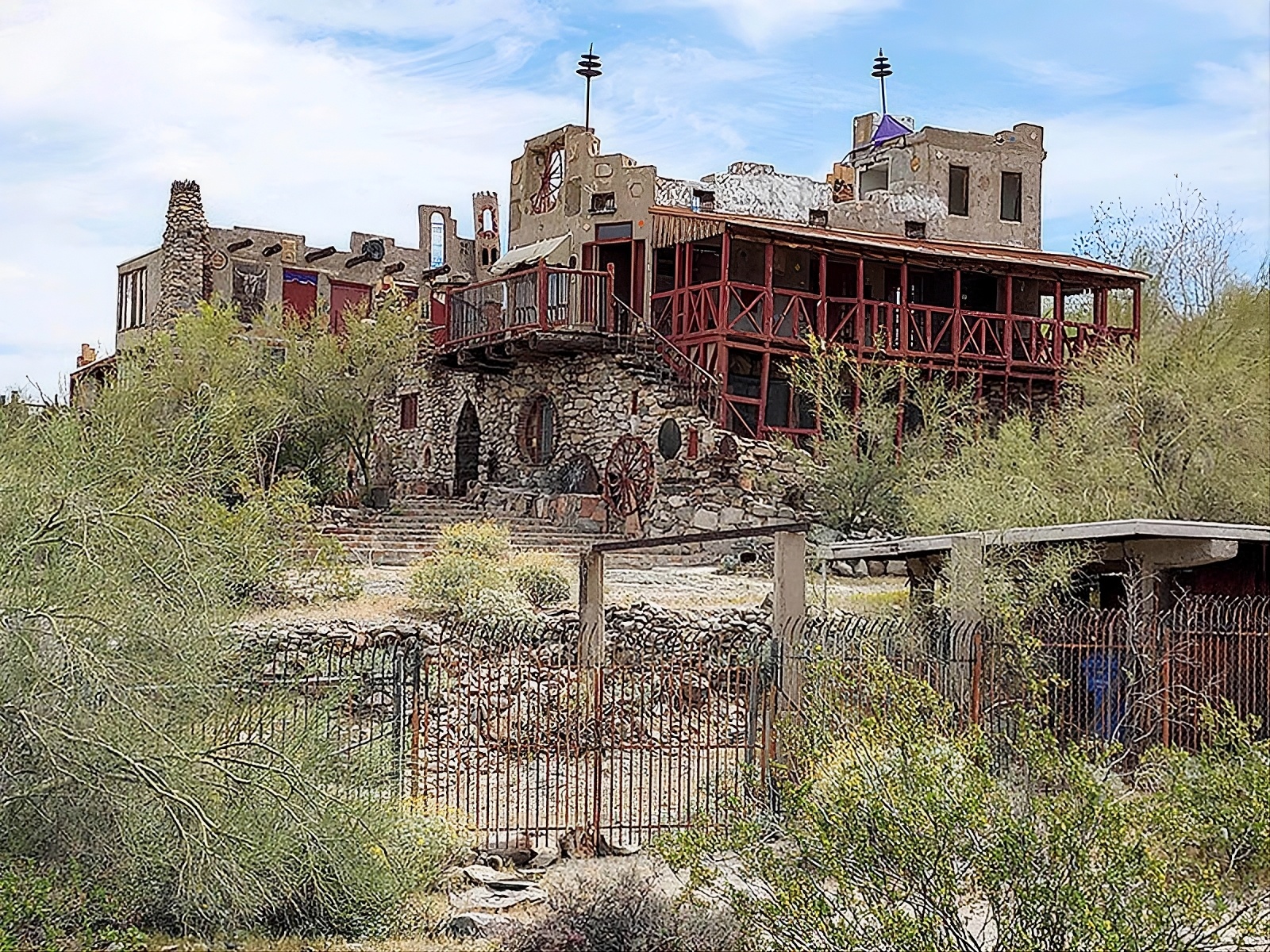
Without a blueprint, without an engineer, and using scrap from the dump, a father spends 15 years building an 18-room castle for his daughter, featuring tram tracks, 13 fireplaces, and over 700 m², which may now be demolished.
-
A megaproject worth R$ 89 billion is advancing in Iraq and promises to change the game in global trade by creating a new corridor between Asia and Europe, reducing traditional routes and repositioning the country as a logistics powerhouse.

-
Goodbye bedside table: floating shelves become a trend in 2026 by freeing up space in the bedroom, improving circulation, bringing visual lightness, and integrating technology without taking up floor space.

-
Israel, Greece, and Cyprus signed an agreement in 2020 to transport gas from the Mediterranean to Europe via a 1,872 km pipeline, but Turkey claimed sovereignty over part of the maritime route, and the project never materialized.


The design competition was won by Brazilian artist Carlos Oswald, whose original drawing depicted Christ holding a cross and a globe. However, after discussions, it was decided that the Christ with open arms, symbolizing peace and welcome, would be more appropriate. Engineer Heitor da Silva Costa led the construction, with the collaboration of the French sculptor Paul Landowski, who was responsible for shaping crucial parts such as the hands and head of Christ.
One of the Great Achievements of Brazilian Engineering
One of the great achievements of Brazilian engineering was the use of reinforced concrete, an innovation at the time, which ensured the durability of the monument and its ability to withstand winds of up to 250 km/h. The assembly process was challenging, with parts brought from France, including the head of Christ, which was made up of 50 separate pieces.
The statue, standing at 38 meters tall (including the pedestal), and with arms extending 28 meters, was inaugurated on October 12, 1931, on the Feast of Our Lady Aparecida. Since then, Christ the Redeemer has become a symbol not only of the Christian faith but also of national pride and the ingenuity of Brazilian engineering.
1.3 m Heart Carved in the Chest of Christ
Another remarkable aspect of the construction was the 1.3 m heart carved in the chest of Christ, a tribute to the Sacred Heart of Jesus. During the works, documents and a family tree were sealed in the heart of the statue, in a glass jar, symbolizing devotion and gratitude.
The construction was not without dangers. Strong winds at the top of Corcovado threatened the lives of the workers, but surprisingly, there were no fatalities. In 1975, the monument underwent significant renovations to address structural issues, and in 2007, it was inaugurated as one of the New Seven Wonders of the World in an election with over 100 million votes.
The Construction of Christ the Redeemer Represents an Achievement of Brazilian Engineering


Christ the Redeemer not only attracts millions of tourists every year, but it has also become a site of religious celebrations, such as baptisms and weddings, as well as a place for masses and pilgrimages. Thus, the construction of Christ the Redeemer not only represents an achievement of Brazilian engineering but also a legacy that continues to enchant and inspire the world.
And you, did you imagine that the construction of Christ the Redeemer involved so many challenges and incredible details of Brazilian engineering? What surprised you the most about this story? Share in the comments!









Seja o primeiro a reagir!