





 Portuguese
  English
  Spanish
 4 min of reading
  0 comments


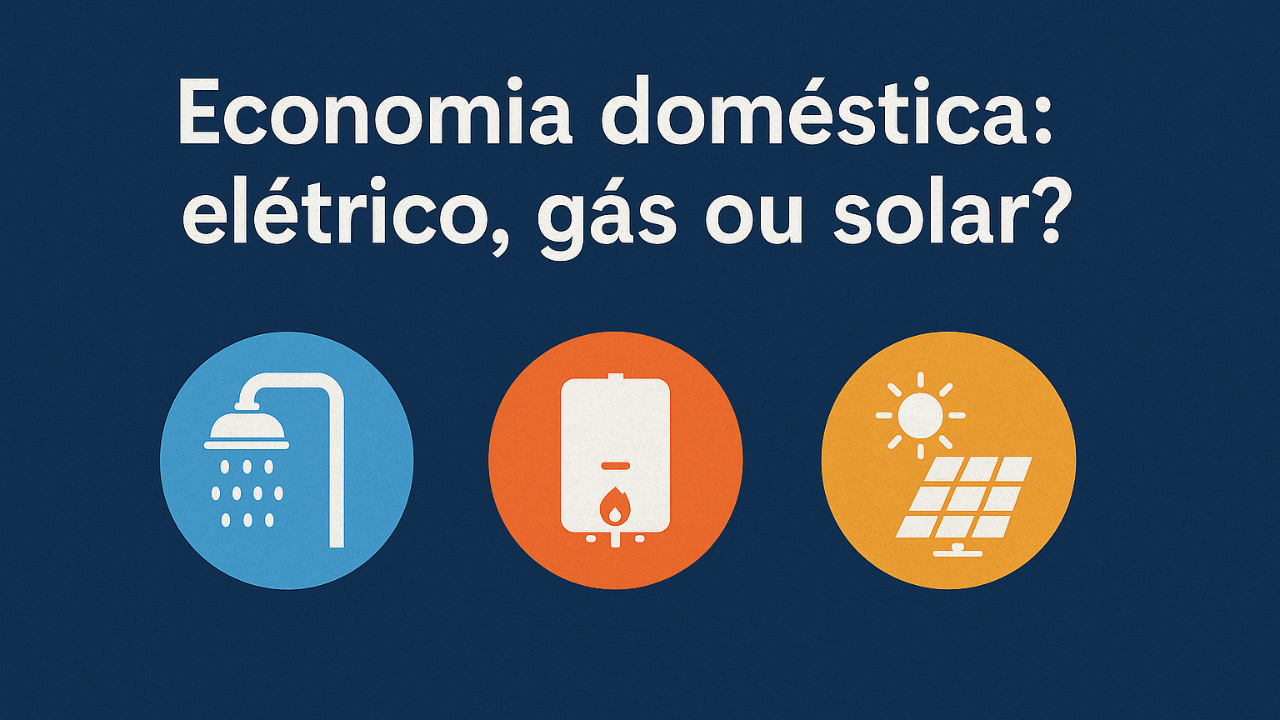
Electric Shower, Gas Heating, and Solar Heater: See Which Option Reduces Energy Consumption and Generates More Household Savings.
Faced with increasingly high electricity bills, consumers across Brazil have been seeking alternatives to reduce expenses without losing the comfort of a hot shower.
The main question is what to choose between electric showers, gas heating, or solar heaters, technologies that cater to different housing profiles.
The analysis by who understands the subject was conducted by researcher Márcio Maia Vilela from USP, consulted by TechTudo, who explains how each system impacts your wallet.
-
Unemployment rises again to 5.8% at the beginning of 2026, raising alarms about the end of temporary positions and its impact on the Brazilian job market.

-
Document organization can cut invisible costs in small businesses, a simple step that prevents waste, rework, and losses in daily operations.

-
Chinese giant worth nearly R$ 4 billion that manufactures cables for electric cars, solar energy, and robotics wants to open a factory in SC.
-
Many employers do not know, but the law guarantees domestic workers a 25% increase in salary during trips, 50% for overtime, 20% for night shifts, and 17 additional benefits that can lead to labor lawsuits if not paid.


The comparisons apply to any household in the country, especially at a time when energy weighs more on the family budget.
The central question arises because each method requires different investments and directly influences why household savings vary so much from one system to another.
Thus, understanding where each fits helps consumers plan better for installation and monthly expenses, as energy consumption varies significantly between alternatives.
Electric Shower: Practical, Inexpensive, and Popular, but a Champion in Energy Consumption
The electric shower remains dominant in Brazilian homes due to its low initial cost and ease of installation.
It does not require specific plumbing, adapts well to small properties, and works without combustion, which eliminates the risks of GLP or CO₂ leaks.
However, this convenience comes at a cost. The device ranks among the highest contributors to residential energy consumption, as its power varies between 4,400 W and 7,500 W.
In homes with more residents, it can account for over 30% of the monthly bill.
Additionally, properties with low water pressure may experience significant drops in flow, reducing the comfort of the shower.
For this reason, the electric shower is primarily recommended for students, individuals living alone, occasional use, or properties without gas infrastructure.
Gas Heating: High Comfort and Hot Water at Multiple Points Simultaneously
The gas heating utilizes Natural Gas (NG) or GLP to heat the water that circulates through a coil. This allows simultaneous use of showers, faucets, and even laundry, with a more stable temperature and more comfortable showers.
An important point for household savings is that the cost no longer appears on the electricity bill and transfers to the gas bill, which, per energy unit, tends to be cheaper.
Thus, the system becomes advantageous for larger families and for those who use multiple hot water points.
On the other hand, the initial investment is much higher. The system requires its own piping, good ventilation, adequate exhaust, and specialized labor.
Annual maintenance is essential, not only for performance but also for safety.
As Márcio Vilela warns, “just over a month ago, in Rio, a family of tourists from Santa Catarina died after using a gas shower whose gas outlet had been diverted to the living room and one of the bedrooms during a renovation.”
This case shows how improper installations pose a serious risk.
Gas equipment must comply with strict technical standards to ensure safety.”
Therefore, gas heating is ideal for well-ventilated apartments and homes with appropriate structures.
Solar Heater: The Greatest Ally of Household Savings in the Long Run
The solar heater uses solar radiation to heat water, reducing energy expenditure associated with bathing by up to 90%.
For an average family, this can translate to around R$ 600 in annual reductions in the electricity bill.
With a lifespan of over 25 years and low maintenance, the system is the most efficient among all.
Yet, it requires the highest initial investment — between R$ 2,000 and R$ 5,000 — as well as roof space for the collectors and reinforced structure to support the full boiler.
Despite the costs, the financial return is quick: in two to four years, the investment typically pays off.
In many financing options, the installments range from R$ 39 to R$ 49, an amount that tends to be lower than the monthly savings generated.
Therefore, the solar heater is recommended for homeowners, planned projects, and sunny regions.
Energy Consumption: How Each System Impacts the Bill
The impact on energy consumption drastically changes according to the chosen technology.
So in the electric shower, up to one-third of the bill may come solely from showers.
In gas heating, this amount decreases, although it is partially transferred to GLP or NG.
Thus, in the solar heater, it practically disappears, except for the support resistance used on cloudy days.
According to Vilela: “The reduction in the electricity bill already covers the cost of the system. After this period, it’s pure savings.”
Which System to Choose to Maximize Household Savings?
Electric Shower: best alternative for low initial cost and properties without gas infrastructure.
Gas Heating: recommended for large families and those seeking comfort at multiple water points.
Solar Heater: ideal choice for those looking for maximum household savings and sustainability.
Practical Tips to Reduce Water and Energy Consumption
Small changes help any system to be more efficient.
Reduce shower time.
In the electric shower, use the “Summer” setting, which consumes up to 35% less energy.
So in gas heating, keep the temperature setting on the device, avoiding excess cold water.
Thus, in the solar heater, keep the panels clean and maintenance up to date.









Seja o primeiro a reagir!