





 English
  Francês
  Alemão
  Italiano
  Japonês
  Norueguês
  Portuguese
  Spanish
  4 min of reading



Petrobras Focus on Deep Water Pre-Salt Combines Substantial Reserves, High Productivity, and Resilience Even in Low Oil Price Scenarios
Finally, the first of four FPSOs from Petrobras has arrived in Brazil, at the third largest pre-salt field in the Santos Basin! The Brazilian state-owned giant announced yesterday (02/02), in a material fact to the market, that the Floating Production Storage and Offloading vessel (FPSO) Guanabara has reached the Mero field, located in the Libra Block, in the pre-salt of the Santos Basin. The platform, of the FPSO type (floating production, storage, and offloading unit), will be the first definitive system to operate in Mero, the third largest pre-salt field (behind only Búzios and Tupi).
Also Read
- To Focus on the Exploration of Offshore Oil in Deep and Ultra-Deep Water in the Pre-Salt, Petrobras Sells 22 Onshore Fields in Rio Grande do Norte and Earns Over R$ 8 Billion!
- Seadrill, which Won a Billion-Dollar Contract from Petrobras for a Platform that Will Operate in the Búzios Field, Calls for Hundreds of Job Openings for Offshore Activities in Rio de Janeiro
- Mubadala, the Arab Sovereign Fund from the Crown Prince of Abu Dhabi, who Bought the RLAM Refinery from Petrobras in Bahia, Increases Gasoline and Diesel Prices More Than the State Company
- GasLub Hub in Itaboraí Begins to Receive Natural Gas from the Pre-Salt and Represents the Resumption of the Former Comperj, whose Works Were Halted Due to Corruption Charges, Resulting in a Loss of R$ 28.3 Billion for Brazilians
According to Petrobras, the FPSO Guanabara will be connected to the wells and subsea equipment and will undergo final tests in the coming months before beginning production, which is expected to start in the first half of this year.
The unit was converted and integrated at the DSIC shipyard in Dalian, China. After leaving China, it made a stop of about 2 months at the Drydocks World Dubai (DDWD) shipyard in Dubai, where commissioning activities were carried out.
-
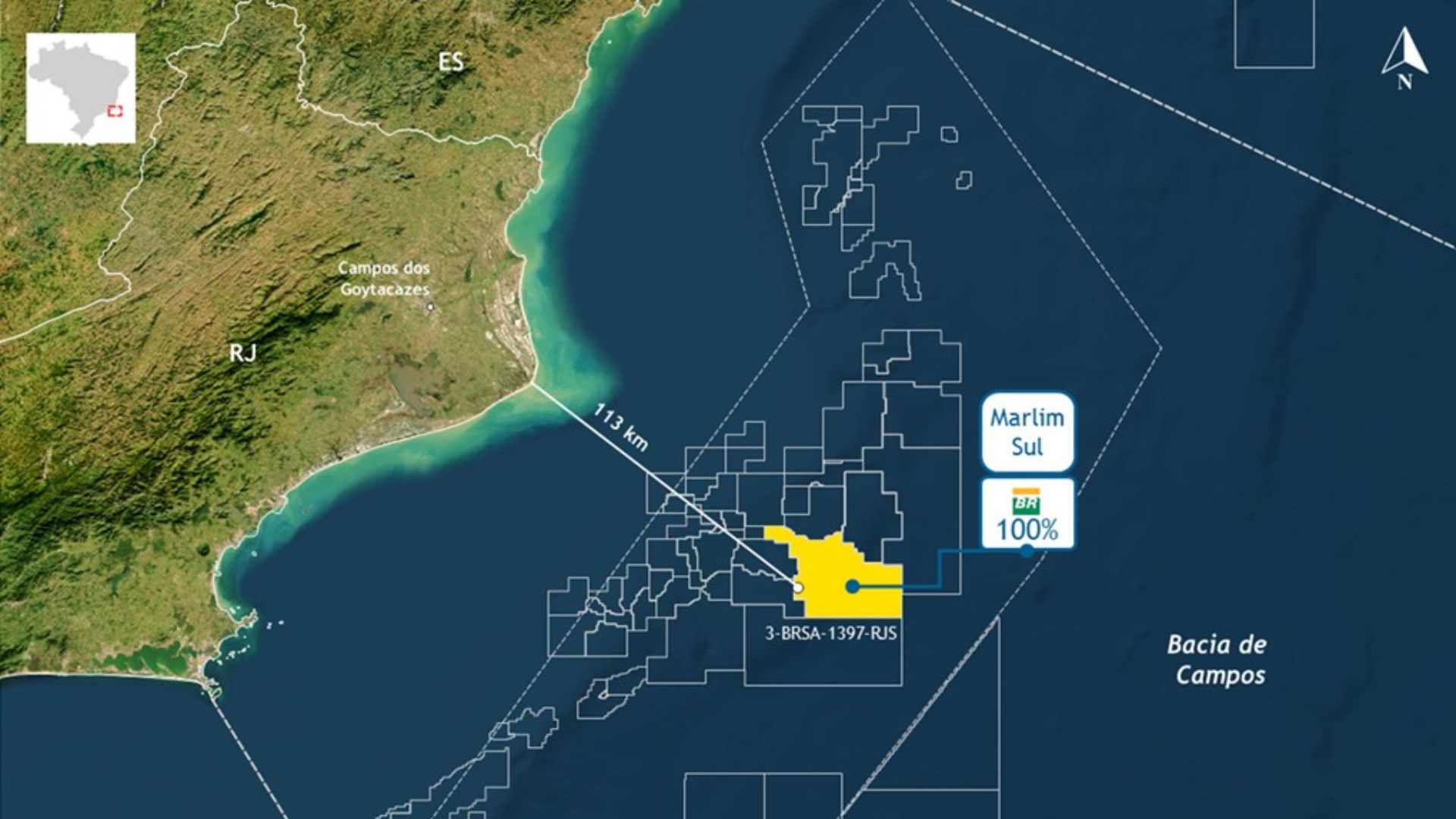
Petrobras finds high-quality oil in the pre-salt at 113 km from RJ and reignites expectations about strategic reserves in the Campos Basin.

-
Ocyan opens registrations for startups focused on innovation in the oil and gas sector and will select projects for Innovation Day with the support of Nexio.

-
Petrobras announces new oil discovery in the pre-salt of the Campos Basin and reinforces Brazil’s prominence with high-quality reserves that can increase production and energy revenues.
-
Alert in the fuel market: Analysts and a former director of ANP warn that oil prices may worsen in the coming months due to global instability.

FPSO Guanabara Converted in China and Commissioned in Dubai Has the Capacity to Produce Up to 180,000 Barrels of Oil Per Day (BPD) and Process 12 Million m3 of Gas
With the capacity to produce up to 180,000 barrels of oil per day (BPD) and process 12 million m3 of gas, the FPSO Guanabara will be the first of a series of four definitive platforms planned for the Mero field in the Strategic Plan 2022-2026. The unit will be installed over 150 km from the coast, at depths reaching 1,930 meters, equivalent to four times the height of Sugarloaf Mountain.
The platform has a height of 172 meters, equivalent to 4.6 Christ the Redeemer statues, and a length of 332 meters, or three football fields. In addition, it has a power generation capacity of 100 megawatts, enough to supply a city of 330,000 inhabitants.
The Development of the Mero Field Will Be Crucial for Petrobras to Maintain the Accelerated Pace of Pre-Salt Production
“The development of the Mero field will be crucial for us to maintain the accelerated pace of pre-salt production. Furthermore, it reflects our strategy to focus on deep water assets that combine substantial reserves, high productivity, and resilience even in low oil price scenarios. Mero also consolidates the integrated work with our partners and suppliers, in addition to driving innovative and sustainable solutions that have expanded the technological limits of the global oil industry,” said Petrobras Exploration and Production Director Fernando Borges.
One of these innovative solutions in the development of this field is a groundbreaking technology focused on reducing greenhouse gas emissions and increasing productivity and efficiency of the project: the HISEP®, a device that will remove excess CO2-rich gas present in Mero right in the seabed. The technology is patented by Petrobras, with the potential to increase production and efficiency in the field, in addition to reducing costs and emissions. The HISEP® is expected to be operational when connected to the third definitive platform planned for the Mero field.
The Libra Consortium is operated by Petrobras (40%), in partnership with Shell Brasil (20%), TotalEnergies (20%), CNPC (10%), and CNOOC Limited (10%), managed by Pré-Sal Petróleo S.A (PPSA).








Seja o primeiro a reagir!