





 Portuguese
  English
  Spanish
  3 min of reading
  0 comments


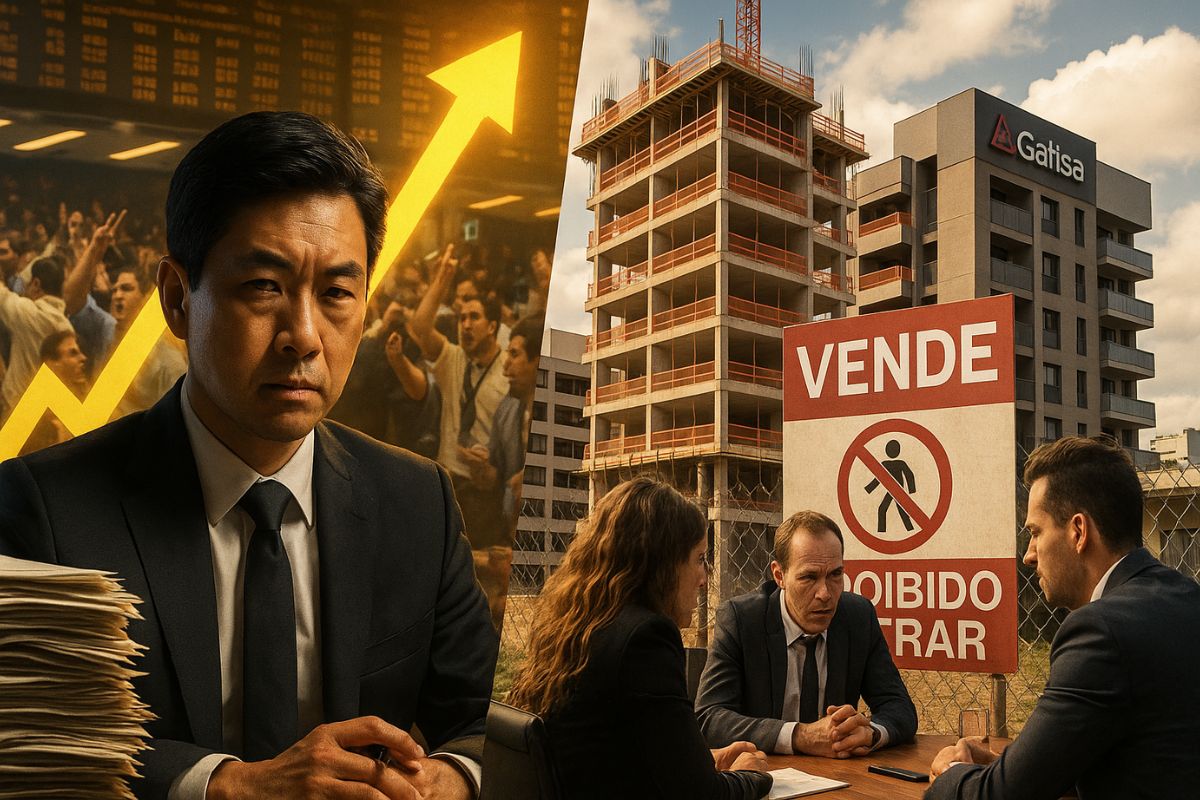
The Korean Who Became a Legend in the Brazilian Financial Market. The Bold Journey of Murakyu, the Investor Who Challenged Giants, Accumulated Fortunes, and Faced Historical Downturns
The Korean Who Became a Legend in the Brazilian Financial Market is a story of ambition, risky strategies, and significant consequences. Murakyu, who arrived in Brazil at just 18 years old, built an empire in the capital market by making high-stakes bets, often against traditional rules. His ability to identify opportunities took him to the top, but a lack of risk control resulted in billion-dollar losses and a legacy surrounded by controversy.
Over decades, he navigated between significant victories and devastating defeats, becoming a figure equally admired for his boldness and criticized for his methods. His journey is a living study on the limits of ambition and the importance of risk management in the financial world.
Arrival in Brazil and First Steps in the Market
Murakyu landed in Brazil in 1970, settling in the Bom Retiro district of São Paulo. Among textile fairs and shops, he learned Portuguese and realized that the country offered space for boldness. He graduated in Business Administration from Fundação Getulio Vargas and gained experience at institutions like Bankers Trust, Citibank, and Banco Nacional.
-
50 viaducts, 4 tunnels, 28 bridges, and 40 kilometers of bike paths: BR-262 in Espírito Santo will receive 8.6 billion reais for the largest engineering project in the state’s history, inspired by the Immigrant Highway in São Paulo.

-
Brazil produces too much clean energy and doesn’t know what to do with it: over 20% of solar and wind capacity was wasted in 2025 while investors flee and 509 renewable generation projects were abandoned in the last year.

-
Piauí will produce a new fuel that replaces diesel without needing to change anything in the truck’s engine and reduces pollutant gas emissions by half: truck drivers from all over the Northeast are already celebrating the news that will arrive later this decade.

-
A new Brazilian shopping center worth R$ 400 million will be built in an area equivalent to more than 4 football fields, featuring 90 stores, 5 cinemas, a supermarket, a college, and parking for 1,700 cars, potentially generating 3,000 jobs.


With a multimillion-dollar severance from his last job, he began investing in stocks, achieving significant profits. In 1995, he founded GW, initially as a financial institution aimed at the Korean community, and soon shifted to asset management. From the beginning, he maintained absolute control, creating a strict and highly centralized corporate environment.
The Peak as “King of Futures”
By the late 1990s, Murakyu structured the GW FIA, a fund that reached over 2,500% in gains. His specialty was the purchase of futures, a high-risk strategy betting on the future appreciation of stocks. His success led to significant positions in major companies, including the purchase of 16.2% of Lojas Americanas in 2007.
The subprime crisis, however, severely impacted his funds, which lost up to 90% of their value. Nevertheless, he took risks again, diversifying into real estate funds and new strategic acquisitions.
Controversial Operations and Corporate Conflicts
In 2011, the leveraged purchase of Marfrig shares resulted in catastrophic losses, forcing him to sell assets and leading to a legal battle that ended with a multimillion-dollar fine and suspension of his license as a manager by the CVM.
His involvement with Livraria Saraiva, starting in 2016, generated one of the market’s most well-known conflicts: attempts to gain control of the company, accusations of abuse of power, and a contentious exit, followed by the irreversible decline of the company.
The Fall of Gafisa
The most dramatic episode came with Gafisa in 2017. After taking control controversially, he implemented radical changes that led to work stoppages, loss of suppliers, and a decline of over 50% in stock prices. The leveraged operations worsened the losses, leaving investors owing money—a rarity in equity funds.
The GW’s stake fell from 50% to less than 8% in just a few days, marking the definitive collapse of his strategy.
Legacy and Lessons
In 2020, GW was expelled from Anbima for irregularities, and since then, Murakyu has disappeared from the market radar. His name, once synonymous with boldness and vision, has also become a symbol of how a lack of limits and risk management can destroy careers and fortunes.
The story of the Korean Who Became a Legend in the Brazilian Financial Market remains a warning: the market rewards courage but punishes recklessness severely.
And you? Do you believe Murakyu’s boldness was visionary or reckless? What lessons does this story leave for today’s investors? Share your opinion in the comments.










Seja o primeiro a reagir!