





 English
  Francês
  Alemão
  Italiano
  Japonês
  Norueguês
  Portuguese
  Spanish
  3 min of reading


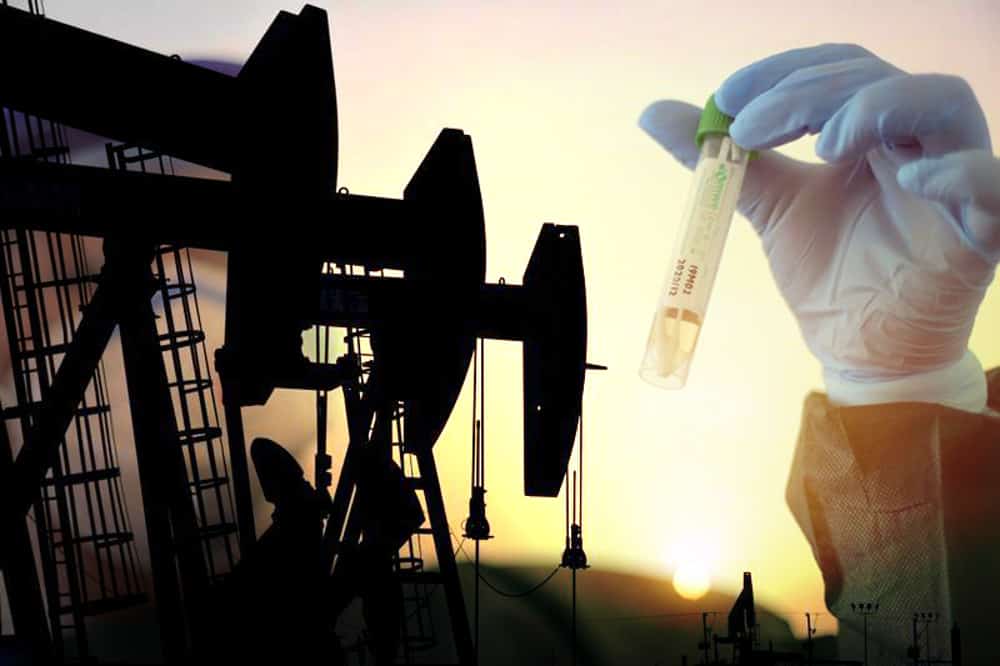
Heavily Indebted Developing Countries (the Case of Brazil), Particularly Commodity Exporters, Face Exceptional Threat from Coronavirus Pandemic
The coronavirus pandemic will cause a collapse in the Chinese economy that will consequently directly affect other countries. The consequences generated by covid-19 on the global economy have not yet been measured, but the world is already beginning to feel the enormous crisis. Petrobras Requests the Disbursement of US$ 8 Billion from Banks to Reinforce Liquidity Amid Coronavirus Crisis
Read Also
- Despite the Crisis, Petrobras Receives Proposals for the Chartering of FPSO Mero 3
- Amaggi Offers 51 Job Openings for Helpers, Electricians, Mechanics, Technicians, and Engineers on This Day
- 349 Job Openings for Elementary, High School, and Higher Education in Operational and Administrative Positions by ManpowerGroup
The industrial sector, the retail market, and investments in fixed assets have been most affected by the new coronavirus; however, according to the National Bureau of Statistics of China, the worst is yet to come, as the damage caused by covid-19 will heighten fears of a global recession.
-
Expansion of Federal Institutes: 38 new campuses and R$ 200 million for public education; see the cities included.

-
Lula’s government changes rule in important benefit and thousands of Brazilians will no longer receive it; see what has changed.
-
New Gripen fighter makes Argentines surrender to Brazil, and the heavy reaction exposes envy, frustration, and shock at Brazil’s technological leap.

-
This discovered deposit near the Andes could change the future of Argentina, attract billions, and even shake up the global metals market.

The pandemic has migrated to Europe, where Spain and Italy are the countries suffering the most from the outbreak. As of March 20, 80,000 people had been reported infected in both countries, with over 6,000 deaths. From Saturday to Sunday alone, nearly 800 people died in Italy, which has the highest death toll in the world, 4,825.
In China, industrial production suffered a significant year-on-year impact, falling 13.5%, marking the first contraction since January 1990. Analysts had expected a decline of 3% in this indicator.
The retail market, considered the second-largest economy in the world, experienced a sharp drop of 20.5% compared to the previous year, the largest decline in the historical series. The market had anticipated a drop of 4%.
Expenses on items that include infrastructure, properties, machinery, and equipment regarded as fixed assets recorded a massive decline of 24.5%, six times more than analysts had predicted.
The numbers reveal the consequences generated in the Chinese economy amid the new coronavirus, where China had to implement harsh measures such as closing factories and stores across the country for several weeks to contain the spread of the virus within its territory.
China is gradually resuming its industrial activities; as of March 16, the Chinese economy was operating at 69.5% of its production capacity, but the crisis caused by the coronavirus clearly shows economists that both sides of the economy, the supply chain and demand, are strongly affected by covid-19.
“The restrictions on industrial activity have mostly been resolved. The major concern for companies now is weak demand,” stated the consultancy.
China currently represents one-third of global manufacturing, being the largest exporter of goods on the planet — what happens in the Asian country will have a global impact.
The damage caused by the coronavirus represents the “greatest threat to the global economy since the 2008 financial crisis.” Earlier this month, the United Nations Conference on Trade and Development (UNCTAD) predicted that the pandemic could cost the global economy up to US$ 2 trillion this year (around R$ 10 trillion).
The Impact of Covid-19 on the Brazilian Economy
“Heavily indebted developing countries (the case of Brazil), particularly commodity exporters, face an exceptional threat,” due to reduced export returns coupled with a stronger dollar, warned Richard Kozul-Wright, director of the UNCTAD Division on Globalization and Development Strategies.
Since the beginning of the year, analyses of the consequences generated by the coronavirus on Brazil’s economy show an increasingly negative scenario.
In February, the government predicted an impact of around 1 percentage point on the expected growth of around 2% of GDP. Last Friday (20), the country’s economic team cut its official projection from 2.1% to 0.02%.
According to analysts and researchers, Brazil may face an economic crisis on a scale comparable to that experienced in 2008 and the truck drivers’ strike in 2018.
The Brazilian GDP could shrink by 4.4% in 2020, according to studies by the Getulio Vargas Foundation. Meanwhile, Itaú bank estimates that if the Brazilian economy experiences a halt similar to what occurred in China during the imposed quarantines, the GDP could fall by 0.7% this year.








Seja o primeiro a reagir!