





 Portuguese
  English
  Spanish
  3 min of reading
  0 comments


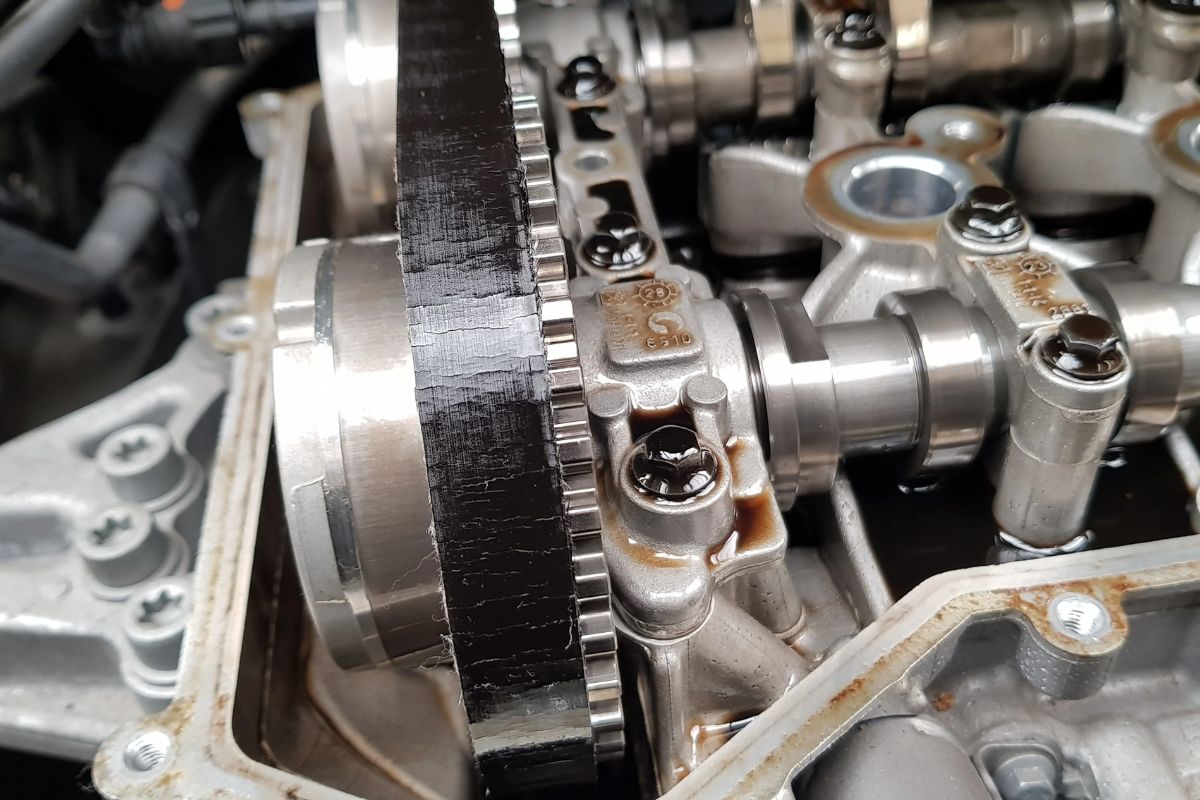
Dayco Patented the “Belt In Oil” System, but Ford Pioneered Its Mass Application of the Oil-Bathed Timing Belt. Understand the History and Contributions of Each.
The oil-bathed timing belt is a significant innovation in engine engineering, seeking more efficiency and durability. But who really invented this technology? The answer involves distinguishing between the creation of a specific system and its pioneering introduction to the market.
This article investigates the origin of the oil-bathed timing belt. We will analyze Dayco’s patent for the “Belt In Oil” (BIO) system. We will also look at Ford’s crucial role in the application and popularization of this technology in the automotive industry.
What Is the Oil-Bathed Timing Belt and Why Was It Developed?
The timing belt synchronizes the rotation of the crankshaft and camshaft in engines. This synchronization is vital for the proper operation of the valves. The evolution of synchronization systems led to rubber belts, which are quieter and lighter than chains but require periodic replacement.
-
Son of a seamstress from the rural area of Ceará who did not speak English wins a scholarship of over 2 million reais at Williams College, one of the top 10 universities in the United States, covering everything including dormitory, meals, and annual trips to Brazil.

-
Bill Gates revealed that the true secret behind every great achievement is not a brilliant leap but rather small improvements repeated over the years, and the data from his own career and the fight against climate change prove that he is right.

-
With 22 thousand tons of steel, a height nearly three times greater than the Eiffel Tower, and a cost of R$ 1.6 billion, China is building the highest bridge on the planet over a colossal canyon, reducing a crossing time of over 2 hours to just over 2 minutes.

-
With more than 635,000 doctors, Brazil sees competition increasing in large cities, and recent graduates are competing for shifts at an accelerated pace while the countryside still faces shortages.


The oil-bathed timing belt, or “wet belt”, operates submerged in engine oil. The goal was to reduce friction, noise, and wear, extending the component’s lifespan. This aimed for greater fuel efficiency and lower emissions, driven by strict regulations and consumer demand for more efficient cars.
Dayco and the Patent for the “Belt In Oil” (BIO) System
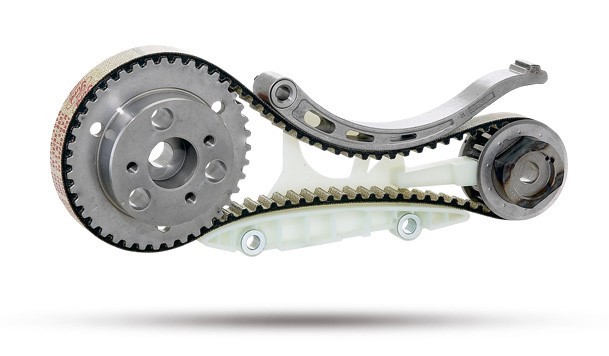
Dayco, an automotive components company, claims to have invented the oil-bathed timing belt, called “Belt In Oil” (BIO). According to Dayco, the invention occurred in 2007. The technology was awarded in 2009 and launched in the market in 2014.
Patent US9322455, “Toothed Belt and Use of a Toothed Belt in Oil”, is central to this claim. The listed inventors are Marco Di Meco, Carlo Baldovino, Fabio Nardone, and Licinia Licini, with DAYCO EUROPE S.R.L. as the holder. The patent, filed in 2009 and granted in 2016, describes a specific construction of the belt, designed to operate in oil, with details about materials and structure.
Ford’s Role: Pioneering the Mass Application of the Oil-Bathed Timing Belt
Ford Motor Company was instrumental in introducing the oil-bathed timing belt to the market. The company introduced the technology in its 1.8 TDCi diesel engine in 2007. This date coincides with Dayco’s claim of invention. Ford sought to reduce consumption and emissions with this innovation.
Ford expanded the use of the technology to EcoBoost engines (like the 1.0L) and EcoBlue. The 1.0L EcoBoost engine is specifically noted for its “oil-belt design”. Ford highlighted benefits such as quiet operation, lightweight, and the promise of a long-lasting belt. In Brazil, the technology arrived with the Ford Ka 1.0 three-cylinder around 2014/2015.
Experts’ Opinion
Experts and technical analyses distinguish the invention of a patented system from its pioneering application. Dayco, with its engineers, is identified as the inventor of the specific patented BIO system in 2007. This is supported by patent US9322455.
On the other hand, Ford is recognized as a pioneer in the mass application of the oil-bathed timing belt, starting with the 1.8 TDCi engine also in 2007. The closeness of the dates raises questions about a possible independent development by Ford or a very early collaboration with Dayco. The common dynamics in the industry involve suppliers developing technologies that manufacturers (OEMs) adopt and integrate. The “invention” of the component (Dayco’s BIO) and the “innovation” of its application (Ford engines) are complementary.
The Legacy and Controversies of the Oil-Bathed Timing Belt
Following Dayco and Ford, other manufacturers adopted the oil-bathed timing belt. The PSA Group (Peugeot/Citroën) used it in the 1.2 Puretech engine, and General Motors (Chevrolet) in CSS Prime engines (Onix).
Despite the benefits, the technology presented challenges. The importance of oil with the correct specification became critical. The use of improper oil can cause degradation of the belt, obstruction of the lubrication system, and catastrophic engine failure. Replacing the belt is complex and costly. The different durability forecasts among manufacturers also indicate variations in the implementation of the technology.








Seja o primeiro a reagir!