





 Portuguese
  English
  Spanish
  4 min of reading
  0 comments


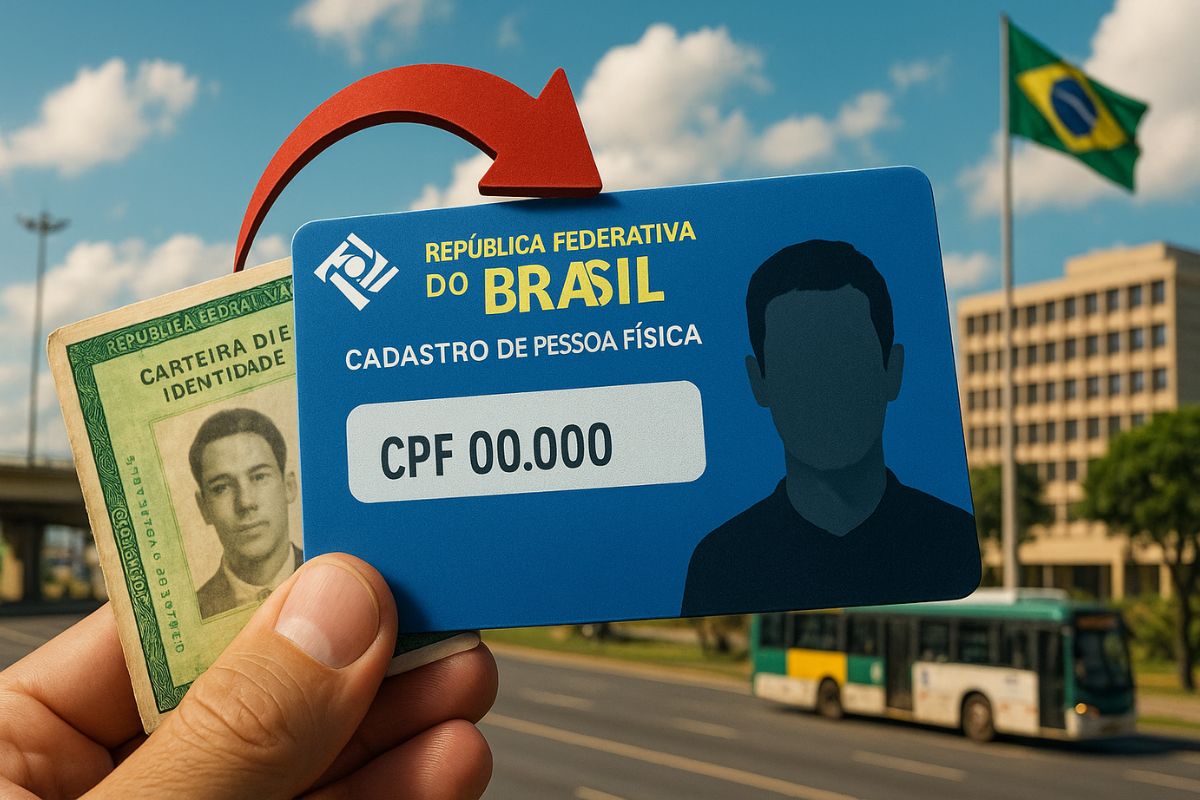
The New Law Establishes That the CPF Will Be the Only Identification Number, the RG Will Lose Validity by 2032, and Millions of Brazilians Need to Adapt to Avoid Problems Accessing Essential Services
The CPF is now the unique document in Brazil, and this change deeply alters the way citizens will identify themselves in the coming years. With the sanction of Law No. 14,534/2023, the Cadastro de Pessoas Físicas becomes the main key for all official records, reducing the need for different documents to access public and private services.
By 2032, the traditional RG will cease to be valid and will be replaced by the National Identity Card (CIN), which uses the CPF as the unique number. The change promises simplification and greater security, but it also requires the population’s attention to avoid problems with outdated registrations or irregular CPFs.
Why the CPF Became the Unique Document
The decision to adopt the CPF as the central document did not come about suddenly.
-
This house in Japan has been transformed on the inside and now looks as if it has been excavated from the inside out like a surreal cave.

-
Globo presenter lives in an R$ 8 million mansion in the interior of São Paulo, with a private lake, basketball and tennis courts, a “private hotel,” a condominium costing R$ 4,000, and surprising details in the decor.

-
Want to fall asleep faster and better? This technique reduces the temperature of the extremities, slows down heartbeats, regulates breathing, and can prompt the release of melatonin in minutes, helping to combat nighttime anxiety.

-
The USA surprises the world with a new Trump dollar after 165 years, breaking historical tradition.


Since the post-war period, Brazil has sought ways to unify identification data to reduce fraud and bureaucracy.
The previous model allowed the same person to have different RG numbers in different states, which opened loopholes for crimes and made it difficult to integrate public services.
With the new law, federal, state, and municipal agencies will exclusively adopt the CPF as the identification number, creating a unified database that connects health, education, finance, and social program records.
The goal is to simplify citizens’ lives and increase administrative efficiency.
The Transition from RG to the National Identity Card
The implementation of the system will be gradual. Until 2032, the old RG will continue to be accepted, but the replacement with the CIN will be inevitable.
This new card, already being issued since 2022, uses the CPF as the unique number and may include additional information such as blood type, voter registration, driving license, and even medical data.
The first issuance of the CIN is free, which encourages adoption.
The digital version, accessed via QR Code, also reinforces security and helps reduce counterfeiting.
Unlike the old model, the CIN eliminates duplications and guarantees validity throughout the national territory.
The Impact of Unification on Public Services
With the CPF at the center of the system, all services will directly depend on the regularity of this number.
This means that situations of suspended or pending CPFs may cause blocks on social benefits, health services, financial contracts, and even access to the Unique Registry.
Additionally, public agencies have been given specific deadlines for adaptation: 12 months to adopt the CPF as an identifier and 24 months to ensure interoperability between registrations.
In other words, the transition is still ongoing and may generate adjustments in the coming years.
Security and Risks of Data Concentration
The unification brings evident benefits, but also raises concerns.
The centralization of data in the CPF increases the need for digital protection against fraud and leaks.
Experts point out that, although the new system is more secure than the old model, it requires continuous investments in cybersecurity.
Another challenge is the situation of millions of Brazilians with irregular CPFs, often due to inconsistencies in tax declarations or outdated registrations.
Regularizing these documents will be essential to ensure full access to public and private services.
What Changes in Citizens’ Lives
In practice, the lives of Brazilians will become simpler: to open a bank account, receive social benefits, access the SUS, sign contracts, or issue certificates, it will be enough to provide the CPF.
The CIN, linked to this number, will function as the official identity and will be accepted throughout the national territory.
The end of the RG also resolves historical issues of duplication.
People who had different documents in each state will now have a unique number, reducing bureaucracy and increasing trust in official records.
The fact that the CPF is now the unique document in Brazil represents a historic milestone in bureaucratic simplification and fraud prevention.
Although the change brings gains in efficiency and security, it requires the population to prepare to update registrations and keep the CPF always regularized.
And you, do you think this change will make life easier for Brazilians or are you concerned that the centralization in a single document will bring new risks? Leave your opinion in the comments, we want to hear from those who are already experiencing this transition.






-

-

-

-

-

-

108 pessoas reagiram a isso.