





 Portuguese
  English
  Spanish
  4 min of reading
  0 comments


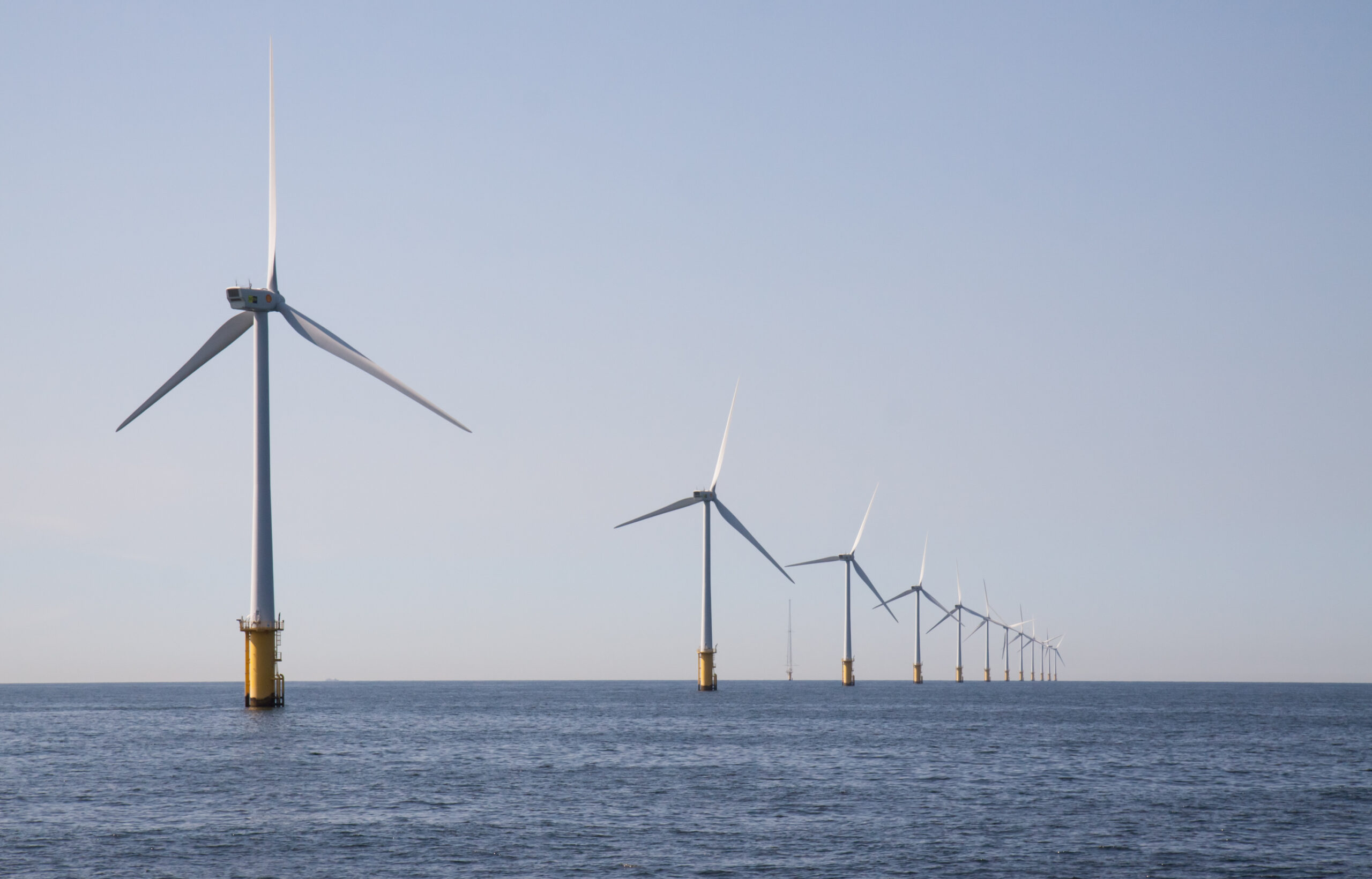
Offshore Wind Energy Is About to Reach a Historic Milestone in 2025. According to Rystad Energy, the Projects Set to Go Live This Year Will Total a Capacity of 19 GW (Gigawatts)
China plays a central role in this growth. According to the data, the country will be responsible for 65% (12.35 GW) of the total estimated to go live. This progress reflects China’s commitment to expanding renewable energy and reducing its dependence on fossil fuels.
Furthermore, the Chinese government’s investment and tax incentives further drive the implementation of offshore wind projects. In this way, China establishes itself as a global leader in the sector, ensuring continuous growth of clean energy.
Contributions from the United Kingdom and Germany
Although China leads this expansion, the United Kingdom and Germany will also have significant stakes in increasing offshore wind capacity. These countries continue to invest heavily in infrastructure and new technologies to enhance their sustainable energy matrices.
-
Renewable energy advances over protected areas in Brazil, and a survey by the Energy Transition Observatory reveals silent impacts that challenge environmental conservation and pressure sensitive traditional territories.

-
Rio Grande do Sul accelerates energy transition: State invests in renewable technologies and consolidates decarbonization strategies and pathways to attract billions in new industrial investments.

-
With 160,000 m² of collectors, an area larger than 20 football fields, Silkeborg, in Denmark, hosts a solar thermal plant that heats 19,500 homes and could become the largest solar heating plant in the world.

-
A study reveals the expansion of renewable energy procurement in Brazil and shows how companies are taking advantage of opportunities to reduce expenses, ensure energy efficiency, and strengthen strategic environmental commitments.

In the United Kingdom, the government has already announced plans to double the installed capacity in the coming years. At the same time, Germany continues its long-term strategy to achieve carbon neutrality by 2045. To this end, the country is betting on auctions for renewable energy that attract investors and encourage new projects in the North Sea.
With this growth, both countries seek to strengthen their position in the renewable energy market. At the same time, they significantly contribute to the reduction of global carbon emissions.
Challenges and Uncertainties in the Sector
Despite the positive outlook, the offshore wind sector still faces significant challenges. Among the main obstacles, uncertainties related to lease contracts between landowners and wind energy companies may directly impact the pace of new projects.
Additionally, in 2024, 55 GW of offshore wind capacity were offered in lease auctions (excluding mainland China). However, many of these auctions received bids below the offered capacity, highlighting a possible cooling of the market in some regions.
Another point of concern involves instability in the supply chain. Since the production of essential components, such as blades and generators, depends on a few global suppliers, any logistical issues could affect the delivery of new wind farms. Thus, costs tend to rise, while the implementation timeline becomes less predictable.
Impact of U.S. Policies on the Sector
The arrival of Donald Trump to the U.S. presidency brought new uncertainties to the energy sector. At the beginning of his term, on January 20, Trump declared a “state of emergency” in the sector and suspended offshore wind projects along the country’s coast.
As a result, companies operating in this market express concern over potential cuts in subsidies and restrictions on the implementation of new projects. Still, some states, such as California and New York, have indicated that they will continue to invest in wind energy, even without federal government support.
This divergence between state and federal policies may create distinct impacts on the growth of renewable energy in the United States. While on one hand, some regions continue to encourage investments, on the other hand, the lack of support from the federal government could limit the advancement of offshore wind energy in the country.
Technological Advances and Investments
Despite the challenges, the offshore wind sector has significantly advanced technologically. Currently, more efficient and higher-capacity turbines increase the economic viability of projects. Additionally, the use of artificial intelligence and sensors for preventive maintenance reduces operational costs and improves turbine efficiency.
At the same time, investors are showing growing interest in the sector. Infrastructure funds and large energy groups see offshore wind as a promising market for the coming years. Given the rising global demand for clean energy, financial investments are expected to increase, consolidating this sector as one of the most strategic for the global energy transition.
Outlook for the Future
The record growth projected for 2025 signals a positive trend for offshore wind energy. With continuous investments, technological advancements, and favorable public policies, the sector is expected to continue expanding in the coming years.
Moreover, experts indicate that by 2030, the global installed capacity of offshore wind may exceed 300 GW. Thus, wind energy establishes itself as one of the main renewable sources in the world, contributing to energy security and the decarbonization of the global economy.









Seja o primeiro a reagir!