





 Português
  Inglês
  Espanhol
  4 min de leitura
  0 comentários


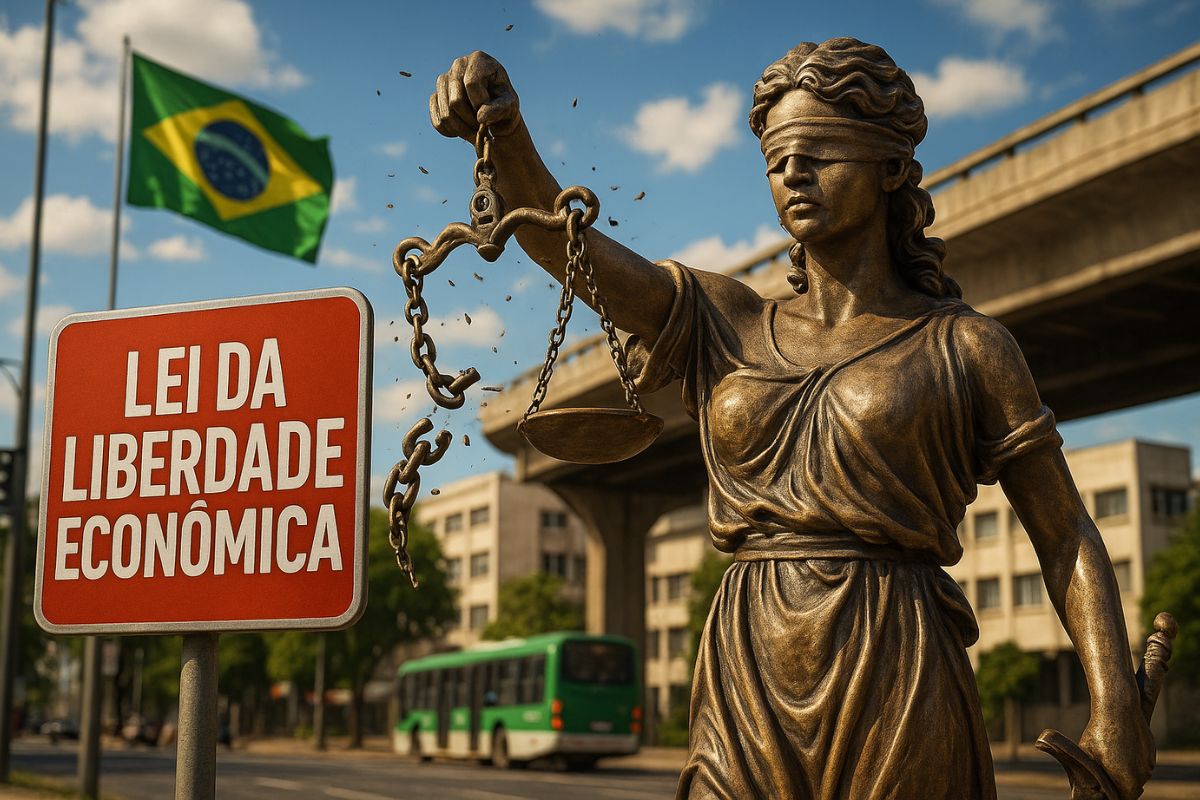
Created to Reduce Bureaucracy and Stimulate Entrepreneurship, the Economic Freedom Law Ended Up Limited to Peripheral Themes, Lost Strength in the Courts, and Became a Symbol of the Gap Between the Discourse of Deregulation and the Practice of the Judiciary.
Promised as a game changer for deregulation and encouragement of private initiative, the Economic Freedom Law was born in 2019, in the first year of Jair Bolsonaro’s government, with the aim of simplifying the lives of entrepreneurs in Brazil. But, more than five years later, the regulation has yielded modest results and had almost symbolic application in the courts.
According to a survey by Mattos Filho lawyers, most legal decisions that cite the law merely reproduce understandings that already existed prior to its enactment. The central principles such as minimal state intervention and economic freedom hardly appear in the jurisprudence, frustrating the expectations of entrepreneurs and legal scholars who hoped for a structural transformation.
The Promise of Deregulation That Wasn’t Fulfilled
During its passage through Congress, the provisional measure that gave rise to the Economic Freedom Law garnered dozens of “jabutis” – extraneous themes to the original text.
-
Brazilian city gains industrial hub for 85 companies that is equivalent to 55 football fields.

-
Peugeot and Citroën factory in Argentina cuts production by half and opens a layoff program for more than 2,000 employees after Brazil drastically reduced purchases of Argentine vehicles.

-
A Brazilian city gains a factory worth R$ 300 million with the capacity to process 200 thousand tons of wheat per year, a mill of 660 tons/day, silos for 42 thousand tons, and an industrial area of 276 thousand m².

-
Havan will leave the shopping mall in Blumenau to inaugurate something that the chain has never done before: a megastore in half-timbered style in the Historic Center of the city, which is expected to be completed in May and change the landscape of local retail.


The final version, approved in 2019, primarily altered the Civil Code, focusing on private issues such as outsourcing, patrimonial autonomy, and disregard of legal personality.
These changes, according to lawyers, did not significantly alter the business environment. In practice, the law consolidated understandings already established by the Justice system, without creating new parameters to reduce state intervention.
“We find the application of the law in peripheral themes. Regarding the principles that would be more important, there are practically no decisions,” explains Fernando Dantas Neustein, a partner at Mattos Filho.
The Numbers That Reveal the Law’s Voids
The study identified 173 decisions on the disregard of legal personality, 95 on minimal state intervention, and 45 on contractual interpretation according to good faith.
Meanwhile, the central themes related to deregulation had almost no impact: only 28 decisions addressed low-risk activities, 13 on freedom of operating hours, and 3 on tacit approval of public acts.
The low practical application shows that the law remained restricted to paper, with little repercussion in areas where it could stimulate entrepreneurship and reduce regulatory burdens.
According to André Luiz Freire, also from Mattos Filho, many decisions cite the regulation only as a formal reference, without altering the case’s understanding. “If the law did not exist, the decision would be the same,” he asserts.
Defeats at the STF and Lack of Regulatory Culture
The Economic Freedom Law also faced significant setbacks in the Supreme Federal Court.
In 2020, the STF struck down a regulation that allowed the use of pesticides if public agencies did not complete the approval process within a set timeframe.
Environmental risk prevailed over the principle of economic freedom, limiting the law’s reach.
For Freire, this type of decision shows how the Brazilian Judiciary still prioritizes state actions over private autonomy.
“The decisions ended up reducing the intended effects at the time of the law’s enactment,” he explains.
Why the Economic Freedom Law Didn’t Work
Specialists consulted by Folha de S. Paulo argue that the problem lies in the law’s very design.
According to Carlos Ari Sundfeld, a professor at FGV Direito SP, the legislation did not create governance mechanisms nor required the public authority to review its own regulations.
“It became a set of intentions without effective command,” he assesses.
Sundfeld recalls that advances like the reduction of time to open businesses since 2019 are due to local initiatives and other specific legislations, rather than the law itself.
“There is a frustration with the Economic Freedom Law, which has not directly achieved anything. It did not create a governance regime that would allow for permanent improvement of public administration,” he concludes.
The Project That Tries to Address the Flaws
To fill the void left by the regulation, a Public Economic Governance Law project has been stalled since 2019 in the Chamber’s Constitution and Justice Commission, which would create a system for continuous monitoring and evaluation of state regulation.
The text, however, has never been voted on and remains without a projected advancement.
Meanwhile, Brazil continues to be trapped in bureaucratic obstacles and a culture of excessive regulation, in contrast to the liberal discourse that inspired the creation of the Economic Freedom Law.
In practice, what should have been an institutional revolution has become a symbol of legal frustration and unfulfilled promises.
The Economic Freedom Law was born with the ambition of liberating Brazilian entrepreneurs from bureaucracy but ended up lost in limited interpretations and decisions that changed little of the reality.
The lack of practical application and the judiciary’s disinterest show that, between the intention to simplify and the practice of regulating, there is still a vast chasm.
And you, do you think the Economic Freedom Law can still fulfill the role it promised or has Brazil missed the chance to truly transform the business environment? Share your opinion in the comments; we want to hear from those who feel the effects of bureaucracy every day.










-

Uma pessoa reagiu a isso.