





 Portuguese
  English
  Spanish
  4 min of reading
  0 comments


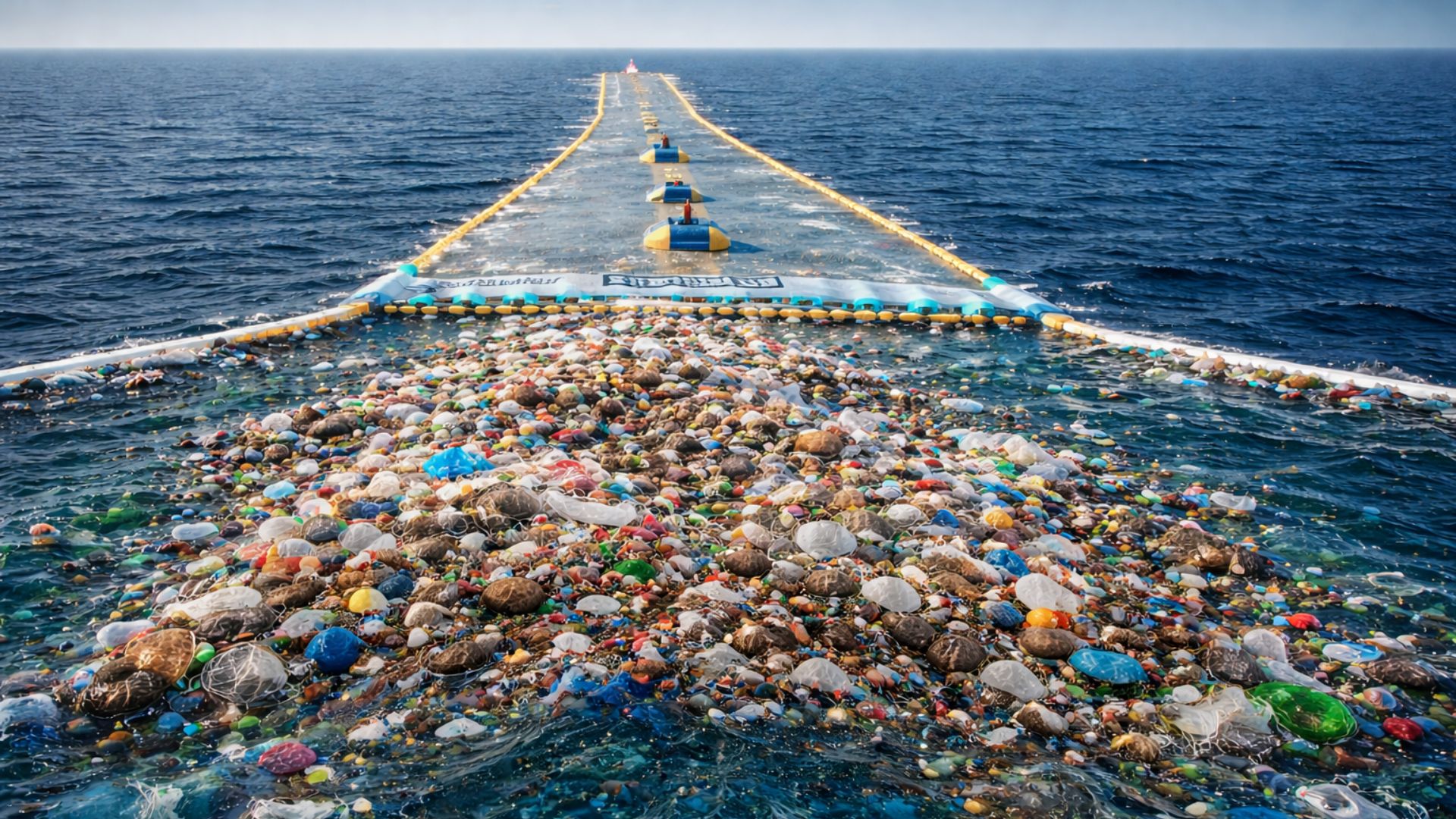
Technology Installed in Ecuador River Intercepts Waste Before It Reaches the Ocean, Combines Floating Barrier and Mechanical Conveyor, Transforms Cleaning into Public Database, and Has Already Removed 13.8 Tons of Waste in Two Years of Monitored Operation.
A floating barrier installed in the Portoviejo River, in Ecuador, intercepted waste before it could head to the ocean and removed about 13.8 tons in two years by concentrating the waste in a single extraction point for weighing and classification.
Naming the system Azure, it combines a structure that directs floating materials and a retrieval mechanism using a mechanical conveyor, allowing the waste to reach the bank for sorting, recording, and monitoring by researchers involved in the oversight.
By turning waste collection into a measurable routine, the operation begins to produce evidence about what appears in the water, during which periods the load increases, and which items dominate the flow, rather than relying solely on indirect estimates about disposal.
-
What can really trigger large volcanic eruptions? Research suggests that gas returning to the magma may be more dangerous than gas escaping from it.
-
Found in one of the most radioactive places on Earth, this Chernobyl fungus may be doing something with radiation that no one has been able to explain to this day.

-
A bright yellow mushroom imported from Asia escaped from a cultivation farm in the United States in 2010 and is now aggressively spreading across 25 states, destroying entire communities of native fungi in American forests.

-
Buried under China, a colossal machine weighing 20,000 tons began operating as the largest neutrino detector on the planet and, in just 59 days, surpassed results that science took half a century to achieve.


Intercepting Waste in the Portoviejo River
Rivers often act as corridors for transporting waste, and part of the material that flows downstream disappears from everyday life until it reappears on beaches and coastal areas, where removal tends to be more complex and costly.

In Portoviejo, the strategy was to create a controlled “bottleneck,” concentrating the capture work in a specific stretch to reduce dispersion along the banks and facilitate systematic recording of what was actually retained.
Instead of teams searching for waste in multiple spots at the same time, the equipment directs the floating load to a retrieval area, which reorganizes human effort and allows for more regular separation by type of waste.
How the Intelligent Azure Barrier Works
Public descriptions of the project indicate that the barrier was designed not to completely block the water flow, using a porous structure that helps reduce pressure imbalance risks and maintain river passage while directing floating items.
The capture dynamics aim to retain a wide variety of synthetic materials, including small objects, and transport them to an extraction point where waste is removed with mechanical support and sent to the bank for processing.
In this design, the conveyor transports the retained material, allowing the operation to record volumes, types, and variations over time, so that cleaning also becomes a continuous source of environmental observation.
Ichthion Technology and Environmental Monitoring
Azure is associated with the company Ichthion, described as a startup with operations linked to Ecuador and the United Kingdom, and the deployment in Portoviejo appears connected to marine debris combat initiatives supported by international networks.
Project materials mention the use of modeling and knowledge about waste transport in rivers to improve interception, while field monitoring relies on collection, weighing, and classification of what reaches the retrieval point.

Additionally, a development component reported in communications from the initiative involves producing image datasets for training object recognition tools, aimed at improving the identification of items passing through the conveyor.
Scientific Study and Removal of 13.8 Tons of Waste
The removal of waste in Portoviejo was analyzed in a scientific paper that describes the integration between capture technology and environmental data, focusing on generating direct observations of anthropogenic waste in a South American river system.
During this monitoring, the material was removed, extracted, weighed, and classified throughout the sampling period, reaching a total of approximately 13.8 tons collected over two years of monitored operation.
The central proposal, according to the logic of the study itself, is to bridge the gap between “the waste that is imagined” and the waste effectively observed, creating consistent series that allow for period comparisons and understanding changes over time.
Public Data and Impact on the Pacific Ocean
Part of the project’s differentiation lies in the standardized recording and availability of data associated with the collection in Portoviejo, providing information on waste collected between 2021 and 2022 and detailing aimed at consistent contamination observations.

These records are linked to a project funded in the United Kingdom to reduce the impacts of plastic waste in the Eastern Pacific, connecting the intervention in the river to a broader agenda on waste prevention before it reaches the marine environment.
With observational series and comparable data, the discussion shifts from generic perceptions to verifiable numbers, capable of indicating spikes after environmental events and changes associated with local management.
Destination of Waste and Prevention Policies
Even when capture works, the question remains about the destination of the removed material, as recycling, sorting, and disposal depend on the available infrastructure and the quality of the collected waste, which does not always arrive in ideal conditions.
Therefore, classification by type and publication of measurements tend to be treated as instruments for source reduction policies, pointing out which items appear most frequently and which consumption and collection chains fail.
If the system can regularly show what is being released into the river and in what volume, what concrete changes in oversight, urban collection, and producer responsibility would be required for interception to become the exception instead of the routine?







-

-

-

-

12 pessoas reagiram a isso.