





 Portuguese
  English
  Spanish
  3 min of reading
  1 comment


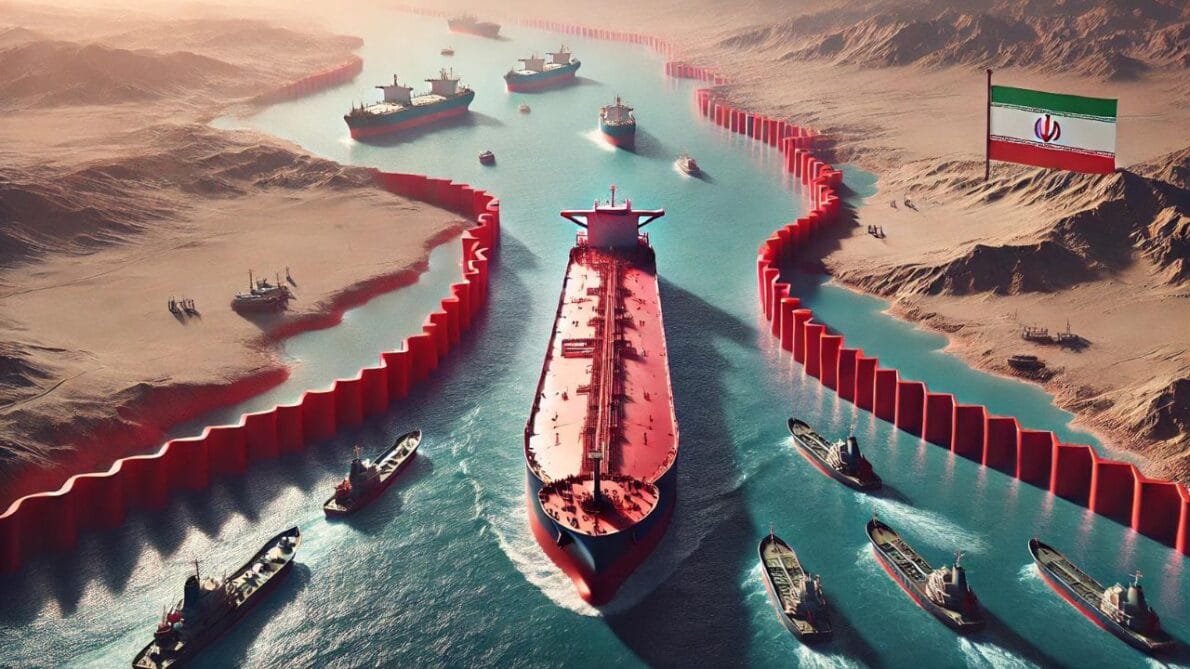

The Global Oil Flow Is At Risk With Possible Iranian Action In The Strait Of Hormuz, Transporting 21 Million Barrels Daily.
The world may be about to face a monumental crisis in the oil flow like never before! Iran may close the Strait of Hormuz, one of the world’s main oil trade routes, if there is an escalation in the conflict with Israel. This maritime portion in the Middle East accounts for 20% of the product flow, meaning that one fifth of the world’s oil could be held back.
The Strait of Hormuz connects the Persian Gulf with the Gulf of Oman and is vital for oil trade logistics. Whenever conflicts in the Middle East escalate, the strait comes back to the center of global discussions. The narrow maritime stretch has Iran to the north and Oman to the south, making it a strategic and sensitive point.
Oil Flow May Be Interrupted
Within the Strait of Hormuz, the most critical area is 33 kilometers wide. Although the distance seems large, the space that vessels navigate is just over 3 kilometers wide. This narrow corridor is enough for major nations to fear retaliation from Iran.
-
Brazilian giant expands borders in the Southeast: Petrobras confirms new oil discovery in ultra-deep waters in the pre-salt of the Campos Basin.

-
Alert in the global energy market: Severe tropical cyclone hits the coast and disrupts gas production at major plants in Australia, threatening global supply.

-
Petrobras finds high-quality oil in the pre-salt at 113 km from RJ and reignites expectations about strategic reserves in the Campos Basin.

-
Ocyan opens registrations for startups focused on innovation in the oil and gas sector and will select projects for Innovation Day with the support of Nexio.


According to the U.S. Energy Information Administration (EIA), at least 21 million barrels of oil could be stranded daily with the closure of the strait. Of this total, 15 million barrels are destined for European countries, in addition to Japan, South Korea, Saudi Arabia, the United States, China, and India. In other words, the impact on oil flow would be global and immediate.
Saudi Arabia And The United Arab Emirates Offer Operational Pipelines To Replace
The EIA stated that there are few structural alternatives that can replace the importance of the small maritime portion. Only Saudi Arabia and the United Arab Emirates offer operational pipelines that could attempt to transport the product in the same proportion. However, these infrastructures together allow the transportation of less than 10 million barrels per day, less than half of what passes through the Strait of Hormuz.
On April 9, 2024, Ali Reza Tangsiri, the head of the Iranian Navy, stated that he could review the policy practiced in the Strait of Hormuz. “We can close the Strait of Hormuz, but we do not do it,” Tangsiri affirmed. “However, we will review our policy if the enemy pressures us.”
The World Is Watching The Middle East And Iran, Especially
The size of the channel and its strategic importance mean that any tension in the region has immediate repercussions on oil prices and the global economy. The world is watching the Middle East, concerned about the potential consequences of a closure of the strait.
Will Iran Really Close The Strait Of Hormuz And Cut 20% Of The Global Oil Flow? How Would This Affect The Global Economy And Our Daily Lives? Share Your Opinion In The Comments!










Dos tempos né o Irã fechar o canal lá como é que vai ficar aqui o mundo todo que a professora guerra Mundial fim dos tempos