





 Portuguese
  English
  Spanish
  6 min of reading
  94 comments




The Housing Crisis in Portugal Forces Brazilians in Portugal into Overcrowded Rooms, Pushes Homeless People to Beaches Like Carcavelos, Makes Rent in Lisbon Unaffordable, and Fills the Voluntary Return Program with Immigrants Who Can No Longer Afford a Dignified Roof at the End of the Month
Since 2017, when reports from Portuguese institutions indicated around 4,000 homeless people across the country, the housing crisis in Portugal stopped being an abstract alert to become a visible scenario on the streets of Lisbon. By 2021, the number of homeless individuals was approaching 11,000, with about 10% being foreigners, many of them Brazilians in Portugal who arrived in search of stability and today compete for meals in night queues.
Between 2016 and 2023, while rents rose by nearly 50% on average in the country, the voluntary return program saw a surge in applications, with Brazilians accounting for about 80% of the requests to return to their country of origin. In Lisbon, an 80-square-meter apartment can practically consume an entire average salary of the capital, turning rent in Lisbon into the main factor of collapsed budgets for immigrant and Portuguese families.
Night in Lisbon: Brazilians in Line for Meals

When most tourists retreat, another routine begins in Lisbon.
-
Larger than entire cities in Brazil: BYD is building a 4.6 km² complex in Bahia with a capacity for 600,000 vehicles per year, but the discovery of 163 workers in conditions analogous to slavery has shaken the entire project.

-
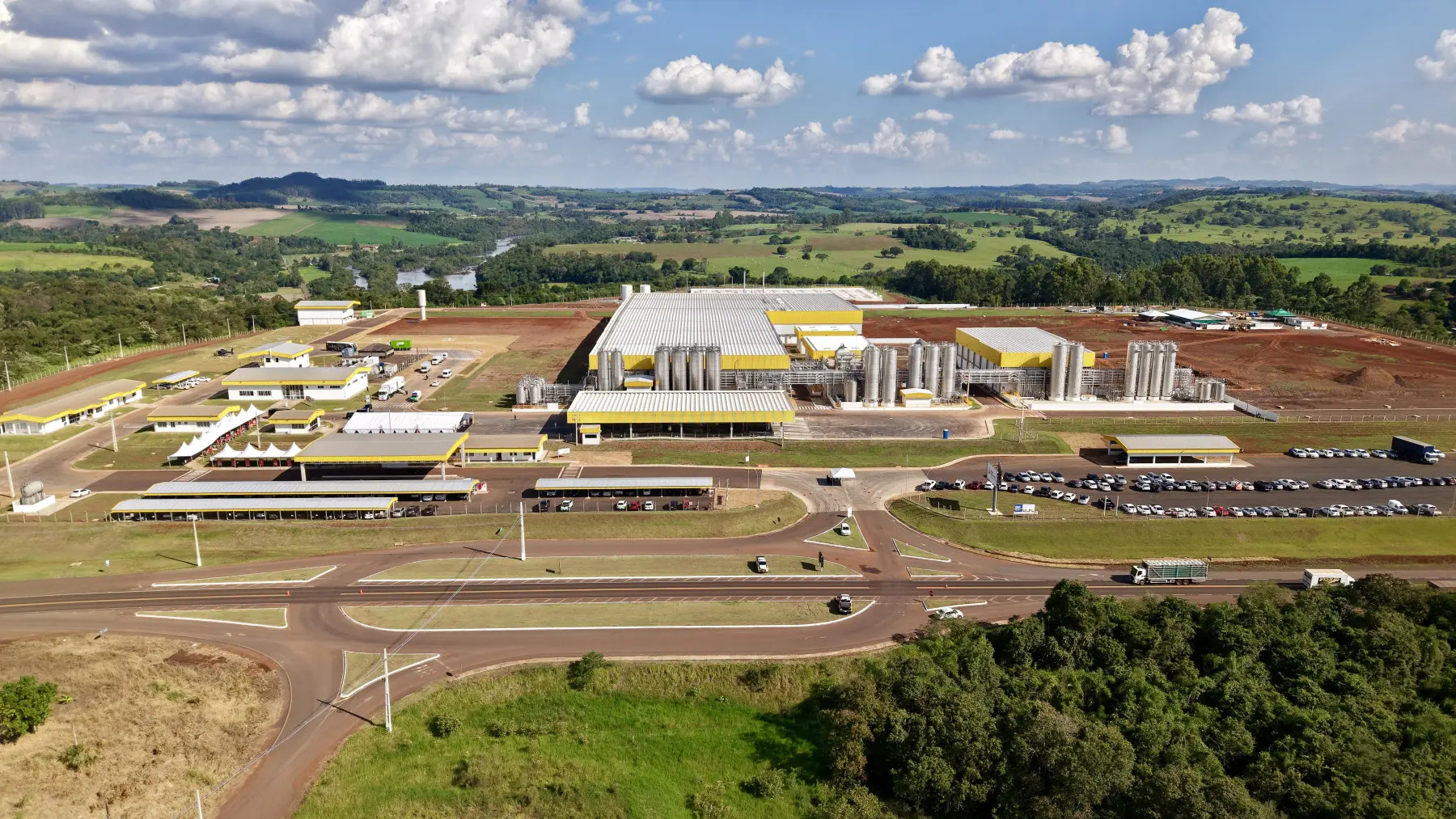
With an investment of R$ 612 million, a capacity to process 1.2 million liters of milk per day, Piracanjuba inaugurates a mega cheese factory that increases national production, reduces dependence on imports, and repositions Brazil on the global dairy map.
-
Brazilian city gains industrial hub for 85 companies that is equivalent to 55 football fields.

-
Peugeot and Citroën factory in Argentina cuts production by half and opens a layoff program for more than 2,000 employees after Brazil drastically reduced purchases of Argentine vehicles.


Humanitarian aid organizations roam squares and sidewalks distributing hot meals to homeless individuals.
The team from Noor Fátima, made up of volunteers who collect donations and prepare meals, finds an increasingly large audience.
The trays are contested, and in line, Portuguese mixes with Brazilian accents.
Many Brazilians in Portugal accept help but refuse interviews and video exposure, fearing the reaction of family members in Brazil and employers.
It is increasingly common to hear accounts of people with formal or informal jobs but unable to afford a room, pushed to the streets or to makeshift tents.
In several cases, the script is repeated: promises of employment, months of underemployment in cleaning, construction, or service sectors, coupled with the high costs of transportation and food.
When rent in Lisbon starts to consume nearly everything that comes into the account, any delay in payment or loss of working hours becomes a trigger for eviction and entry into the statistics of homeless individuals.
Numbers That Explain the Housing Crisis in Portugal

According to a survey by a Portuguese institution, the total number of homeless individuals more than doubled between 2017 and 2021, jumping from around 4,000 to nearly 11,000 people across the territory.
Of this universe, approximately 10% are foreigners, a group in which Brazilians in Portugal have significant weight.
In the same period, the real estate market underwent significant repricing.
In the last five years, the average rent in the country increased by around 50%, concentrating the highest adjustments in urban centers of Lisbon and Porto.
Today, it is not uncommon for rent in Lisbon for an 80-square-meter apartment to approach or equal the average salary of the city, leaving basic bills and food in the background.
Experts interviewed in public reports attributed the worsening of the housing crisis in Portugal to three main factors: increased foreign investment in residential properties, tourism boom since 2015, and a shortage of new housing construction at affordable prices.
The direct result is a market that remunerates short-term tourist rentals better than long-term contracts for low-income families, putting pressure on homeless individuals and pushing low-skilled workers to distant peripheries or improvised solutions.
Brazilians in Portugal Lead the Voluntary Return Program

The impact of the housing crisis in Portugal is also visible in the statistics of the voluntary return program, partially funded by the Portuguese government and aimed at immigrants who can no longer sustain themselves in the country.
The mechanism provides minimal logistical and financial support for foreigners to return to their country of origin, regardless of immigration status.
From 2016 to 2023, the number of registered individuals grew sharply, with Brazilians in Portugal accounting for about 80% of the registrations.
Many are workers who arrived with expectations of regularization, secured jobs, but could not bear the burden of rent in Lisbon, monthly bills, and the absence of a support network.
In practice, the voluntary return program has become the last exit door for families who find themselves squeezed between expensive contracts and the concrete prospect of becoming homeless.
Accounts from volunteers show a frequent pattern: immigrants who, after months living in overcrowded rooms or tents, seek help to buy tickets back and regularize documents.
The return, in many cases, is seen less as a choice and more as a forced retreat in the face of the advancing housing crisis in Portugal.
Cleaners in Tents on Carcavelos Beach
While some opt for the voluntary return program, others try to buy time by improvising housing solutions.
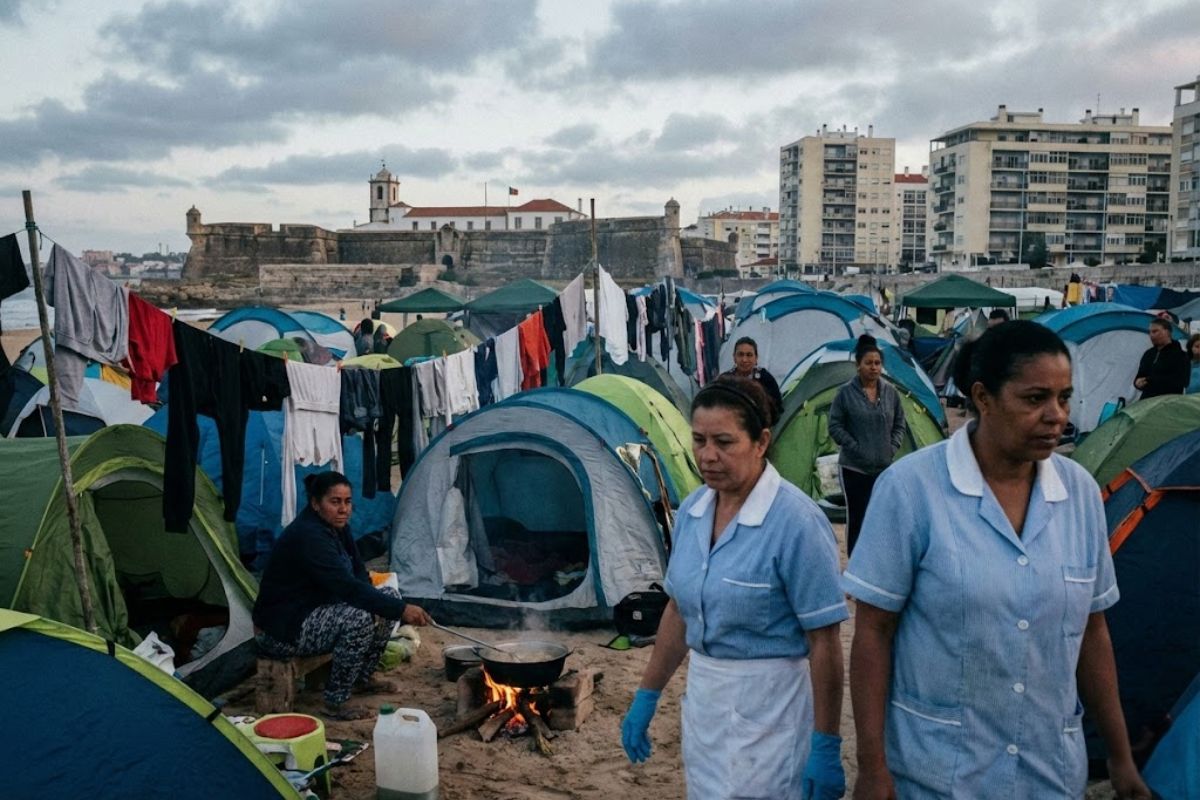
In Carcavelos, one of the most valued areas of Greater Lisbon, a camp has grown amid the vegetation of Quinta dos Ingleses.
There, tents are organized as if they were studios, with divisions resembling a bedroom, living room, kitchen, and bathroom.
Andreia, a Brazilian who works as a cleaner, used to share a room in Lisbon with a friend, paying 200 euros each.
In a short time, the price rose to 300, and there were forecasts that the same shared room would cost 400 euros per person.
Faced with the prospect of compromising half of her monthly income just on housing, she decided to set up her own tent on Carcavelos beach.
Today, Andreia shares the camp with her friend Márcia. The first night, marked by heavy rain and wind, was a test of endurance.
After that, the perception of both changed. They claim they traded a cold-walled house for a “canvas house” with more privacy and the real possibility of saving money that previously disappeared with rent in Lisbon and its surroundings.
The wooded land, however, is not just an alternative housing point: it concentrates other tents occupied by Brazilians in Portugal in similar situations, who work in cleaning, general services, or construction during the day and return at night to a scene that mixes improvisation, vulnerability, and attempts at a fresh start.
Suspended Life Project and Will to Return
In the same camp lives Marciele, a Brazilian from Presidente Prudente, interior São Paulo. She also set up a tent in Quinta dos Ingleses to reduce housing expenses and send part of her income to her family in Brazil.
From a financial point of view, the strategy allowed some savings compared to the shared rooms available in the metropolitan area.
But the choice comes at a high emotional cost. Marciele left a 6-year-old son in Brazil and reports thinking daily about returning.
Between the possibility of saving some money and the prolonged distance from her son, the balance is fragile, and the housing crisis in Portugal ends up directly interfering in family decisions that go beyond the calculation of rent in Lisbon or the salaries received.
Like her, other homeless individuals or those in improvised camps say they live in a kind of limbo: they do not feel fully integrated into Portugal, but they also cannot gather enough for an immediate return.
In many cases, the voluntary return program emerges as a medium-term alternative, depending on the ability to assemble documentation and confront the embarrassment of returning to their country of origin without having achieved the initial plan of economic ascension.
What the Housing Crisis in Portugal Reveals About the Future of Migration
The advancement of the housing crisis in Portugal exposes the limits of a model that attracts immigrants with promises of stability but does not offer housing compatible with the income of those occupying low and medium-skilled jobs.
The combination of foreign investment in real estate, booming tourism, and limited availability of affordable housing pressures both Portuguese and Brazilians in Portugal and increases the number of homeless individuals.
At the same time, the increase in registrations for the voluntary return program indicates that a significant portion of these migrants is starting to see return as a less risky exit than insisting on rental contracts in Lisbon or accepting to live indefinitely in tents, overcrowded rooms, or temporary shelters.
Without structural changes in housing policy, the trend is that more stories of suspended projects will repeat, with a direct impact on street statistics and the dynamics of migration between Brazil and Portugal.
In your opinion, in light of the housing crisis in Portugal and the cost of rent in Lisbon, is it still worth it for Brazilians in Portugal to try to build a long life in the country or does the risk already outweigh the real opportunities?








A tendência é piorar não só em Portugal mas na Europa toda. Grandes empresas vêm fechando as portas só a Volkswagen já chutou 35 mil empregos diretos.
BRASILEIROS PROCURE FICAR NO SEU PAIS, PORQUE SENTIR SAUDADE DELE É MUITO TRISTE.
Acredito que todo ser humano tem o direito de sonhar e buscar novos horizontes. Muitos brasileiros vão para Portugal em busca de melhoras financeiras. Porém, viver em situação de vulnerabilidade, é melhor voltar para o seu país de origem. Creio que viver em outro país de forma precária e não ser reconhecido pelas Leis do território é uma situação humilhante. Vejo pelos noticiários que a casa dia o Governo de Portugal, vem dificultado a entrada de estrangeiros e fazendo uma higienização no país, enviando estrangeiros ilegais para seu país de origem.