





 Português
  Inglês
  Espanhol
  7 min de leitura
  0 comentários


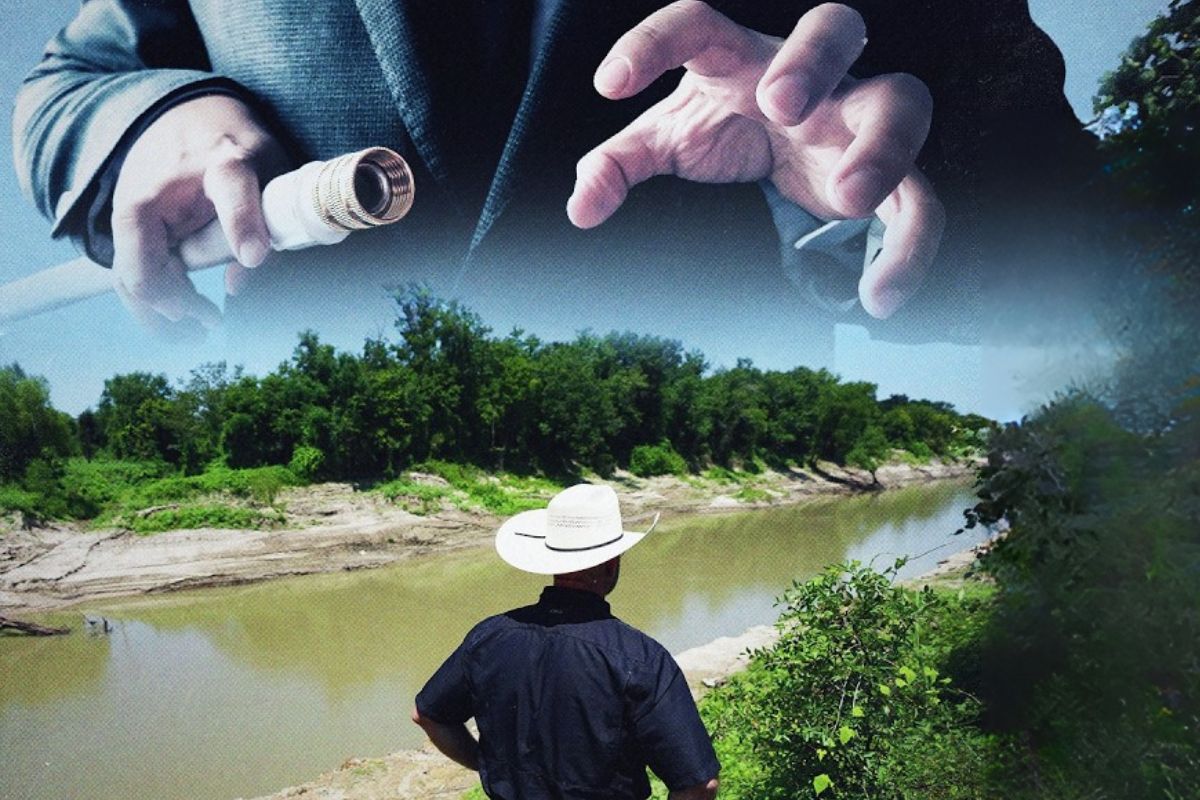
In The Midst Of The Water Crisis In Texas, A Billionaire Manager Wants To Pump 15 Billion Gallons Per Year From The Rural Eastern Aquifer To Sell To Rapidly Growing Metropolises, While Farmers, Local Politicians, And Groundwater Districts Struggle To Keep Their Wells From Simply Drying Up In The Next Decades
The water crisis in Texas has ceased to be merely a climate concern and has started functioning as a business plan. As cities grow at a rapid pace, attracting companies and thousands of new residents daily, private investors are mapping rural aquifers, buying large tracts of land, and seeking permission to extract billions of gallons of groundwater, transforming a vital resource into a financial asset.
In the eastern part of the state, this dispute has taken on a face, a name, and a number. A fund manager, Kyle Bass, wants to withdraw 15 billion gallons per year from an area where the combined rural communities consume around 8 billion gallons annually. For those who rely on small orchards, cattle ranching, and household wells, the feeling is direct: the water crisis in Texas could dry up their neighbors’ taps to fill pipes that supply large urban centers and investor balances.
The Water Crisis In Texas As An Investment Opportunity

The question spreading through the eastern part of the state is simple but unsettling: how far does the water crisis in Texas go when it becomes a chance for profit for those speculating on groundwater?
-
Brazilian city gains industrial hub for 85 companies that is equivalent to 55 football fields.

-
Peugeot and Citroën factory in Argentina cuts production by half and opens a layoff program for more than 2,000 employees after Brazil drastically reduced purchases of Argentine vehicles.

-
A Brazilian city gains a factory worth R$ 300 million with the capacity to process 200 thousand tons of wheat per year, a mill of 660 tons/day, silos for 42 thousand tons, and an industrial area of 276 thousand m².
-
Havan will leave the shopping mall in Blumenau to inaugurate something that the chain has never done before: a megastore in half-timbered style in the Historic Center of the city, which is expected to be completed in May and change the landscape of local retail.


Large funds, including Kyle Bass’s, have begun to see properties with productive aquifers as core assets for a hotter, dryer future.
The logic laid out by the investor is clear: agricultural lands with water underground tend to appreciate as scarcity advances.
This movement does not happen in a vacuum. Texas attracts about 1,500 new residents daily, driven by tax incentives and corporate migrations.
At the same time, the state water resource plan is criticized as inadequate.
In this planning vacuum, the water crisis in Texas opens the door for private projects that promise to transport water from “high concentration” areas to “extreme need” regions, but concentrate control in the hands of a few.
Who Is The Investor And What Is At Stake For The Rural Neighbors

From a financial viewpoint, Kyle Bass is no novice at profiting from crises. He has accumulated hundreds of millions of dollars betting against high-risk assets during moments of collapse.
Now, he sets his sights on the groundwater of East Texas as the next return frontier.
His plan involves creating a business structure capable of raising capital, drilling high-capacity wells, and selling long-term contracts to large cities facing declining reservoirs.
For neighbors like rancher John McCall, who lives on a century-old family property next to Bass’s lands, the calculation is different.
What is at stake is not just the value of the hectare, but the continuity of a rural way of life based on wells, green pastures, and small productions.
Residents report a concrete fear of seeing orchards, herds, and homes become unviable if aquifer levels drop to the point where household pumps start pulling air and mud, as has already occurred in other regions of the state.
The Capture Rule And The Power Of Who Has The Strongest Pump
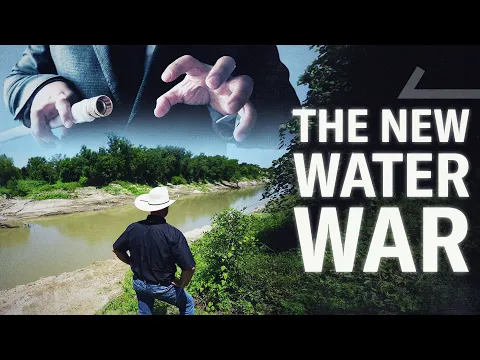

The legal backdrop of the water crisis in Texas is a doctrine over a century old: The Capture Rule.
Since 1904, state legislation has stated, in practical terms, that a landowner can pump as much groundwater as they wish, within their area, without any obligation to compensate neighbors whose wells dry up due to such pumping.
A local senator’s description sums up the spirit of the rule: whoever has the most powerful pump wins.
In practice, this means that a large investor can, legally, install high-capacity wells, extract billions of gallons per year, and sell to distant cities, even if this drastically reduces the water available for smaller properties around.
The water crisis in Texas, combined with the Capture Rule, produces a scenario in which scarcity ceases to be a collective problem and becomes a tool for the concentration of power, benefiting those who can hire expensive technicians, lawyers, and lobbyists.
Groundwater Districts, Science Of Aquifers, And Asymmetry Of Power
In response to this model, groundwater conservation districts were created, local entities with the mission of planning how much can be pumped from each aquifer without compromising its levels irreversibly.
These districts hire hydrologists, conduct modeling, and organize public hearings.
In Bass’s project case, a study indicated that the planned extraction would far exceed the current total consumption of several rural counties, with the risk of affecting connected rivers, such as the Trinity, which supply Dallas, Fort Worth, and Houston.
The problem is that these districts operate with limited budgets, need to choose between funding technical studies or defending themselves in lawsuits, and face, on the other side of the table, investors with specialized legal teams.
While local representatives call for decisions based on hydrogeological data, private groups can hire their own specialists to produce favorable reports for the projects, deepening the asymmetry of technical and political power within the very water crisis in Texas.
Vista Ridge As A Warning: When Pumping Brings Down The Water Levels In Wells
To understand what large private projects can provoke, residents of the eastern part of the state look to another point on the map: the Vista Ridge pipeline, valued at about $3 billion.
This system supplies approximately 20 percent of the water consumed in San Antonio, pumping significant volumes from an aquifer in rural counties. For those living near the wells, the experience has turned into a case study on the hidden costs of intensive pumping.
Owners of small farms reported that after the commencement of Vista Ridge’s operation, the water level in the wells dropped dozens of meters within a few months, requiring high investments to lower pumps and deepen drilling.
In one case, the lowering cost around $10,000 for a family, compromising the finances of retirees.
From this precedent, the water crisis in Texas ceases to be a future projection and becomes a reality where large pipelines ensure urban supply, while rural communities bear the burden of sunk wells, rising bills, and permanent insecurity.
Politics, Lobbying, And The Attempt To Halt Large Pumping
Faced with the pressure of the water crisis in Texas, rural legislators like Cody Harris and Robert Nichols attempted to pass a two-year moratorium on Bass’s project to allow for more detailed studies on the aquifer’s impact.
An 11-hour hearing publicly exposed the clash between residents concerned about the survival of their properties and the investor defending his legal right to extract water at the limits of the Capture Rule.
The moratorium was ultimately withdrawn in the Senate amidst intense lobbying. The bill was filed away, increasing the pressure on local groundwater districts, now responsible for evaluating strategic licenses for the future of the entire region.
In a recent decision, one of these councils opted to annul previous votes and reopen the administrative analysis of Bass’s drilling application, temporarily halting the implementation of the plan.
The episode shows how the water crisis in Texas has become a battleground for legislation, where victories and defeats are decided both in hearing rooms and in lobbying offices.
When Groundwater Becomes A Line Of Credit And A Tool Of Pressure
Simultaneously, the state itself approved the creation of a billion-dollar fund to invest in public supply systems, including the replacement of old pipes that waste billions of gallons per year.
In cities like San Antonio, losses in aging networks are comparable to the entire volume arriving via large private pipelines, exposing a contradiction: the water crisis in Texas is exacerbated not only by the lack of water, but by how it is managed, distributed, and priced.
Meanwhile, investors continue to raise funds for large-scale extraction projects. Companies linked to Bass have already raised more than $180 million from clients interested in financial returns tied to water.
With each new regulatory dispute, it becomes increasingly clear that groundwater is being treated as an asset that can be mortgaged, securitized, and used as collateral, even though it is a finite resource sustaining entire communities.
Conclusion: Water Crisis In Texas, Private Profit, And Collective Choice
The water crisis in Texas has revealed something that goes beyond declining reservoirs and pressured aquifers.
It has exposed a model where the law allows those with more capital, better legal advice, and more powerful pumps to turn scarcity into a source of profit, while rural neighbors fear losing the water that sustains homes, crops, and herds.
Groundwater districts attempt to impose scientific limits but operate in the shadow of expensive processes, aggressive lobbying, and a century-old rule that favors large extractors.
In light of this scenario, the discussion has ceased to be solely technical and has instead become ethical and political.
If projects like Kyle Bass’s move forward, cities may receive guaranteed water under long-term contracts, while rural counties face lowered wells, increasing costs, and permanent uncertainty.
In your view, who should have priority over groundwater in a water crisis in Texas: investors who can finance large pipelines for cities or rural communities that have relied on these aquifers for generations to live on their own territory?









-

-

4 pessoas reagiram a isso.