





 Portuguese
  English
  Spanish
  3 min of reading
  0 comments


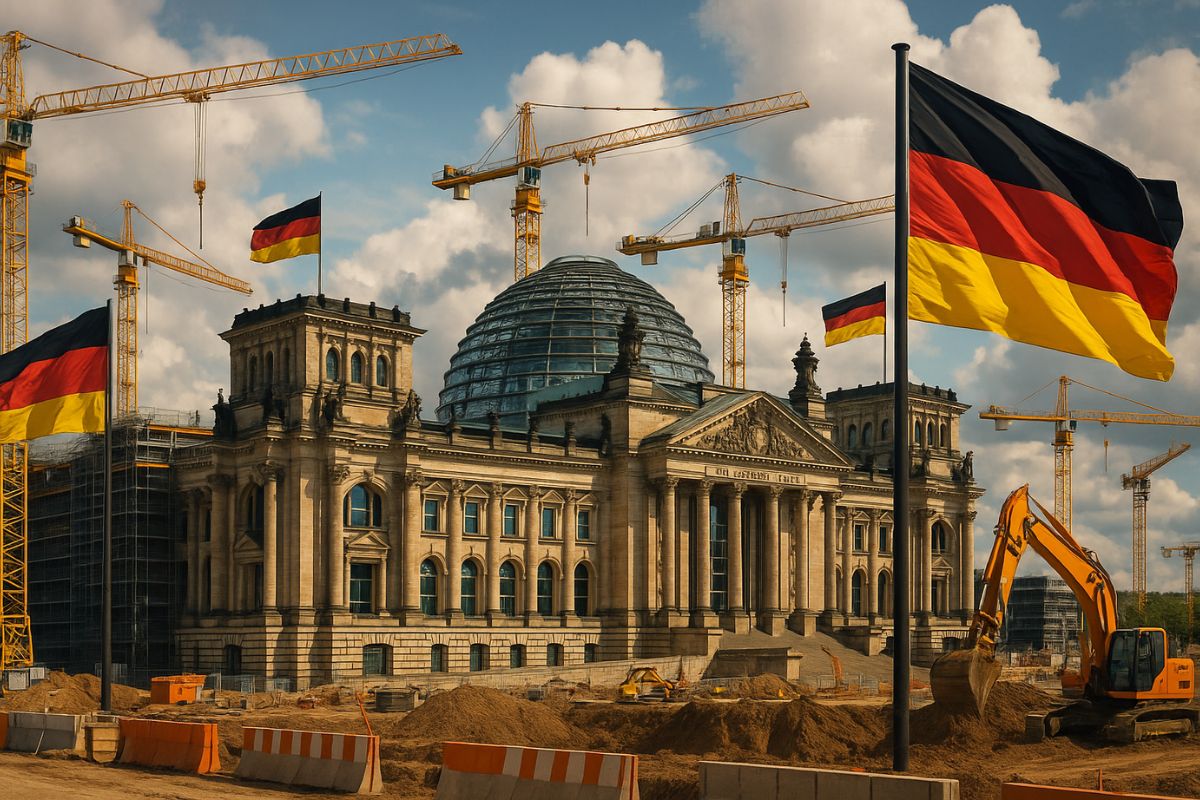
Crisis In Germany: Why The Largest Economy In Europe Stagnated? Billion-Dollar Fiscal Package Tries To Reverse Years Of Weak Growth, But Structural Challenges Put Economic Future At Risk
The crisis in Germany exposed vulnerabilities that have been masked for decades by its reputation as a stable economic powerhouse. According to CNBC, the new conservative government has broken with the tradition of strict fiscal rules to try to stimulate growth, but faces historical obstacles and new global pressures.
After years of low dynamism, the coalition led by Chancellor Friedrich Mertz launched one of the largest stimulus packages in German history, easing the debt brake rule and creating a fund of 500 billion euros to modernize infrastructure, defense, and energy. The gamble is bold — and divides economists and investors.
How The Crisis Formed
The weakening of the German economy did not happen overnight. It is the result of decades of accumulated challenges, such as industrial slowdown, high energy costs, an aging population, and excessive bureaucracy.
-
Larger than entire cities in Brazil: BYD is building a 4.6 km² complex in Bahia with a capacity for 600,000 vehicles per year, but the discovery of 163 workers in conditions analogous to slavery has shaken the entire project.

-
With an investment of R$ 612 million, a capacity to process 1.2 million liters of milk per day, Piracanjuba inaugurates a mega cheese factory that increases national production, reduces dependence on imports, and repositions Brazil on the global dairy map.

-
Brazilian city gains industrial hub for 85 companies that is equivalent to 55 football fields.

-
Peugeot and Citroën factory in Argentina cuts production by half and opens a layoff program for more than 2,000 employees after Brazil drastically reduced purchases of Argentine vehicles.

The global financial crisis of 2008 marked a turning point. Despite being the engine of Europe, Germany was hit hard by the international banking collapse. In response, the debt brake was created, which drastically limited public borrowing capacity, even in times of growth. This helped contain deficits, but also reduced the ability to make strategic investments.
The Weight Of Political Legacy
The long government of Angela Merkel maintained stability but postponed structural reforms. Her successor, Olaf Scholz, promised changes but faced overlapping crises: the war in Ukraine, inflation, labor shortages, and record energy costs.
The deadlock surrounding the debt brake led to the coalition’s collapse in 2024. The early election in February 2025 resulted in the victory of Mertz’s CDU, with the far-right AfD in second place, pushing for more aggressive economic policies.
The New Billion-Dollar Plan
The current fiscal package foresees massive investments in railways, digitalization, clean energy, and military modernization. Furthermore, the government promises to accelerate infrastructure projects and reduce bureaucratic hurdles to attract foreign capital.
There is also an effort to contain the exodus of companies, as many investors have migrated to countries with cheaper energy and fewer regulations, undermining Germany’s competitiveness on the global stage.
The Risk Of A Short Breath
Although experts recognize that the stimulus may generate growth in the short term, there are doubts about its sustainability. Economist Francisca Palmas warns that without deep reforms in the labor market and the energy sector, Germany might return to slow growth in the coming years.
The fiscal pressure is also concerning: easing budget rules creates room for investments but increases exposure to future crises, especially in a scenario of geopolitical uncertainty.
Lessons And Next Steps
The crisis in Germany shows that even established economies need to adapt quickly to technological, climatic, and geopolitical changes. The ability to balance fiscal discipline with strategic investments will be critical for the country to regain its economic prominence.
And you, do you believe that the billion-dollar package will save the German economy or do you think the problem is deeper? Leave your opinion in the comments.









-

-

2 pessoas reagiram a isso.