





 Portuguese
  English
  Spanish
  4 min of reading
  0 comments



Irregular Rains Affect Agricultural Crops and Delay Summer Planting, Influencing Productivity and Water Storage in Several Producing Regions of the Country
A agricultural crops face a challenging scenario with the irregular rain volumes recorded between October 1 and 30 of 2025, according to the Agricultural Monitoring Bulletin (BMA) from the National Supply Company (Conab), as reported in an article published.
The document reveals that the poorly defined distribution of precipitation reduced the pace of summer crop planting in central areas of Brazil.
Regions such as Mato Grosso, Goiás, and Mato Grosso do Sul experienced fluctuations in soil water storage, compromising the beginning of soybean development and other first-crop crops.
-
Unable to pass through Hormuz, Brazil activated a plan B that uses Turkey as a gateway to the Middle East: the route through Gibraltar and the Mediterranean is longer and more expensive but ensures that chicken, beef, and corn continue to reach Arab markets.

-
You grew up hearing that the good coffee from Brazil goes all abroad and the bad coffee stays for Brazilians, but this story has completely changed, and the numbers show that in the 1980s, thirty percent of the coffee sold here was adulterated with corn and barley.

-
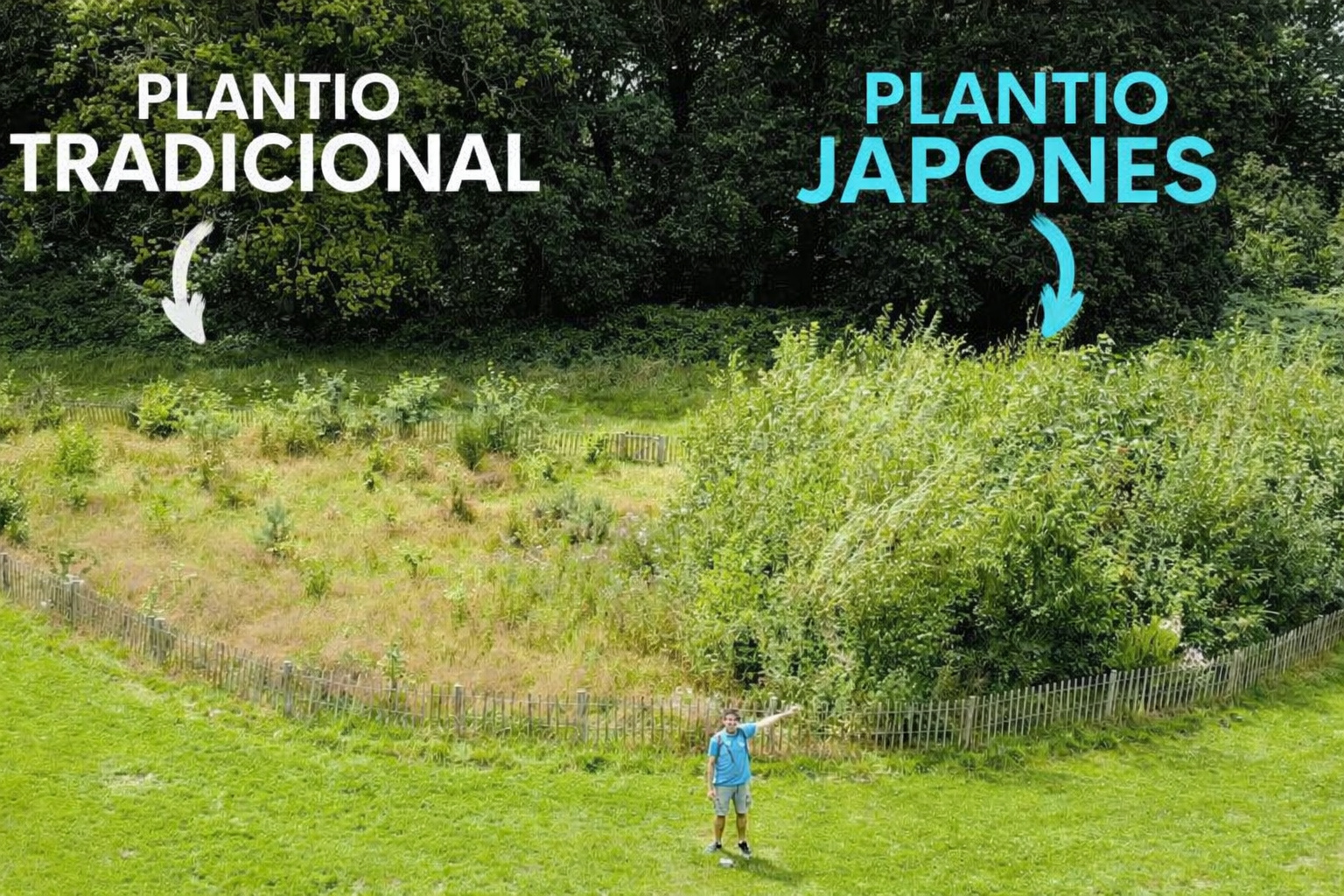
Engineer creates reforestation method that transforms small plots into dense forests in a few years using local biomass and can reduce environmental recovery costs.
-
Alone, the producer applies 7,400 hectares with the T100 drone in an optimized structure, replaces the generator with a silent battery, and demonstrates how technology reduces costs, increases productivity, and even challenges the uniport in the field.

This climatic behavior, associated with the lack of stability during the rainy season, reinforces the importance of meteorological monitoring and water management to ensure national agricultural productivity.
Irregular Rains and Impact on Sustainable Agricultural Productivity
The Conab bulletin indicates that the irregularity of the rains directly affected sustainable agricultural productivity in the main producing regions.
In the Midwest, the highest volumes of rain were recorded in parts of Mato Grosso and in the southwest of Mato Grosso do Sul.
In contrast, northern Mato Grosso do Sul and areas of Goiás faced water restrictions, hindering planting progress.
In the Southeast, the scenario for agricultural crops was no different. The more intense precipitation occurred only during the second decile of October, still in a disordered manner.
This lack of regularity compromised the planning of producers, who rely on stable rains to synchronize planting with the ideal germination period.
In the Northeast, however, the situation was even more critical: Conab observed little to no precipitation, harming regions of Matopiba, a strategic area that includes Maranhão, southwestern Piauí, western Bahia, and Tocantins.
The low rainfall volume limited the progress of first-crop planting without irrigation, reducing the planting pace and increasing costs with water inputs.
Agricultural Crops: The Role of Water Storage in the Soil and Its Regional Effects
The variation in water storage in the soil highlighted significant regional disparities. In areas of Mato Grosso and Mato Grosso do Sul, partial recovery of moisture favored the beginning of soybean development.
However, this improvement was not sufficient to uniform conditions across the central region when it comes to agricultural crops.
In the North of the country, locations such as Rondônia, southeastern Pará, and western Tocantins recorded insufficient rains.
In contrast, Amazonas and western Pará experienced more favorable volumes, promoting better soil moisture and benefiting soybean planting in southwestern Pará.
In Sealba, which encompasses parts of Sergipe, Alagoas, and Bahia, moderate precipitation helped maintain the third crop corn harvest without major losses.
The Conab Bulletin also highlighted that, in the South, intense rains alternated with periods of fair weather benefited winter crops in maturation and harvest.
Regions such as northwestern Rio Grande do Sul and western Santa Catarina recorded the highest accumulations, allowing for the maintenance of necessary moisture for the transition between crops.
Strategies for Agricultural Climatic Monitoring and Decision-Making
The fluctuation of rains reinforces the importance of agricultural climatic monitoring and the regionalized analysis of precipitation data.
Conab, through its Agricultural Monitoring Bulletin, plays an essential role by providing updated information on climatic behavior and its impacts on the harvest.
These reports assist producers and public managers in formulating mitigation strategies, such as the rational use of irrigation, crop diversification, and proper soil management.
According to the bulletin, the daily average moisture recorded in the last decile of October indicates a slight recovery in part of the affected areas, especially in the Midwest, which signals a possible gradual advance of planting of agricultural crops in the coming weeks.
The complete document, with regional data and detailed graphs, is available on the Conab Portal, reinforcing the agency’s commitment to transparency and technical support to the productive chain.
In a context of climatic transition and meteorological uncertainties, understanding the behavior of rains is essential for planning the future of agricultural crops in Brazil.
The irregularity observed during this period in October demonstrates that the balance between volume and precipitation distribution remains one of the major challenges for national agribusiness.






Seja o primeiro a reagir!