





 Portuguese
  English
  Spanish
  5 min of reading
  0 comments


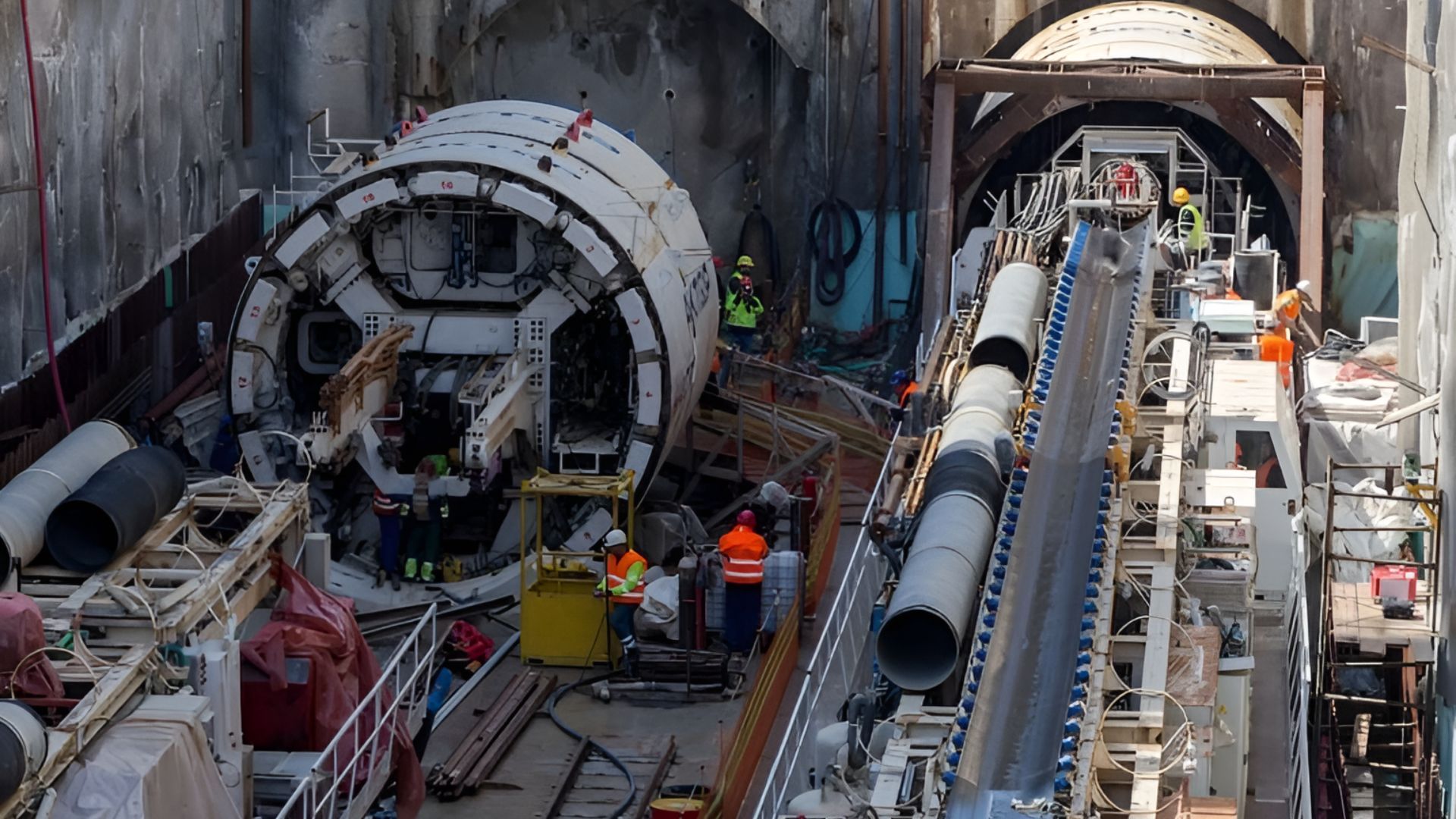
Underground Production Line Advances Beneath Cities Without Disrupting the Surface, Combining Excavation, Material Transport, and Installation of the Final Tunnel in a Single Continuous Process with Technology Capable of Operating in Different Types of Soil and Rock, Reducing Structural Risks in Major Urban Centers.
Tunnel boring machines, known in Brazil as tatuzões and internationally as TBMs, operate as an integrated underground production line.
As they excavate, remove material, and advance, they leave the tunnel practically ready behind them in a continuous process that minimizes surface disruption.
In subway projects, this method allows for openings without interrupting the city’s operations.
-
Friends have been building a small “town” for 30 years to grow old together, with compact houses, a common area, nature surrounding it, and a collective life project designed for friendship, coexistence, and simplicity.

-
This small town in Germany created its own currency 24 years ago, today it circulates millions per year, is accepted in over 300 stores, and the German government allowed all of this to happen under one condition.

-
Curitiba is shrinking and is expected to lose 97,000 residents by 2050, while inland cities in Paraná such as Sarandi, Araucária, and Toledo are experiencing accelerated growth that is changing the entire state’s map.

-
Tourists were poisoned on Everest in a million-dollar fraud scheme involving helicopters that diverted over $19 million and shocked international authorities.


Daily advancement can reach 10 to 15 meters, depending on ground characteristics, the type of machine used, and the technical requirements of the project.
The size helps explain the nickname “monster.”
The equipment occupies dozens of meters in length and integrates cutting, transport, propulsion, and lining systems in a single industrial assembly.
To operate safely, this process requires constant monitoring of pressure and ground stability, along with rigorous logistical planning.
This planning involves lowering, assembling, and maintaining the machine in starting shafts that can exceed dozens of meters in depth.
Underground Factory Advancing Beneath the City

By observing a tatuzão in operation, one can witness a continuous and synchronized cycle of activities.
At the front, the cutting head rotates with blades and metal tools responsible for breaking up the soil or rock in front of the machine.
The excavated material enters the internal system and is then transported by belts or conveyors to the rear.
At this point, the crushed soil or rock exits the machine to be directed according to the project’s disposal plan.
As this flow occurs, the entire structure advances thanks to the hydraulic jacks, which push the equipment forward.
These jacks rest on the newly lined tunnel section, allowing the machine to progress with precision and stability.
The principle is simple, but it requires strict control to maintain the excavation front under constant balance.
This logic explains why TBMs are considered a safer alternative in sensitive urban areas.
The work progresses with the support of instrumentation and ongoing technical monitoring, without the need for large open excavations at the surface.
Nonetheless, the effective pace depends on factors such as local geology, existing interferences, and specific project conditions.
Cutting Head, Shield, and Final Lining

The greatest concentration of effort occurs at the front of the machine.
In softer soils, the cutting tools are designed to penetrate and guide the material in a controlled manner into the system.
In rocky terrains, discs and more robust components come into play, capable of fracturing the stone through impact and pressure.
This process requires greater power and results in elevated wear on the tools, necessitating constant monitoring.
Just behind the cutting head, the assembly is protected by a metal shield, a cylindrical casing that supports the excavation.
This shield helps maintain tunnel stability and separates the workspace from the pressures exerted by the surrounding ground.
Within this environment, mechanical equipment, sensors, and control systems operate in an integrated manner.
The goal is to ensure a regular and predictable advance throughout the entire route.
The transformation of the excavation into a final tunnel occurs at the rear of the TBM.
There, a robotic arm, known as an erector, positions the wedge segments, precast concrete segments.
These pieces form structural rings that, when assembled in sequence, constitute the tunnel walls.
In this way, the final lining is installed while drilling continues, reducing stops and avoiding prolonged exposure of the soil.
EPB Technology and Rock Machines

Although the nickname suggests a standardized piece of equipment, there is no universal TBM.
The choice of model depends on the type of soil, presence of groundwater, tunnel depth, and existing conditions at the surface.
In areas with unstable terrain, the use of EPB (Earth Pressure Balance) technology is common.
In this system, part of the excavated material is transformed into a controlled slurry within the pressure chamber.
This balance helps reduce settlements and soil movements, which is crucial when there are buildings and underground networks nearby.
In more competent rocky masses, another machine design is adopted, with tools suitable for the effort to fracture the stone.
The natural stability of the rock directly influences the construction method and pace of progress.
In some projects, hybrid solutions are employed, allowing for mode switching based on the excavated section.
This flexibility reduces improvisations and lowers the risk of prolonged work stoppages due to incompatibility between machine and geology.
Giant Machines That Marked Major Works
The size of these drillers often draws attention even outside technical environments.
In the United States, the TBM “Bertha” was used in the SR 99 tunnel in Seattle, with a 17.5-meter diameter.
It was among the largest machines of its kind ever used in urban projects.
With the advancement of engineering, other projects began competing for this scale.
In Brazil, the tunnel boring machine Cora Coralina gained prominence while working on the expansion of Line 2-Green of São Paulo’s Metro.
The machine is 100 meters long, weighs 2,500 tons, and operates with a cutting wheel of 11.66 meters in diameter.
The section demands rigorous ground control and continuous lining execution in a complex urban environment.
The project’s expansion anticipates the use of a second, even larger tunnel boring machine, to be unveiled in 2025.
This equipment is 133 meters long, 11.67 meters in diameter, and has a total weight of 2,600 tons.
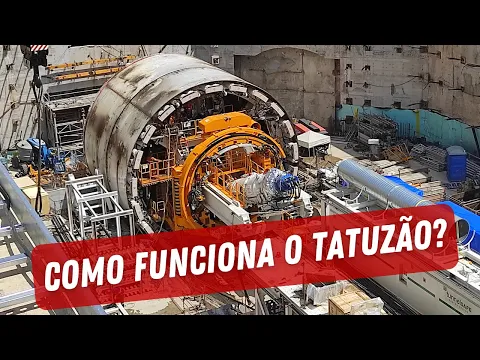

The operation occurs in dual mode, combining EPB technology and open mode.
Under these conditions, the estimated capacity reaches 15 meters per day in soil and up to 10 meters per day in rock, depending on the section.
Automation and Efficiency as Upcoming Challenges
The recent evolution of TBMs points to increasing levels of automation and operational control.
Sensors continuously monitor pressure, torque, vibration, and alignment throughout the excavation.
This data feeds systems that adjust parameters in real time, reducing sharp variations and enhancing predictability of progress.
Meanwhile, manufacturers and operators seek gains in energy efficiency and waste reduction.
Strategies include optimizing energy consumption and adopting smarter maintenance routines.
Operational safety remains a central priority in these projects.
Even with growing automation, the works require technical responsibility, regular inspections, and strict risk management.
In densely populated cities, the challenge is to balance execution speed and impact control.
With the pressure for greater urban mobility, how far can these underground factories advance to accelerate works without increasing risks and disruptions in cities?









-

-

-

-

-

30 pessoas reagiram a isso.