





 Portuguese
  English
  Spanish
  4 min of reading
  14 comments


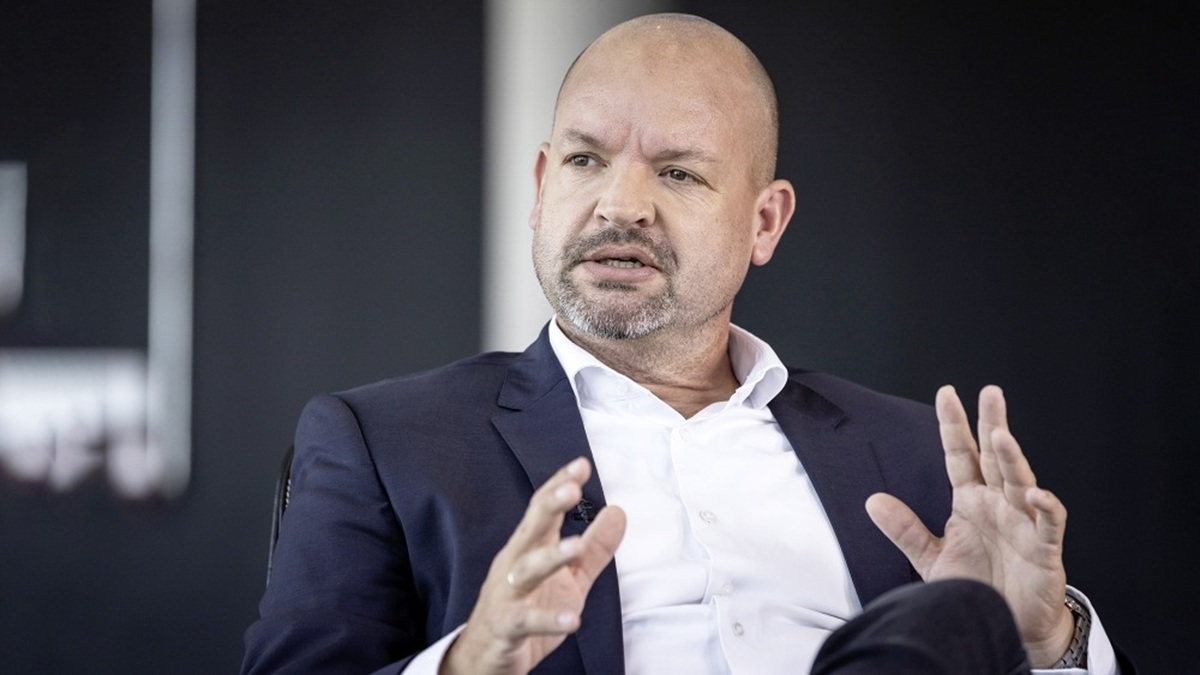


Jörg Burzer, Head of Development at the Automaker, Argues That Electromobility Has a Much Broader Field for Technological Innovation Compared to Century-Old Engines, Although the Brand Supports Customer Choice Following the Recent European Union Decision to Allow Sales of Combustion Vehicles After 2035.
Major European brands, such as Mercedes-Benz, Volkswagen, and BMW, for example, faced a huge headache ahead: the obligation to electrify all their vehicles by 2035.
After much discussion, it was decided that this rule would no longer apply, serving as a clear sign of Germany’s pressure on the European Union, which had to bend to the country’s interests in not betting all its chips on electric vehicles.
In this context, Jörg Burzer, Mercedes-Benz executive, highlights technological innovation in electric vehicles, pointing to a promising future for electromobility.
-
Motorola launched the Signature with a gold seal from DxOMark, tying with the iPhone 17 Pro in camera performance, Snapdragon 8 Gen 5 that surpassed 3 million in benchmarks, and a zoom that impresses even at night.

-
Satellites reveal beneath the Sahara a giant river buried for thousands of kilometers: study shows that the largest hot desert on the planet was once traversed by a river system comparable to the largest on Earth.

-
Scientists have captured something never seen in space: newly born stars are creating gigantic rings of light a thousand times larger than the distance between the Earth and the Sun, and this changes everything we knew about stellar birth.

-
Geologists find traces of a continent that disappeared 155 million years ago after separating from Australia and reveal that it did not sink, but broke into fragments scattered across Southeast Asia.

Jörg Burzer stated that electric vehicles technically surpass combustion models. The statement made to the magazine GOLEM comes after the European decision to maintain sales of traditional engines after 2035.

Technical Superiority of Electric Mobility
Jörg Burzer did not hesitate to declare his preference for electric mobility over internal combustion. The executive stated that he is a big fan of this technology during a recent event held in Germany.
The statements were made at the Mercedes-Benz Museum. According to him, zero-emission models offer advantages in various technical aspects and represent a mobility concept far superior to traditional models.
The executive classifies gasoline-powered cars as a technology from a century ago. In contrast, he positions electric vehicles as the true future for the global automotive sector.
According to him, zero-emission models “offer advantages in various aspects and therefore represent a much superior mobility concept“.
“In terms of innovation, electromobility offers greater potential simply because it is a newer technology and the field of innovation is much broader. This applies to battery formats, cooling options, and the integration of all systems,” Burzer continued.
Technological Innovation and Mechanical Limitations
The executive understands that electromobility offers greater potential for innovation because it is a newer technology. The field of development is considerably broader in comparison to traditional and old internal combustion engines.
This breadth applies to battery formats and available cooling options. The integration of all systems also benefits from this new technological horizon currently being explored by the German automaker.
Burzer highlights the existence of an incredible number of innovative topics for exploration. This is the fundamental difference between a century-old technology and one that represents the future of modern mobility.
The automaker notes significant improvements in internal combustion engines today. However, the executive believes these mechanical advancements will not be as pronounced as those seen in the electric sector.
Regulatory Context and Energy Efficiency
Earlier this month, the European Commission announced that it would reverse the decision regarding the sale of gasoline cars. The measure will allow the marketing of these vehicles in the economic bloc starting in 2035.
Stefan Kornelius, spokesperson for the EU, described internal combustion engines as highly efficient.
The head of Mercedes agreed, citing the existence of high-performance electrified combustion engines at the company.
Personal Experience and Freedom of Choice
Burzer does not believe that internal combustion engine vehicles have much of a future in the coming years. He admits to using a complete personal ecosystem that allows him to save a lot of money daily.
The system includes solar panels on the roof and battery storage in the basement. He describes the feeling of driving a car powered by solar energy from his home as incredibly wonderful.
Despite his praise for electricity, he applauded the EU’s decision to lift the ban. The executive considers it important for the customer to choose what best suits their style.
Corporate Leadership and Political Articulation
Ola Källenius, CEO of Mercedes-Benz, also serves as president of the European Automobile Manufacturers Association. He has been a staunch advocate for the continuation of the sale of combustion vehicles after 2035.
The final decision was influenced by high-level political direct intervention in Germany. Chancellor Friedrich Merz sent a decisive letter to Ursula von der Leyen a few weeks ago on the matter.
Jim Farley, CEO of Ford, Is Also an Enthusiast of Electric Mobility and Advocates for the Innovation of Electric Cars

It is not just this Mercedes-Benz executive who has major executives passionate about electric cars.
In 2024, Jim Farley, CEO of Ford, also expressed enthusiasm for electric mobility. Farley, in an interview on “The Fully Charged Podcast“, revealed that he owns a Xiaomi Speed Ultra 7 (SU7), the first electric car from the Chinese tech giant at the time.
The executive highlighted the excellent experience with the model and stated that he does not intend to give it up, even being a direct competitor in the electric vehicle market.
According to Farley, the SU7 has been a big sales success, with Xiaomi selling out its stock every month.
With this statement, Farley joins other leaders in the automotive sector who believe in the potential of electric vehicles, highlighting the importance of innovation in this field.
While Mercedes-Benz remains firm in its bet, Ford also reinforces its commitment to the future of sustainable mobility, demonstrated both by its CEO’s preference and by the growing offer of electric vehicles from the automaker.








A questão é: onde vão descartar as baterias depois. Esse negócio de carro elétrico, para mim, é uma bomba de efeito ****. Polui para ser feito e depois, vai poluir muito mais e com muito mais risco, no descarte das baterias.
Os empresários sempre dirão que o seu recente produto é o futuro… Sempre tentarão empurrar no consumidor!!
Vivemos em um país subdesenvolvido cuja cultura é comprar carros pensando na revenda e troca por um mais novo… Dito isso, fico imaginando quem compraria um usado elétrico com 4, 5 anos de uso… e qual seria a desvalorização na revenda… Particularmente eu jamais compraria um eletrico usado sabendo q sua bateria teria, no máximo, mais uns 4/5 anos de vida e q seu custo equivale a +- 50/60% de um eletrico novo… ou seja, mais caro que o próprio carro… A ver como ficará isso daqui a alguns anos qdo os “pioneiros” responderão a essas e outras perguntas…
Tenho 3 carros em casa. 2 elétricos e um a combustão. E estou planejando trocar o a gasolina por um elétrico. Quanto aos elétricos, comprei um com dois anos de uso e outro zero. Quanto a bateria, logo começaram a reciclar, reabilitar, etc. é um novo mundo sem volta. Revisão a cada dois anos, desgate de peças quase zero, gasto 1/5 do que gastaria com carro a combustão. Só isso já vale a pena.