





 Portuguese
  English
  Spanish
 4 min of reading
  0 comments


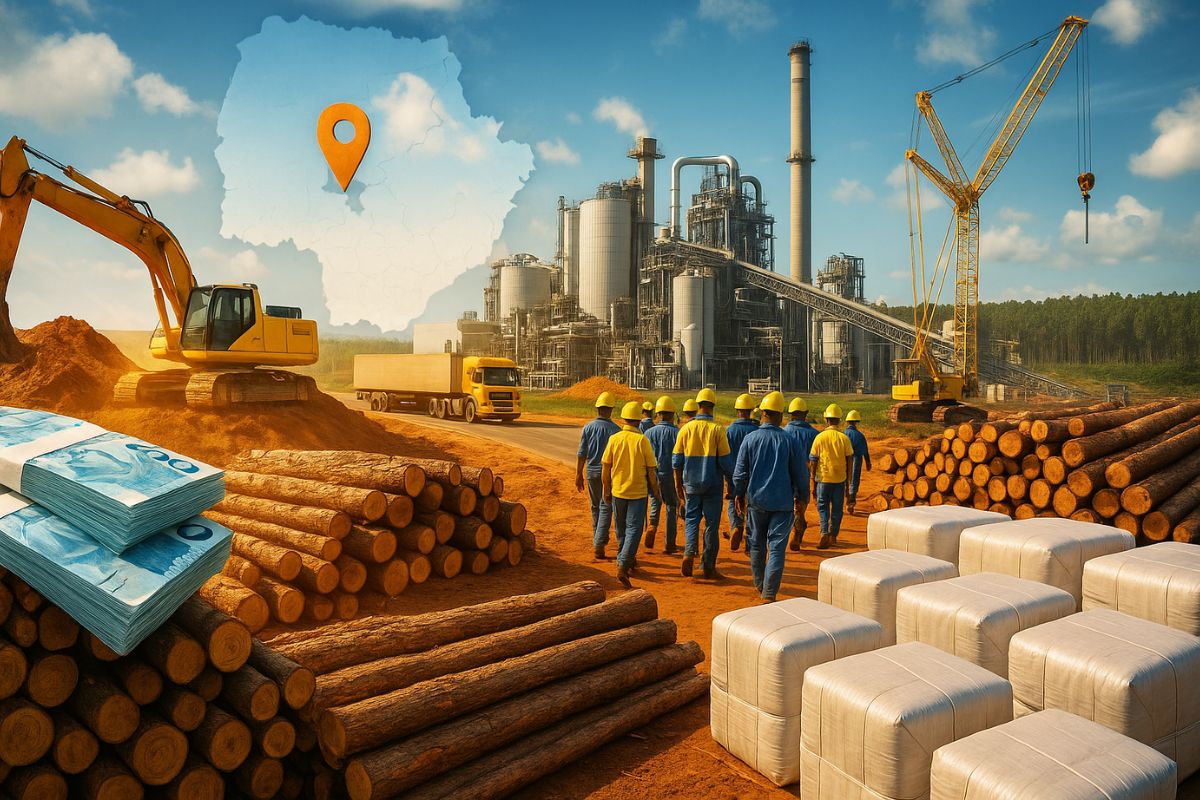
The Pulp Megafactory of the Sucuriú Project, with an investment of R$ 25 billion from Arauco, Changes the Economic Scale of Inocência and Inaugurates a Cycle of Qualified Jobs, Clean Energy, and New Productive Infrastructure Connected to the Country.
The installation of the megafactory in Inocência, Mato Grosso do Sul, projects the town of 8,700 inhabitants to an unprecedented level of competitiveness. Arauco’s venture, with a capacity of 3.5 million tons per year and 400 megawatts of clean energy, aligns industry, logistics, and planted forests in a single high-performance corridor.
With the groundbreaking laid in April and operations expected to begin by the end of 2027, the megafactory creates a new industrial axis in the so-called Pulp Valley. The peak of the construction is expected to employ 14,000 people, and the post-inauguration phase adds around 6,000 permanent jobs, anchoring commerce, services, and new supply chains.
Industrial Capacity and Timeline
The plant was designed to produce 3.5 million tons/year of pulp, a figure that positions the project among the largest in the world in a single stage.
-
The government requests the Federal Revenue Service for a new system to automate the income tax declaration, reducing errors, time, and bureaucracy for millions of Brazilians.

-
Pix in installments, international Pix, and contactless payment without internet: the Central Bank revealed the new features coming to the tool that is already used by almost every adult in Brazil.

-
Mercado Livre has just started selling medications with delivery in up to three hours to your door, and this move could completely change the way Brazilians buy medicines on a daily basis.

-
In Dubai, rising tensions from the war in the Middle East are causing super-rich individuals to leave the Gulf and direct their fortunes to a new financial refuge in Asia.


This volume allows for long-term contracts and stable off-take plans, providing predictability for clients and for the municipality.
The schedule establishes commissioning by the end of 2027, a stage that requires process testing, fine quality adjustments, and integration of utility systems.
The ramp-up cadence is critical to capturing productivity early in the first months and reducing unit costs.
Jobs and Multiplier Effects
During construction, 14,000 direct jobs support a wave of demand for housing, food, transportation, and materials.
This movement spills over into health services, training, and medium-sized local suppliers.
In the permanent regime, the operation of the megafactory adds around 6,000 positions in industrial and forestry activities, as well as logistics functions.
Each industrial position tends to multiply income in the surrounding area, impacting tax collection, qualification, and formalization.
Clean Energy and System Integration
The unit is expected to generate 400 MW of clean energy, sufficient to supply a city of 800,000 inhabitants.
Part of this amount self-supplies the plant, and the surplus will go to the grid, enhancing regional energy security.
By injecting surpluses into the system, the megafactory helps to smooth demand peaks and reinforces the role of Mato Grosso do Sul as a net energy exporter.
The predictability of this supply facilitates contracts and improves load management.
Planted Forests and Competitive Advantage
With 400,000 hectares of eucalyptus dedicated, the forestry base ensures volume, standardization, and cost.
The seven-year cutting cycle in the state, almost half of that observed in Chile, reduces tied-up capital and accelerates productive turnover.
This productivity window allows for staggered harvest planning, continuous supply, and optimized forestry logistics, elements that sustain the long-term competitiveness of the hub.
Why Inocência Entered the Global Map
The choice of Inocência combines available land, forestry suitability, and strategic position for logistics routes.
The municipality becomes part of the Pulp Valley, concentrating production capacity and attracting specialized suppliers.
With the megafactory as an anchor, the city gains scale for new investments in transportation, storage, and technical services, creating an ecosystem that retains talent and capital.
Urban Infrastructure and Planning
The surge in activity requires careful urban planning in housing, mobility, and public services.
Management of freight traffic, water supply, and expansion of health and education form the immediate agenda.
Coordination between the public sector and the company is vital to align schedules and avoid bottlenecks.
Local qualification policies are the bridge between open positions and productive inclusion of the population.
What Changes for the Regional Economy
The arrival of the megafactory reorganizes value chains in industry, logistics, and regional commerce.
Positive fiscal effects enhance the municipality’s investment capacity, while new specialized services tend to settle in the area.
In perspective, Inocência shifts from a rural-based economy to become a integrated hub of industry and energy, with productivity gains and greater insertion in the global market for pulp.
The megafactory of R$ 25 billion repositions Inocência on the economic map by combining industrial scale, clean energy, and a high-productivity forestry base.
The challenge now is to transform the construction peak into sustainable development, with training, infrastructure, and governance capable of multiplying long-term gains.
What is, in your opinion, the number one priority for the megafactory to translate into lasting prosperity for Inocência: accelerated local qualification or urban and logistics infrastructure ready before operation?









-

2 pessoas reagiram a isso.